Jewish · Authentic-ish Jewish
Rugelach
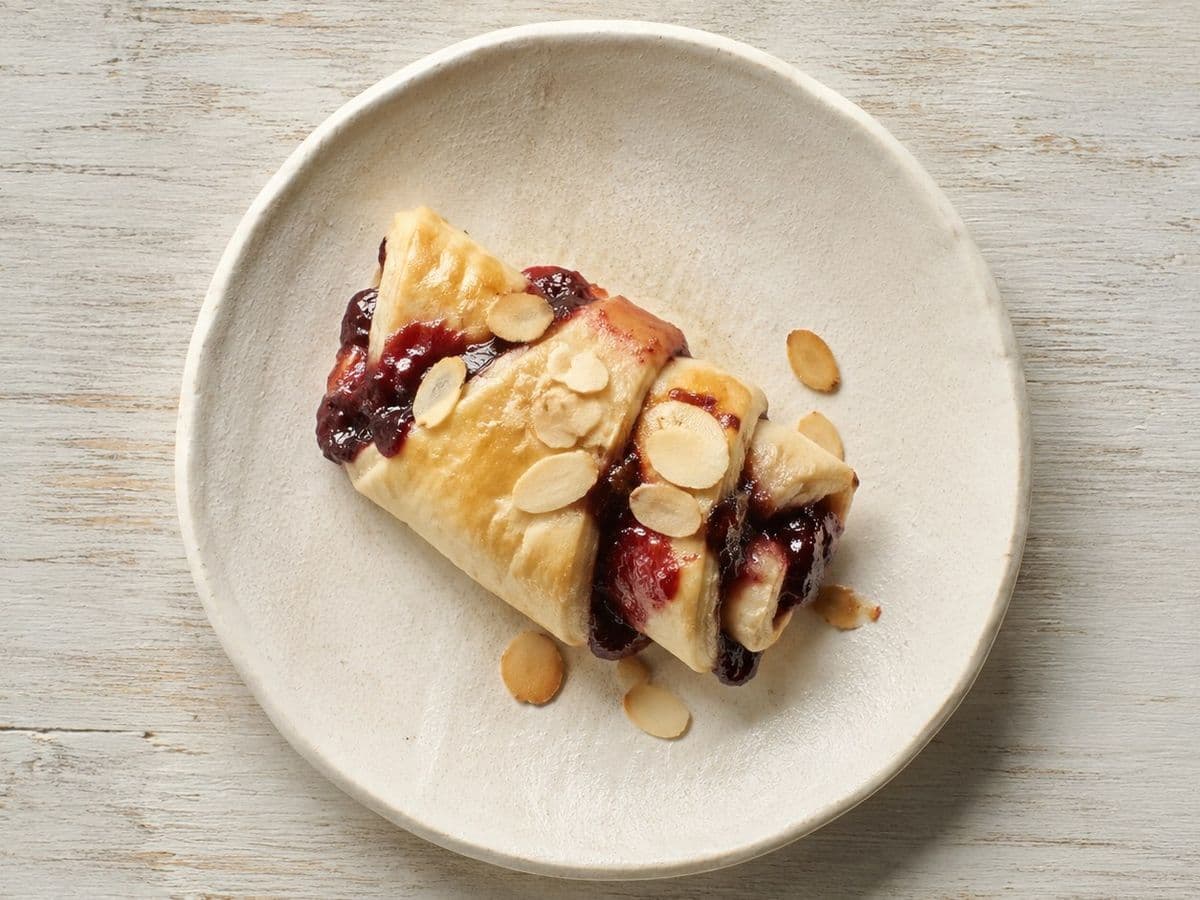
219 kcal a serving, against 377 for the traditional version. That is 158 kcal off, or 42%, with 8g of protein. Serves 8. 1 hour 30 minutes.
What the traditional version is
Traditional rugelach are made by creaming together equal weights of softened butter and cream cheese, blending in plain flour, and chilling for a few hours. The dough is rolled thin, spread with a mixture of melted butter, brown sugar, cinnamon, chopped walnuts and a layer of fruit jam, then sliced into triangles and rolled up like tiny croissants. Brushed with egg, baked till golden, and usually demolished while still slightly warm.
What changed, and what each change costs
Butter and full-fat cream cheese for fat-free Greek yoghurt and a smaller amount of light cream cheese
The original dough is a marvel, but it's a marvel made from half its weight in butter and cheese. Switching to a yoghurt dough with just a touch of light cream cheese means you save a huge chunk of the fat while keeping some of the tang.
What it costs you. You don't get layers. The pastry is much more like a soft, chewy cookie, a bit cakey, and nothing like the shattering, flaky original. It isn't delicate - it's determined.
Half the flour replaced by extra-fine ground almonds
This ups the protein and gives body to a dough that would otherwise be rubbery. The almonds also add a bit of richness, but with more of the good stuff and fewer empty carbs.
What it costs you. If you're allergic to nuts, this is the first door slammed in your face. You'll miss the pure wheat taste and get a bit of almond aroma alongside it.
Filling changed to fruit spread and ground almonds, ditching the butter and half the sugar
Butter and sugar fillings are desperate to leak out and burn. A layer of thick fruit spread and a dusting of almonds give you sweetness, bite and prevent the rolling-up from becoming a greasy, sticky farce.
What it costs you. No caramelised sugar round the edges, and the aroma's less of a punch in the face. The filling is much more restrained with no butter slick to carry it.
Egg glaze dropped entirely
This dough browns quite well on its own as long as you don't overbake.
What it costs you. You lose the glassy shine. They look more homemade, which is probably accurate.
What goes in it
The ingredients, without the quantities. The weights are what the figures below are computed from, and they are in the book.
- Plain flour
- Ground almonds
- Light cream cheese
- Fat-free Greek yoghurt
- Caster sugar
- Fruit spread with no added sugar
- Extra ground almonds for filling
- Ground cinnamon
- Salt
How it starts
- In a large bowl, mix the plain flour, ground almonds and salt.
- Scrape the dough onto a floured surface and knead lightly until it's smooth.
- Roll the dough into a rough circle, about 30cm across and 5mm thick.
The rest of the method, and every weight, is in Authentic-ish Jewish.
The numbers
| Per serving | Traditional | Lightened |
|---|---|---|
| Calories | 377 | 219 |
| Protein | 6.1g | 8g |
| Fat | 23g | 10.6g |
| Saturated fat | 11.7g | 1.4g |
| Carbohydrate | 37.6g | 24.5g |
| Protein per 100 kcal | 1.6g | 3.7g |
Every figure is computed from the recipe's own weighed ingredient list against public food composition databases. The appendix in Authentic-ish Jewish prints the exact database row used for each ingredient, so any number here can be checked. How every number is computed sets out the method.
Allergens. gluten, milk, nuts.
The method is in the book
If you grew up with the proper stuff, you'll know right away what's missing: the pastry doesn't flake and the richness is a distant memory. But you do get more actual filling with far less fat, and they're lighter in the hand and the belly. You can actually go back for a second without yearning for a lie-down. The texture is the third thing you'll notice - it's more like a sweet roll than a pastry. Not one for a show-off table, but perfect if you just want that cinnamon-jam smell in the kitchen and an excuse to eat three before lunch. If anyone complains, tell them to make their own.
The quantities and the method for this dish are in Authentic-ish Jewish, along with 51 more. Buy the paperback
More from Authentic-ish Jewish
- Honey Cake, 224 kcal a serving, 44% off
- Babka, 290 kcal a serving, 45% off
- Baked Apples, 129 kcal a serving, 65% off
- Apple Cake, 460 kcal a serving, 26% off
- Cheese Blintzes, 209 kcal a serving, 54% off
- Sufganiyot, 362 kcal a serving, 30% off
Every Jewish dish and its calories · Every dish in the series