Jewish · Authentic-ish Jewish
Cold Beetroot Borscht
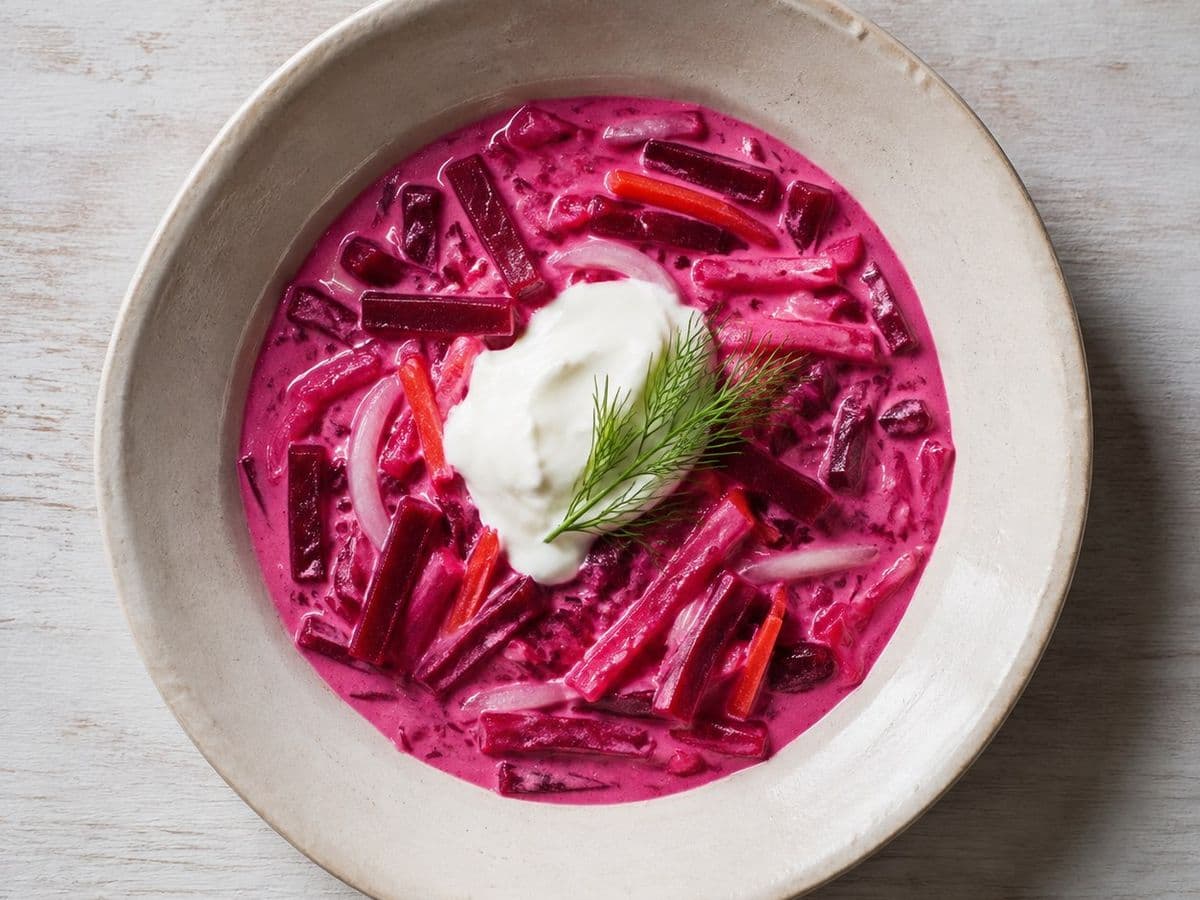
111 kcal a serving, against 180 for the traditional version. That is 69 kcal off, or 38%, with 6g of protein. Serves 4. 2 hours, plus chilling.
What the traditional version is
Fresh beetroot is simmered with carrot, onion and sometimes a bit of potato, then cooled and strained to give a clear, crimson broth. It's finished with lemon juice, a pinch of sugar and a decent whack of salt, then served chilled with a large spoonful of soured cream plonked in for each bowl. Some put dill on top, others swear by chives. Either way, the cream is the first thing your spoon hits and the last thing you taste.
What changed, and what each change costs
Full-fat soured cream swapped for fat-free Greek yoghurt
Yoghurt lets you keep the tang and creamy swirl on top, but with a fraction of the fat and a bigger hit of protein. It's the easy fix for most creamy soup toppings, so you don't have to stare jealously at everyone else's bowl.
What it costs you. The creaminess isn't close. Soured cream coats your mouth and carries the beetroot's sweetness, while yoghurt just sits on the surface and tastes sharper. The soup feels less rich. If you're loyal to tradition, you'll notice the difference with every spoonful.
Potato left out
Potato bulks the soup and makes it a touch more substantial, but adds little protein and plenty of starchy calories. Leave it out and the soup loses some body, but you can eat twice as much and still not be full.
What it costs you. The texture's a bit thinner and the broth feels lighter on the tongue. It also goes cold even faster. Stir in some sliced boiled egg if you miss the substance, but that's definitely not classic.
Sugar halved
Most home recipes go heavy on sugar for that classic sweet-sour note. Using less means the soup is sharper, more beetroot than pudding, but you don't have to feel like you're eating dessert with a spoon.
What it costs you. If you grew up with it sweet, this will taste bracing. You might want to adjust the lemon and salt a bit to soften the edge, but I quite like the clean finish.
Slightly more dill
With less richness floating about, more fresh herbs help distract the taste buds. Dill brings a green, almost grassy punch that makes the soup feel more lively. I don't bother with chives, but you're welcome to add them if you fancy.
What it costs you. No one ever complained about extra dill. The only risk is finding green bits in your teeth after lunch.
What goes in it
The ingredients, without the quantities. The weights are what the figures below are computed from, and they are in the book.
- Raw beetroot
- Carrot
- White onion
- Cold water
- Caster sugar
- Salt
- Fresh lemon juice
- Fat-free Greek yoghurt
- Fresh dill
How it starts
- Combine the grated beetroot, carrot and onion with the water in a large saucepan.
- Strain the soup through a fine sieve into a clean bowl, pressing down on the veg to get out every drop.
- Stir in the sugar, salt and lemon juice while the broth is still warm.
The rest of the method, and every weight, is in Authentic-ish Jewish.
The numbers
| Per serving | Traditional | Lightened |
|---|---|---|
| Calories | 180 | 111 |
| Protein | 4.2g | 6g |
| Fat | 6.2g | 0.5g |
| Saturated fat | 3.1g | 0.1g |
| Carbohydrate | 29.2g | 22.5g |
| Protein per 100 kcal | 2.3g | 5.4g |
Every figure is computed from the recipe's own weighed ingredient list against public food composition databases. The appendix in Authentic-ish Jewish prints the exact database row used for each ingredient, so any number here can be checked. How every number is computed sets out the method.
Allergens. milk.
The method is in the book
Switching to Greek yoghurt is about as controversial as it gets in my family. The original soured cream borscht is so smooth and cosseting you might forget it's mostly vegetables. With yoghurt, you lose that rich finish - it's definitely sharper and less comforting. Honestly, the soup is still handsome, just not as decadent. If you want all the pink drama and the cooling punch but don't want to burn through the day's allowance on cream, this works a treat. But if you're putting it out for the in-laws, keep some soured cream on standby to avoid complaints.
The quantities and the method for this dish are in Authentic-ish Jewish, along with 51 more. Buy the paperback
More from Authentic-ish Jewish
- Chicken Soup, 339 kcal a serving, 18% off
- Cold Borscht, 86 kcal a serving, 33% off
- Mushroom Barley Soup, 175 kcal a serving, 15% off
- Schav, 102 kcal a serving, 57% off
- Yemenite Chicken Soup, 297 kcal a serving, 43% off
- Roast Chicken, 312 kcal a serving, 40% off
Every Jewish dish and its calories · Every dish in the series