Soul Food · Authentic-ish Soul Food
Crowder Pea Salad
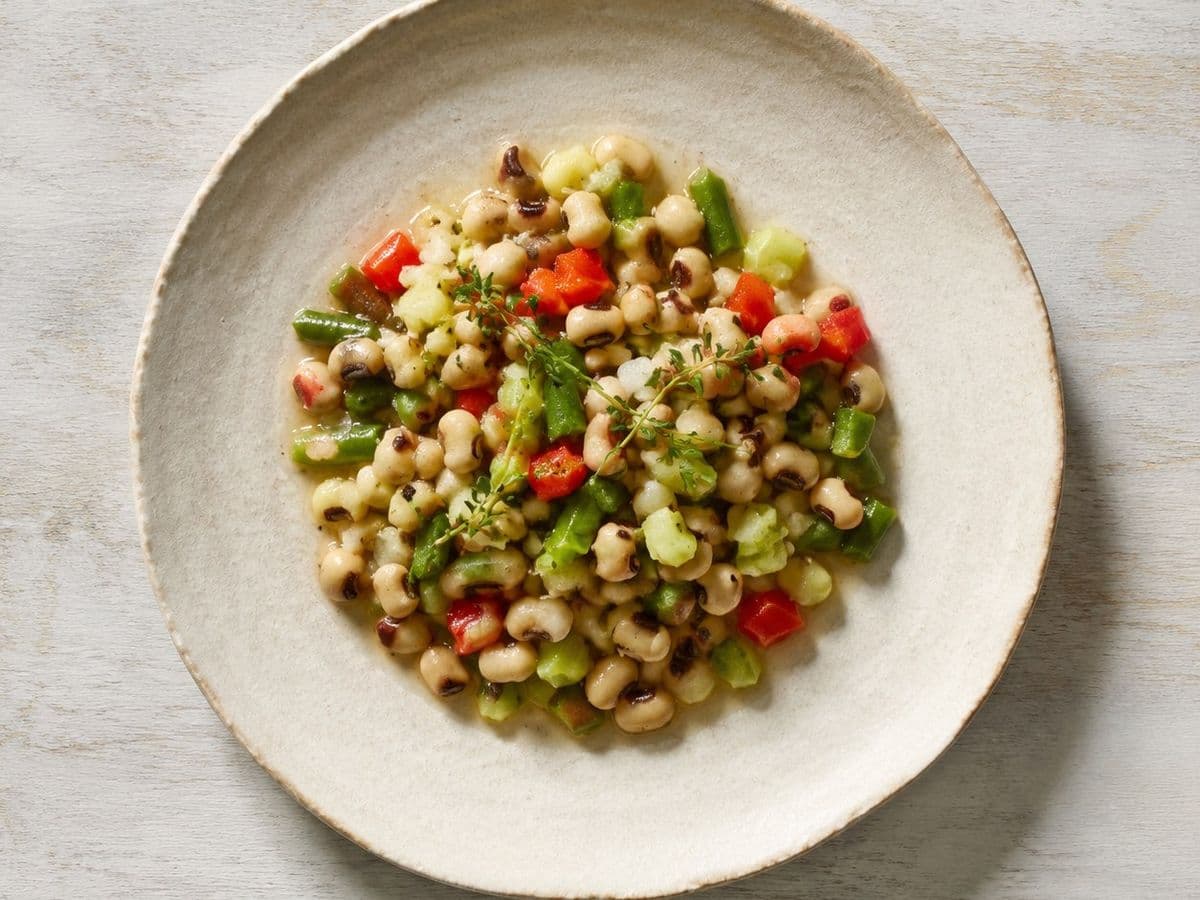
341 kcal a serving, against 401 for the traditional version. That is 60 kcal off, or 15%, with 18.4g of protein. Serves 8. 50 minutes (plus cooling time).
What the traditional version is
Classically, you simmer fresh or frozen crowder peas until just tender, then drain and cool. The peas are combined with diced red and green pepper, chopped red onion, a bit of celery, and sometimes parsley. All this is tossed with a generous pour of good vegetable oil and cider vinegar, seasoned with salt and black pepper. The original aims for shiny peas in a punchy, very rich dressing, best left to mingle for a couple of hours before serving.
What changed, and what each change costs
Halved the olive oil, upped the cider vinegar, and sharpened with extra salt and pepper
Oil gives the peas that slippery richness, but also brings nearly all the calories. By cutting the oil to 60g and boosting the vinegar, you keep the peas lively and bright, and the salad still holds together. The punch of vinegar stops things from tasting dry, so you don't feel like you're gnawing on cold beans out of a tin.
What it costs you. You lose the slow hug of oil that rounds out every bite. It's no longer picnic food that's flirting with coleslaw, it's a crisp, tangier salad. If you're a die-hard for silkiness and glisten, the original wins hands down.
Used black-eyed beans for crowder peas, and swapped green pepper for green beans
Crowder peas aren't exactly queuing up in British supermarkets, so black-eyed beans do the same job. Green beans sub for green pepper because they're easier to find, stay crunchy longer after dressing, and avoid that grassy aftertaste.
What it costs you. The purist will notice a different bite and a little less earthy flavour. Unless you're a crowder pea expert, you'll just get a fresher, easier salad.
Doubled the parsley and used more red onion
Upping the herbs and aromatics helps cover for the missing oil, giving you more flavour for your buck. It also makes the salad brighter, so you can taste every main ingredient.
What it costs you. No real downside unless you hate parsley, in which case, eat around it or leave it out entirely. It's not the main act.
What goes in it
The ingredients, without the quantities. The weights are what the figures below are computed from, and they are in the book.
- Black-eyed beans
- Red pepper
- Green beans
- Celery
- Red onion
- Flat-leaf parsley
- Olive oil
- Cider vinegar
- Salt
- Black pepper
How it starts
- If you're using dried black-eyed beans, soak them overnight, then simmer until just tender - about 30-35 minutes.
- Very finely dice the red pepper, green beans, celery and red onion, so every forkful gets a bit of everything.
- Tip the beans into a large bowl.
The rest of the method, and every weight, is in Authentic-ish Soul Food.
The numbers
| Per serving | Traditional | Lightened |
|---|---|---|
| Calories | 401 | 341 |
| Protein | 18.2g | 18.4g |
| Fat | 16.1g | 8.6g |
| Saturated fat | 2.3g | 1.3g |
| Carbohydrate | 48.5g | 49.5g |
| Protein per 100 kcal | 4.5g | 5.4g |
Every figure is computed from the recipe's own weighed ingredient list against public food composition databases. The appendix in Authentic-ish Soul Food prints the exact database row used for each ingredient, so any number here can be checked. How every number is computed sets out the method.
Allergens. celery, sulphites.
The method is in the book
The salad's still bright, savoury and filling after the oil cut, and the peas hold their own - just don't expect that soft, glossy mouthfeel. The dressing's tangier and more direct, but you're not left with a puddle in the bottom of the bowl. The first forkful is the sharpest, and the second is the one where you realise you're not missing much. Serve this at any not-too-formal lunch, and no one will mutter about diets. If you want that lush, southern richness, go heavier on the oil and congratulate yourself on your excellent taste - but for a weeknight, this is the version I actually make.
The quantities and the method for this dish are in Authentic-ish Soul Food, along with 50 more. It is not out yet. The swap kit is free in the meantime.
More from Authentic-ish Soul Food
- Black-Eyed Peas, 367 kcal a serving, 12% off
- Red Beans and Rice, 590 kcal a serving, 28% off
- Butter Beans with Ham, 169 kcal a serving, 37% off
- Pinto Beans, 232 kcal a serving, 21% off
- Field Peas and Snaps, 268 kcal a serving, 14% off
- Southern Fried Chicken, 479 kcal a serving, 58% off
Every Soul Food dish and its calories · Every dish in the series