Southern · Authentic-ish Southern
Angel Biscuits
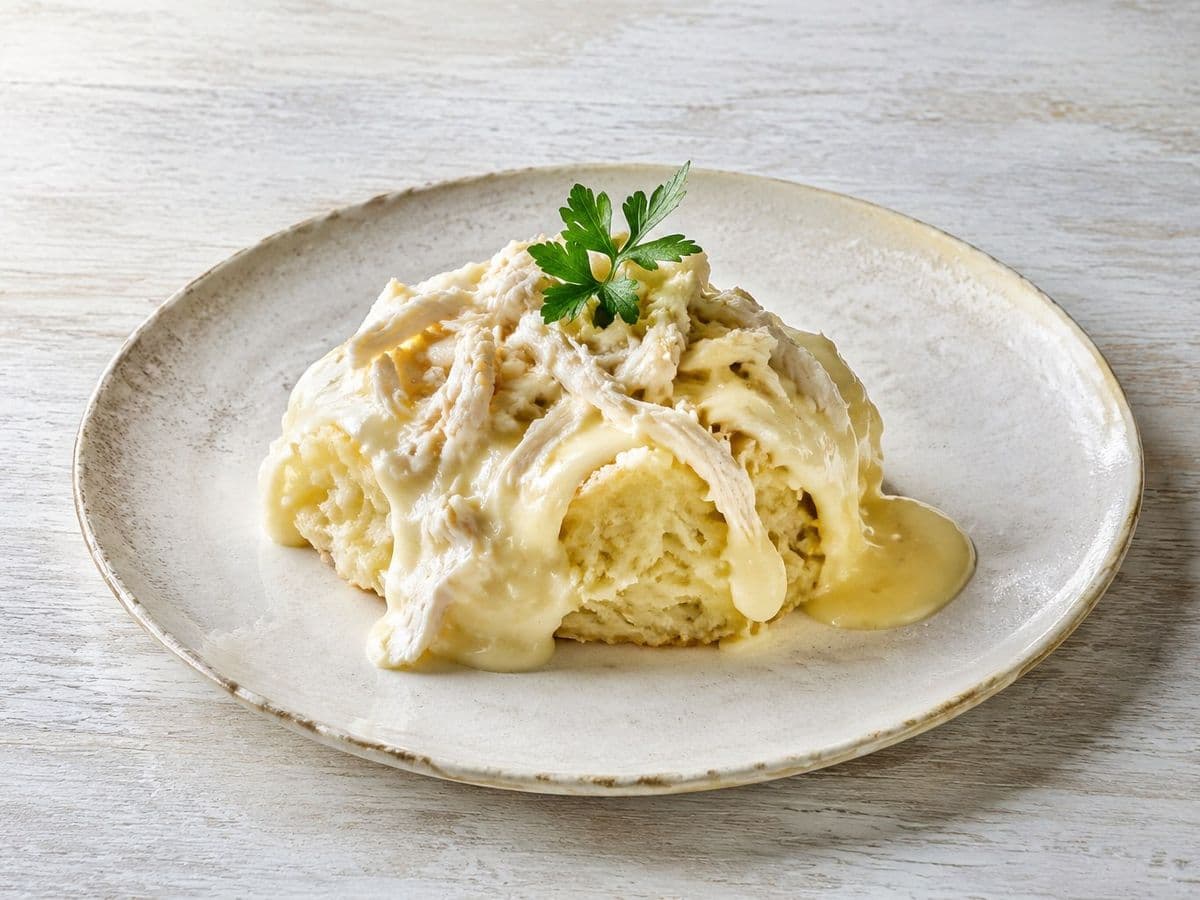
321 kcal a serving, against 417 for the traditional version. That is 96 kcal off, or 23%, with 12.6g of protein. Serves 8. 1 hour plus rising.
What the traditional version is
Classic angel biscuits start with 500g plain flour, sifted with 15g baking powder, 8g dried yeast and 8g sugar. You rub in 125g cold vegetable shortening until it looks like coarse crumbs, then stir in 250g buttermilk and a good pinch of salt. Knead lightly, cut into rounds and let them rise for 30 minutes. Bake hot for 15 minutes until puffed and golden, then brush with melted butter for good measure.
What changed, and what each change costs
Shortening cut from 125g to 60g, swapped for oil
Most of the 'angel' in angel biscuits is due to all that fat rubbed into the flour. Cutting it back to 60g means you're not eating a stick of fat with your bread. Swapping to regular vegetable oil does away with the solid chunks but keeps it light enough to mix through.
What it costs you. The classic flakiness isn't coming back. The texture lands more on the roll side - less angel, more mortal - and you won't get those visible layers when you pull them open. Still soft, just not floating off the plate.
Buttermilk upped from 250g to 330g
Taking out fat means you need more liquid to pull the dough together. Extra buttermilk not only helps hydrate the flour but gives a bit of tang to distract from the missing flake.
What it costs you. The dough is softer, and the rise isn't quite as dramatic. You'll need a bit more flour on your hands when shaping. The tang is nice, but it's covering for lost richness.
Butter for finishing skipped entirely
The original crowns each biscuit with a shine of melted butter. It's pure luxury, and that's exactly why it had to go. You could brush with a hint of oil if you absolutely must.
What it costs you. No gloss on top and less buttery aroma. The eating becomes more about the bread than the butter, so if you want that hit, bring the butter to the table and let people make their own bad decisions.
Plain flour held, but added 55g whey protein powder
A classic biscuit is nearly pure starch. Adding whey protein powder to the flour tips it a bit closer to something that might keep you full until tea. It bumps up the protein by a good margin.
What it costs you. A slight chew creeps in, but with all the other changes, it's hard to object. If anything, it's the least disruptive change here.
What goes in it
The ingredients, without the quantities. The weights are what the figures below are computed from, and they are in the book.
- Plain flour
- Whey protein powder
- Baking powder
- Fresh yeast
- Caster sugar
- Vegetable oil
- Buttermilk or soured semi-skimmed milk
- Salt
How it starts
- Mix the plain flour, whey protein powder, baking powder, yeast, sugar and salt in a large bowl.
- Pour in the vegetable oil and rub it through with your fingertips until the mix looks sandy.
- Stir in the buttermilk.
The rest of the method, and every weight, is in Authentic-ish Southern.
The numbers
| Per serving | Traditional | Lightened |
|---|---|---|
| Calories | 417 | 321 |
| Protein | 7.6g | 12.6g |
| Fat | 19.9g | 9g |
| Saturated fat | 4.4g | 1.6g |
| Carbohydrate | 50.9g | 46.6g |
| Protein per 100 kcal | 1.8g | 3.9g |
Every figure is computed from the recipe's own weighed ingredient list against public food composition databases. The appendix in Authentic-ish Southern prints the exact database row used for each ingredient, so any number here can be checked. How every number is computed sets out the method.
Allergens. gluten, milk.
The method is in the book
A real angel biscuit fluffs and flakes apart, with nearly as much fat as flour. This one's more honest: a soft, slightly chewy roll with ambition. The protein's a fair sight higher, the fat is halved, and there's enough flavour to get you through a plate of beans or a slice of ham. It's not fooling anyone from Tennessee, but for Tuesday night, it does more good than harm. If you want proper flake, don't make this. If you want a warm, soft vehicle for leftovers, you're sorted.
The quantities and the method for this dish are in Authentic-ish Southern, along with 50 more. Buy the paperback
More from Authentic-ish Southern
- Buttermilk Biscuits, 262 kcal a serving, 20% off
- Jalapeno Cheese Bread, 399 kcal a serving, 8% off
- Cheese Straws, 239 kcal a serving, 19% off
- Texas Toast, 273 kcal a serving, 25% off
- Chicken and Sausage Gumbo, 433 kcal a serving, 45% off
- Prawn Etouffee, 256 kcal a serving, 25% off
Every Southern dish and its calories · Every dish in the series