Spanish · Authentic-ish Spanish
Pisto
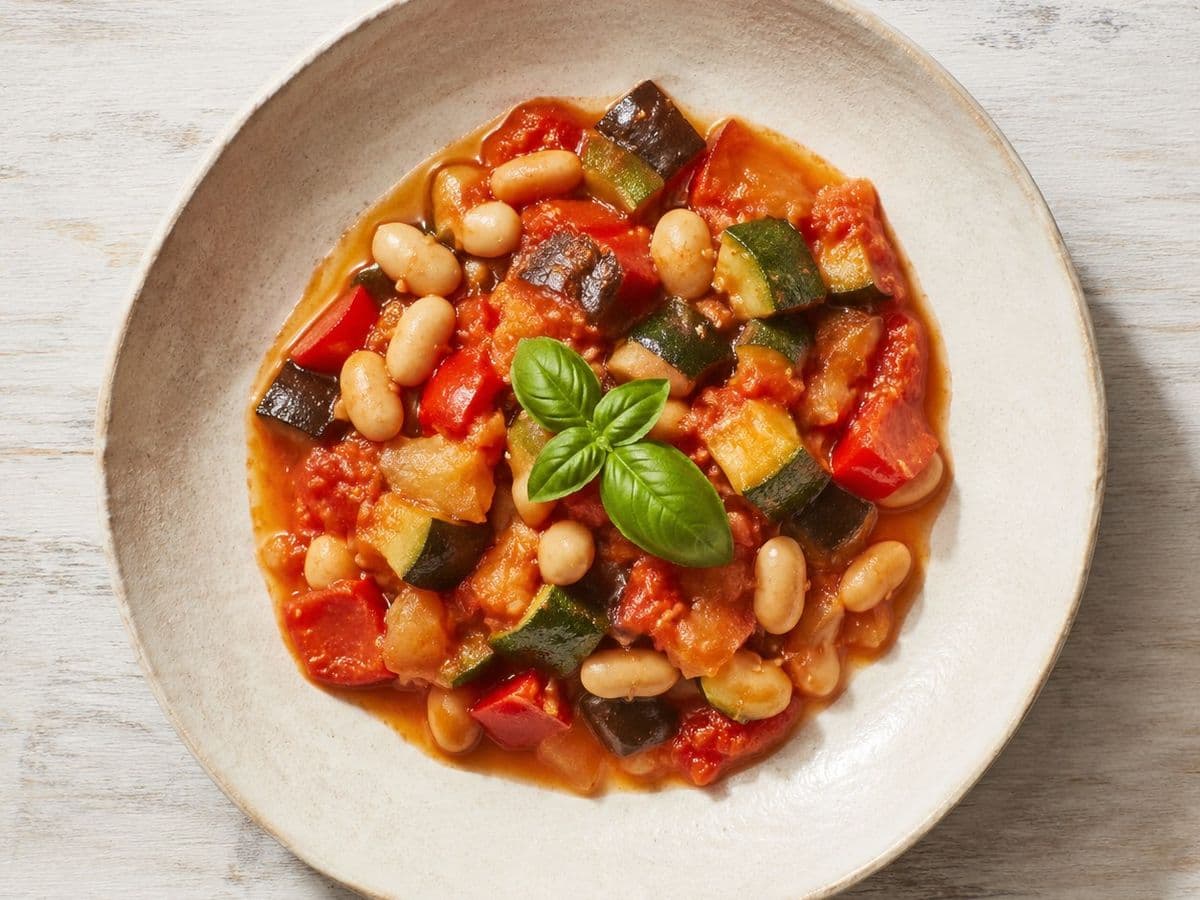
174 kcal a serving, against 196 for the traditional version. That is 22 kcal off, or 11%, with 8.4g of protein. Serves 4. 50 minutes.
What the traditional version is
Courgette, aubergine, red pepper and onion are chopped, then each is fried separately in plenty of olive oil, so every vegetable ends up soft, glossy and full of flavour. Tomatoes come in last, simmered to make a thick stew. Served warm or at room temperature, sometimes topped with a fried egg or a hunk of bread. It's a staple at Spanish family tables and best when you've made more than you need.
What changed, and what each change costs
Frying each vegetable in olive oil swapped for all-in-one stewing with minimal oil
Pisto's glory is the flavour each vegetable builds in hot oil - but you end up with a dish that's as much about the oil as the veg. Stewing in a covered pan brings the oil down to a splash and means you're eating vegetables, not just a delivery system for olive oil.
What it costs you. You lose the golden edges, the individual sweetness and richness that frying gives. Instead everything is a bit softer and more homogenous. If you're after toasted, caramelised bits, this isn't the one.
Aubergine and courgette held at their full quantity
It's tempting to drop the higher-calorie vegetables but then you don't get pisto, you get a tomato stew. The trick is to keep them, but cook them differently.
What it costs you. You keep all the classic veg, but their texture is less distinct. There's no browned edge, just soft cubes. On the upside, there are a lot fewer squabbles over who got the best caramelised bit - because there aren't any.
Extra protein from cannellini beans stirred in
There's usually not much protein in pisto, just vegetables and olive oil. A tin of cannellini beans bulks it up without stealing the spotlight.
What it costs you. Beans are mild enough to blend in, but a purist will notice. The texture isn't quite the same - it's heartier, and a little starchier. If you're up for something closer to a main course, this will do the trick.
Olive oil shrunk to just enough for flavour
50 grams is classic, but you won't taste pisto for hours after. Drop it to 12 grams and you still get a little richness, especially if you add it right at the end.
What it costs you. No gloss. This is honest vegetable stew territory: softer, fresher, less smouldering. Some will call it boiled. They're not wrong.
What goes in it
The ingredients, without the quantities. The weights are what the figures below are computed from, and they are in the book.
- Courgette
- Aubergine
- Red pepper
- Onion
- Ripe tomatoes
- Tinned cannellini beans
- Olive oil
- Garlic
- Salt
How it starts
- Put a big lidded pan over medium heat.
- Season with salt, cover the pan, and let everything sweat for 15 minutes.
- Once the vegetables are softening but not falling apart, lid off and tip in the chopped tomatoes.
The rest of the method, and every weight, is in Authentic-ish Spanish.
The numbers
| Per serving | Traditional | Lightened |
|---|---|---|
| Calories | 196 | 174 |
| Protein | 3.8g | 8.4g |
| Fat | 13.2g | 4.7g |
| Saturated fat | 1.9g | 0.7g |
| Carbohydrate | 19.3g | 28.8g |
| Protein per 100 kcal | 2g | 4.8g |
Every figure is computed from the recipe's own weighed ingredient list against public food composition databases. The appendix in Authentic-ish Spanish prints the exact database row used for each ingredient, so any number here can be checked. How every number is computed sets out the method.
The method is in the book
If you've had pisto the proper way, you'll notice what's missing. No fried aroma, no oil-glossed veg, and not a hint of caramelisation. In exchange, you get something lighter, fresher, and just shy of a main course thanks to the beans. I'd serve this to any friend who likes their vegetables softer and their cholesterol lower.
The quantities and the method for this dish are in Authentic-ish Spanish, along with 57 more. Buy the paperback
More from Authentic-ish Spanish
- Padron Peppers, 44 kcal a serving, 68% off
- Gazpacho, 155 kcal a serving, 47% off
- Escalivada, 158 kcal a serving, 36% off
- Salmorejo, 447 kcal a serving, 9% off
- Berenjenas Fritas con Miel, 160 kcal a serving, 46% off
- Pisto Manchego, 186 kcal a serving, 29% off
Every Spanish dish and its calories · Every dish in the series