British · Authentic-ish British
Pork Pie
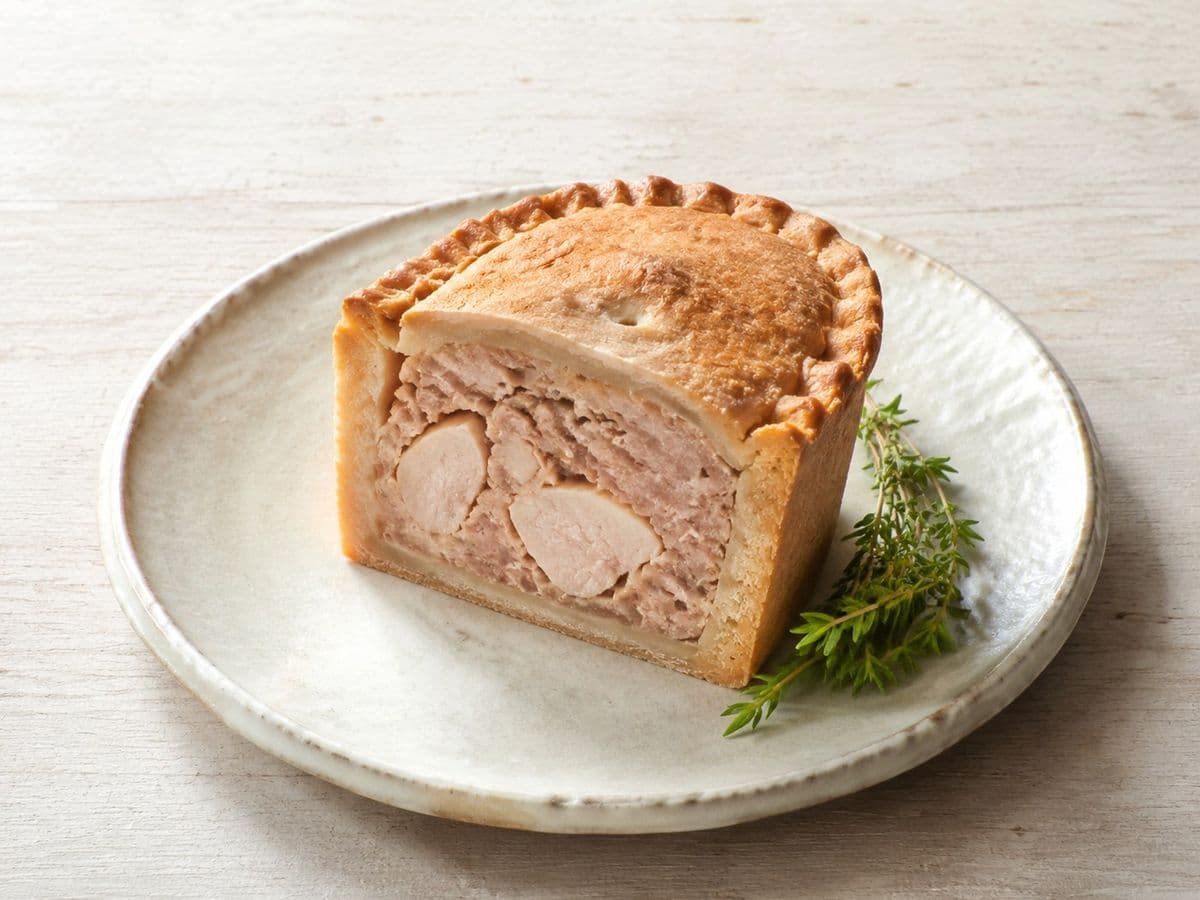
369 kcal a serving, against 551 for the traditional version. That is 182 kcal off, or 33%, with 19.2g of protein. Serves 8. 2 hours plus cooling.
What the traditional version is
The classic pork pie starts with a hot water crust: white flour mixed with boiling water, loads of lard, and salt, pressed into a mould while still warm. The filling is pork shoulder and belly, diced and heavily seasoned, sometimes with a bit of bacon, then packed in raw to cook inside the pastry. Once baked, you pour hot, gelatinous stock down a hole in the lid so it sets into wobbly, savoury jelly.
What changed, and what each change costs
Lard to half-and-half olive oil and semi-skimmed milk
Impossible to dodge all the fat here: lard sets the crust, gives it flavour, and stops it leaking. I swapped half the lard for olive oil and replaced the other half with enough semi-skimmed milk to get the dough workable. The crust is lighter but only just holds together. It's crumbly and patchy, not crisp and golden. If you try to use all oil or - please no - any kind of butter substitute, the whole thing falls apart.
What it costs you. You lose that robust snap and porky brown note. It's paler, tastes less of anything, and if you cut it too soon, it'll collapse. No lard, no structure. Don't pretend it's a proper pork pie - just call it pie with pork inside.
Pork shoulder with fat and bacon to lean pork shoulder and a hit of chicken breast
Most of the filling is fatty pork and bacon. Trim off the obvious outside fat, and blend in some finely chopped chicken breast to keep it moist without adding more fat. Not traditional, but it helps the pie hold its shape and raises the protein.
What it costs you. Of course, it's not as juicy. The chicken doesn't give the same sticky mouthfeel, and the pork loses its melting quality. Flavour's there with the right seasoning, but you don't get the porky hit that makes your fingers shiny.
Jelly from pork stock to chicken stock
Strong pork stock is classic, but chicken stock works and is usually less fatty. The texture's still there, but the flavour is milder.
What it costs you. You lose that slightly barnyard hit from boiling bones for hours. The jelly doesn't taste quite as deep. If you've always found the jelly a bit suspicious, you might even prefer it.
What goes in it
The ingredients, without the quantities. The weights are what the figures below are computed from, and they are in the book.
- Plain flour
- Olive oil
- Semi-skimmed milk
- Boiling water
- Salt
- Lean pork shoulder
- Chicken breast
- Black pepper
- Chicken stock
- Gelatine
How it starts
- Mix the flour and salt in a large bowl.
- Cut off a quarter of the dough for the lid.
- Chop the pork shoulder and chicken breast into small dice (about 1cm).
The rest of the method, and every weight, is in Authentic-ish British.
The numbers
| Per serving | Traditional | Lightened |
|---|---|---|
| Calories | 551 | 369 |
| Protein | 19.1g | 19.2g |
| Fat | 34.3g | 14g |
| Saturated fat | 12.8g | 2.6g |
| Carbohydrate | 39.5g | 40.1g |
| Protein per 100 kcal | 3.5g | 5.2g |
Every figure is computed from the recipe's own weighed ingredient list against public food composition databases. The appendix in Authentic-ish British prints the exact database row used for each ingredient, so any number here can be checked. How every number is computed sets out the method.
Allergens. gluten, milk.
The method is in the book
This isn't a Melton Mowbray and I won't pretend it is. The crust just can't deliver the same experience without lard - it's a supporting actor at best. The filling's protein is up, but the joy is down. A proper pork pie is the first thing you'd miss on a low-fat plan, and no "hack" changes that. Still, as a picnic centrepiece that won't put you into a food coma, it does the job. I'd rather admit up front: if you want the full porky thrill, this isn't it, it's a trade-off. But sometimes the numbers matter, and this pie lets you eat two slices without hiding the box.
The quantities and the method for this dish are in Authentic-ish British, along with 56 more. Buy the paperback
More from Authentic-ish British
- Shepherd's Pie, 386 kcal a serving, 54% off
- Steak and Ale Pie, 542 kcal a serving, 38% off
- Chicken and Mushroom Pie, 300 kcal a serving, 53% off
- Cheese and onion pie, 400 kcal a serving, 43% off
- Corned beef pie, 202 kcal a serving, 64% off
- Melton Mowbray pork pie, 427 kcal a serving, 31% off
Every British dish and its calories · Every dish in the series