British · Authentic-ish British
Classic Scones
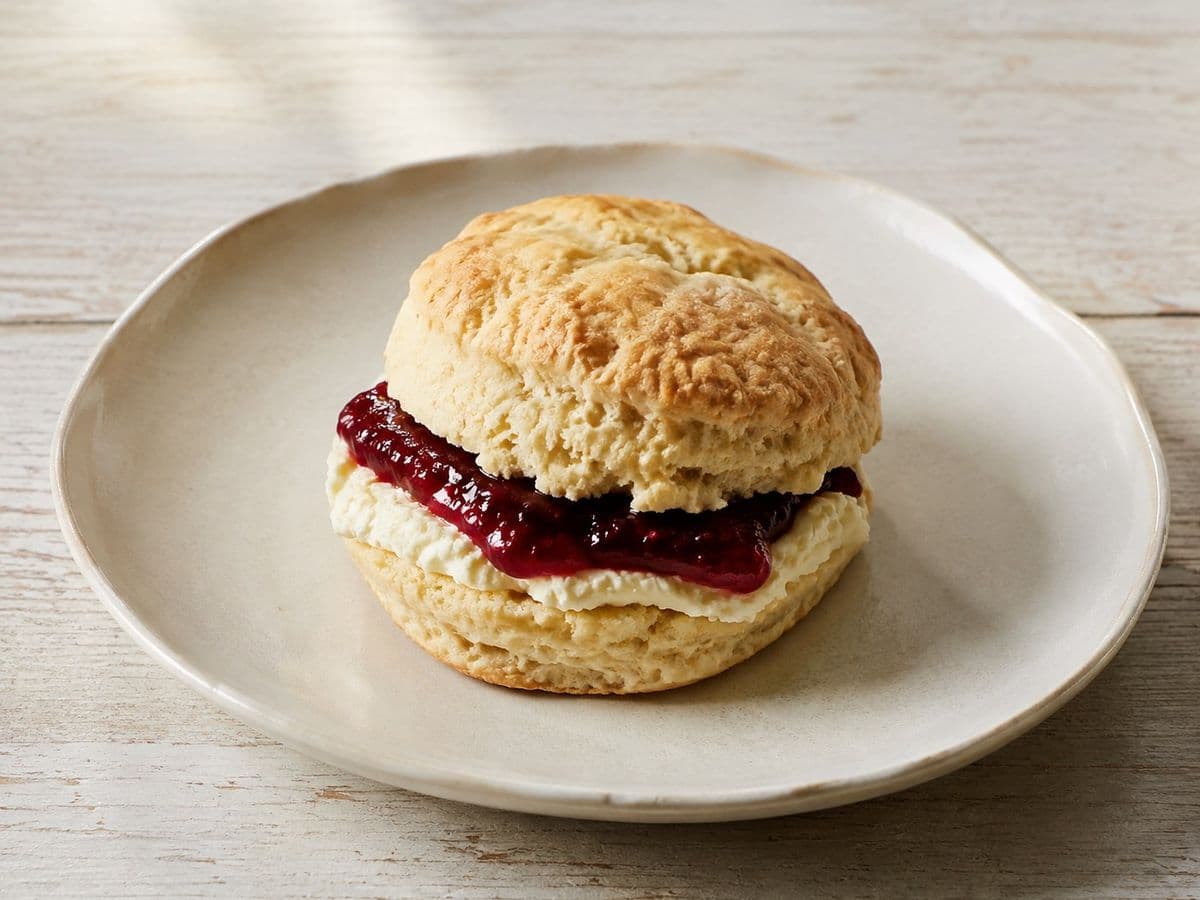
279 kcal a serving, against 369 for the traditional version. That is 90 kcal off, or 24%, with 8.2g of protein. Serves 8. 40 minutes.
What the traditional version is
Proper scones are a baker's handshake: plain flour cut through with cold butter, a little sugar, then brought together with milk and a touch of salt. Once baked, they're split open and topped with thick clotted cream (the more, the better) and a dab of jam. They're eaten warm, soft inside and a bit flaky, and they don't hang about on the table for long.
What changed, and what each change costs
Butter halved, replaced with a little ricotta
Butter brings that flaky soft crumb, but you can get some of the tenderness by using a mix of less butter and part-skimmed ricotta. It isn't alchemy, just damage limitation - saves you fat, adds a pinch of protein.
What it costs you. The texture goes from short and melt-in-the-mouth to a touch more bread-like. Eat them warm and you might forgive it. Cold, you'll remember what you're missing.
Clotted cream swapped for whipped ricotta
Clotted cream is all about decadence. Ricotta, whipped with a splash of milk and a touch of sugar, stands in without pretending to be cream. You actually get more protein - not that that's why you're here.
What it costs you. Ricotta's no rival to clotted cream. It doesn't have the sticky crust or the unctuous wobble. You get something lighter and less rich. It's not a cream tea, but it's nice enough if you haven't had the real thing in a while.
Whole milk to semi-skimmed
Cuts a bit more fat while keeping the dough soft. It does the job, but you lose a bit of richness at every step.
What it costs you. Nobody's ever eaten a scone and said, 'If only this tasted less like a treat.' With semi-skimmed, it's edging closer to a milk roll. Just don't serve it dry and you'll be fine.
Egg wash out, replaced with milk-only brush
Traditionally you glaze scones with beaten egg for a golden top. Brushing with milk gives you a bit less shine and colour but still helps the crust along, without using an extra egg.
What it costs you. The top's a paler shade of beige. It's not winning a village show, but neither's your cholesterol.
What goes in it
The ingredients, without the quantities. The weights are what the figures below are computed from, and they are in the book.
- Plain flour
- Cold unsalted butter
- Part-skimmed ricotta
- Caster sugar
- Semi-skimmed milk
- Salt
- Ricotta
- Jam
How it starts
- Heat your oven to 210C with the shelf in the top third.
- In a big bowl, rub the butter into the flour and salt with your fingertips until it's a bit like breadcrumbs.
- Pour in most of the milk and mix with a blunt knife until you've got a rough dough.
The rest of the method, and every weight, is in Authentic-ish British.
The numbers
| Per serving | Traditional | Lightened |
|---|---|---|
| Calories | 369 | 279 |
| Protein | 6.3g | 8.2g |
| Fat | 18.7g | 7.2g |
| Saturated fat | 11.4g | 4.3g |
| Carbohydrate | 44g | 44.9g |
| Protein per 100 kcal | 1.7g | 3g |
Every figure is computed from the recipe's own weighed ingredient list against public food composition databases. The appendix in Authentic-ish British prints the exact database row used for each ingredient, so any number here can be checked. How every number is computed sets out the method.
Allergens. gluten, milk.
The method is in the book
Can't lie to you - a scone without the butter and cream isn't bringing tears to anyone's eyes, unless they're remembering Devon in the rain. The breadiness is the first thing you notice, and the whipped ricotta is about as close to clotted cream as instant coffee is to a double espresso. That said, you get a warm, soft, and gently sweet scone, which makes a nice vehicle for jam. If what you're missing is the event of afternoon tea, you could do worse. If you're after the full cream tea experience, you know what you have to do: call this a warm-up, then go to Cornwall and do it properly.
The quantities and the method for this dish are in Authentic-ish British, along with 56 more. Buy the paperback
More from Authentic-ish British
- Victoria Sponge, 378 kcal a serving, 42% off
- Shortbread, 181 kcal a serving, 26% off
- Welsh cakes, 225 kcal a serving, 23% off
- Crumpets, 303 kcal a serving, 8% off
- Bara brith, 211 kcal a serving, 15% off
- Eccles Cakes, 332 kcal a serving, 10% off
Every British dish and its calories · Every dish in the series