British · Authentic-ish British
Roast pheasant
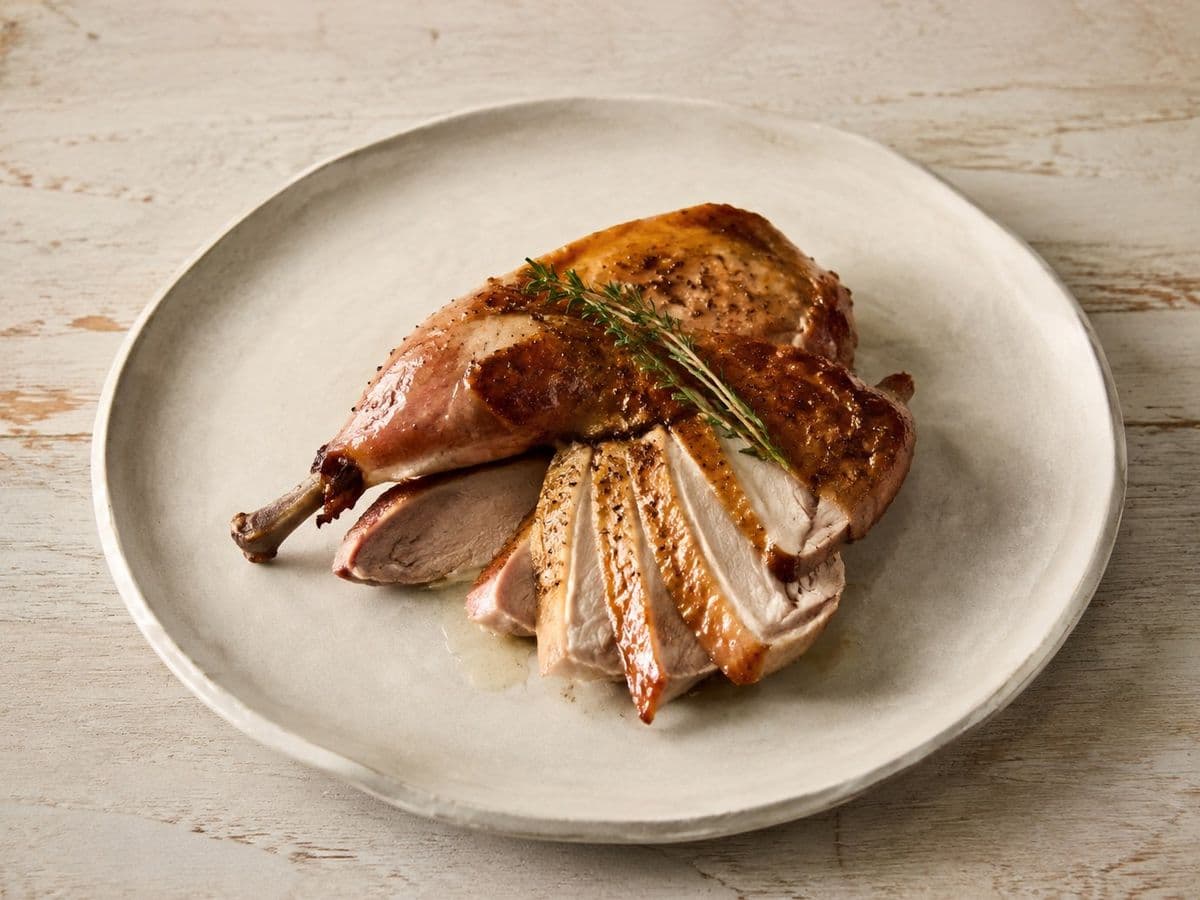
477 kcal a serving, against 678 for the traditional version. That is 201 kcal off, or 30%, with 83g of protein. Serves 2. 1 hour 30 minutes.
What the traditional version is
The classic approach: a whole pheasant, seasoned and stuffed with a bit of thyme and onion, then covered all over with rashers of streaky bacon. Into the roasting tin it goes, dotting plenty of butter on top and basting every 15 minutes. It's usually roasted gently, so the bacon bastes the breast and keeps it from drying out. The final bird is salty, rich and tear-apart tender - if you get it out of the oven before it's mummified.
What changed, and what each change costs
Bacon-wrapped to bacon-free, with brining
The bacon's there to keep the breast moist and add salt and smokiness. If you take it away, the bird dries out - unless you brine it first. Brining means the meat holds more water, so you can skip the bacon and still have a bird that's not fit for making bookmarks.
What it costs you. You lose that salty, porky layer and the aroma that fills the kitchen. The pheasant tastes more like, well, pheasant. It's not as rich or as forgiving. If bacon's your deal-breaker, you can always just make the classic version and run an extra lap.
Butter out, roast at high heat instead
Butter is for basting - keeping the breast from drying and adding flavour. Roasting quickly at a higher heat and resting the bird does more to save your dinner than another 20g of butter over the top.
What it costs you. The skin won't go as golden or as crisp, and you miss that buttery finish. Without the fat, the gravy's not as lush, but it does taste more of pheasant than congealed Christmas sandwich.
Aromatics tweaked: more thyme, less onion
Without bacon and butter to distract you, the aromatics in the cavity make more of a difference. Thyme gives the bird a grassy lift that stands out. Onion's there for steam and a bit of body, not sweetness.
What it costs you. You end up tasting the herbs and the actual bird, not just the bacon. That's either a feature or a bug, depending on your priorities.
What goes in it
The ingredients, without the quantities. The weights are what the figures below are computed from, and they are in the book.
- Whole pheasant
- Sea salt
- Water
- Fresh thyme sprigs
- Onion
- Black pepper
- Extra salt for seasoning
How it starts
- The night before, make a brine by dissolving 35g salt in 1.75 litres of cold water.
- On the day, heat your oven to 230C (fan 210C).
- Stuff the cavity with the quartered onion and the rest of the thyme.
The rest of the method, and every weight, is in Authentic-ish British.
The numbers
| Per serving | Traditional | Lightened |
|---|---|---|
| Calories | 678 | 477 |
| Protein | 90.7g | 83g |
| Fat | 31.7g | 12.9g |
| Saturated fat | 15.5g | 4.4g |
| Carbohydrate | 3.6g | 2.8g |
| Protein per 100 kcal | 13.4g | 17.4g |
Every figure is computed from the recipe's own weighed ingredient list against public food composition databases. The appendix in Authentic-ish British prints the exact database row used for each ingredient, so any number here can be checked. How every number is computed sets out the method.
The method is in the book
This version is about as forgiving as a tax return. If you get distracted, you'll have dry pheasant and moral superiority but little else. But if you brine the bird and keep the heat up, you'll get meat that's juicy without needing a duvet of bacon. The skin won't be as crisp, the gravy's lighter, and nobody will mistake it for the full-fat Sunday lunch of old. But here's the trade-off: the pheasant actually tastes of itself. If you're bored of everything tasting like bacon, you'll call this a win. If not, you'll probably want to sneak a rasher onto the side anyway. There's no shame in that.
The quantities and the method for this dish are in Authentic-ish British, along with 56 more. Buy the paperback
More from Authentic-ish British
- Roast Beef and Yorkshire Pudding, 560 kcal a serving, 35% off
- Roast Chicken with Stuffing, 1008 kcal a serving, 14% off
- Roast Pork with Crackling, 289 kcal a serving, 65% off
- Toad in the Hole, 373 kcal a serving, 38% off
- Roast Gammon, 431 kcal a serving, 41% off
- Roast Venison Haunch, 267 kcal a serving, 35% off
Every British dish and its calories · Every dish in the series