British · Authentic-ish British
Sausage and butterbean casserole
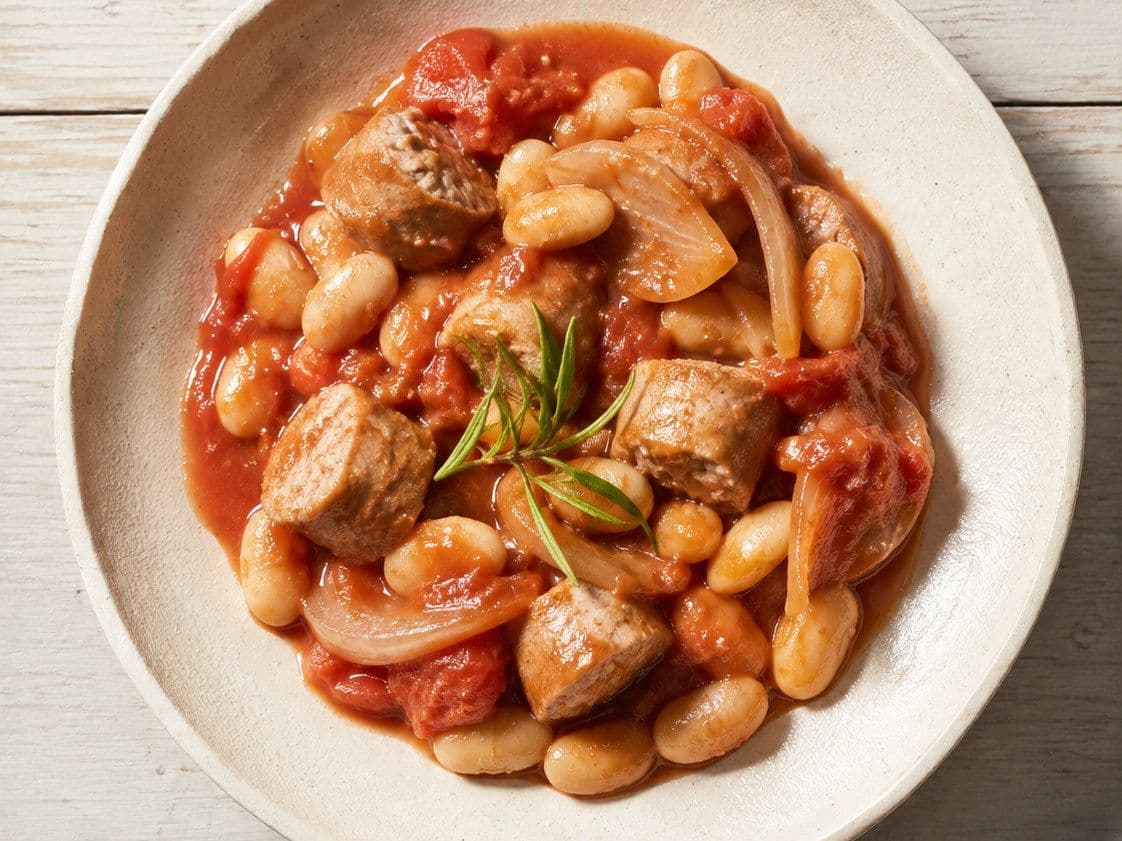
328 kcal a serving, against 470 for the traditional version. That is 142 kcal off, or 30%, with 22.9g of protein. Serves 4. 55 minutes.
What the traditional version is
The classic is a tray of proper pork sausages, big and fat, seared in a frying pan until golden, then dropped into a pot of onions, tomatoes and butterbeans. The sausage fat makes the sauce rich, and there's a bit of stock or wine for depth. It's all bubbled on the hob till thick, then served with mash or hunks of bread.
What changed, and what each change costs
Pork sausages to high-protein chicken sausages
Pork sausages are mostly fat and filler, even when you spring for the 'good' ones. Chicken sausages slash the fat and keep the protein high, provided you don't pick the ones that taste like reconstituted gym mat. Go for a decent brand with actual meat in it.
What it costs you. The sauce doesn't get that velvety gloss from rendered pork fat. You'll lose the sticky richness you remember, but you do get a cleaner, lighter tomato sauce. The chicken sausages aren't as juicy, and you'll notice it if you live for the banger.
Butterbeans increased and cannellini beans out
Doubling the butterbeans gives more bite and extra protein, making up for the missing sausage heft. Cannellini beans aren't traditional here anyway, but some tins sneak them in. All butterbeans keeps the bite.
What it costs you. More beans means a thicker, starchier sauce. You lose the variation, but you gain a bit of creaminess and filling power.
Olive oil halved
There's no point flooding a pan with oil if your chicken sausages aren't going to spit pork fat everywhere. You only need a slick to stop things catching.
What it costs you. You'll miss the glossy pools of orange oil floating on the finished dish, but not enough to add them back in.
Stock increased, wine dropped
A glug of white wine is classic, but it doesn't add much unless you're using pork sausages and want to deglaze the pan. Stock adds enough depth for everyday stews.
What it costs you. Less complexity in the sauce, unless you splash in a bit of vinegar at the end. If you want the wine, add it, but it won't rescue the lack of pork.
The numbers
| Per serving | Traditional | Lightened |
|---|---|---|
| Calories | 470 | 328 |
| Protein | 18.3g | 22.9g |
| Fat | 32.1g | 11.1g |
| Saturated fat | 10.2g | 2.8g |
| Carbohydrate | 29g | 36.2g |
| Protein per 100 kcal | 3.9g | 7g |
Every figure is computed from the recipe's own weighed ingredient list against public food composition databases. The appendix in Authentic-ish British prints the exact database row used for each ingredient, so any number here can be checked.
Allergens. celery, gluten, milk.
The method is in the book
Here's what you gain: loads of filling protein, a hearty stew, and less regret after a big second helping. Here's what you lose: that porky depth that makes you want to scrape up every last bit of sauce. The chicken sausages won't fool anyone in a blind taste test, and if you miss the sticky mouthfeel from pork fat, you're going to notice. But for a midweek meal that won't sink your plans, this holds its own. The beans give you enough bite, and the tomatoes keep the sauce bright. If you crave the full pub experience, have it with a beer and shut your eyes. It's not sausage casserole the way your nan did it, but it's a fair trade for the extra years you might get to complain about the weather.
The quantities and the method for this dish are in Authentic-ish British, along with 57 more. It is not out yet. The swap kit is free in the meantime.