Chinese · Authentic-ish Chinese
Steamed Pork Buns
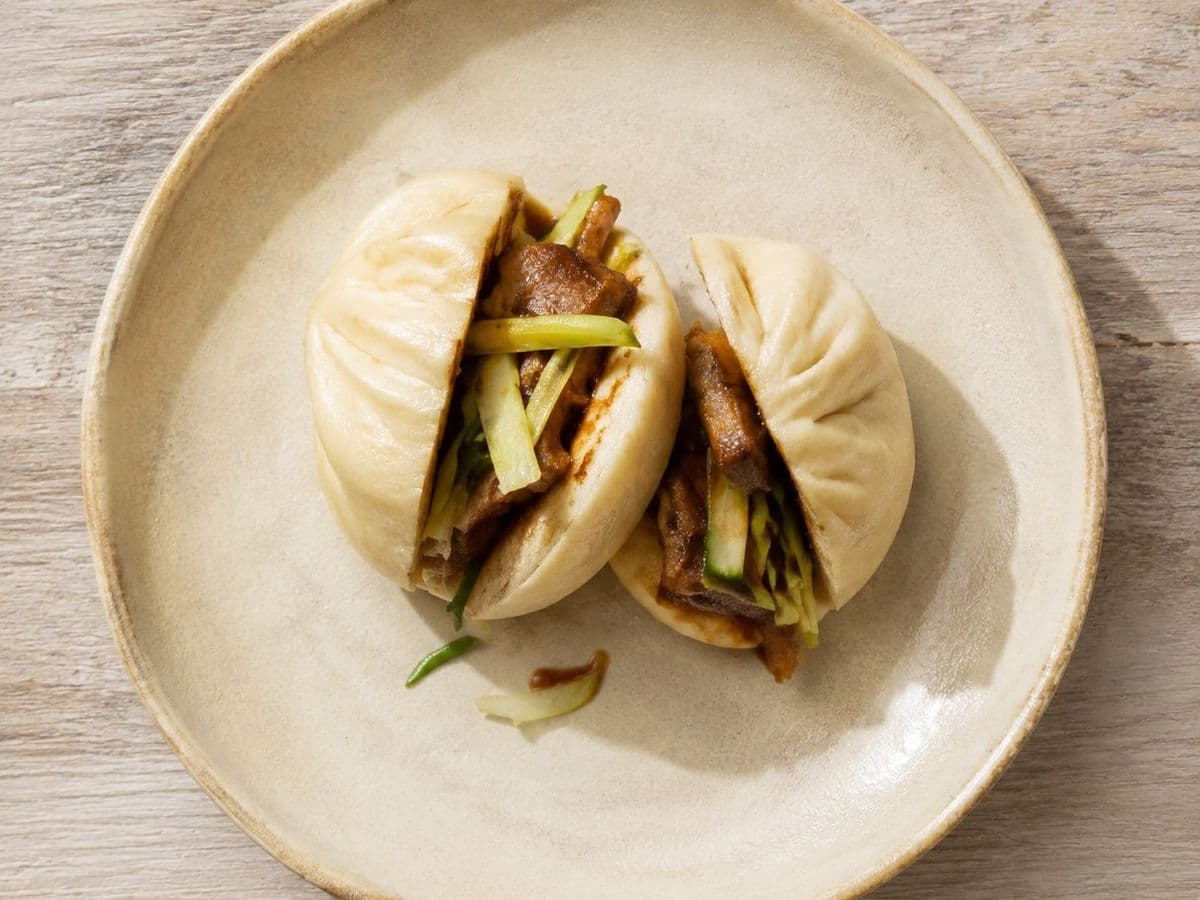
242 kcal a serving, against 370 for the traditional version. That is 128 kcal off, or 35%, with 16.7g of protein. Serves 8. 45 minutes.
What the traditional version is
A sweet, cake-like dough made with heavily milled flour, sugar and oil. The filling uses diced roasted pork shoulder with its thick fat cap intact, bound together by a sticky sauce of sugar, soy and hoisin.
What changed, and what each change costs
400g of fatty pork shoulder for 450g of lean pork loin
Pork shoulder brings melting fat that creates the signature jammy texture inside the bun. Swapping to loin drops the fat significantly while increasing the sheer amount of meat you get.
What it costs you. Lean loin bites back a bit more. A firmer chew, then. Not a rich, melting confit, and I'm not going to pretend otherwise. You lose that unctuous mouthfeel.
80g of sugar down to 20g
A traditional bun dough is essentially a pudding. Slashing the sugar brings the dough back into savoury territory and stops the sudden crash later.
What it costs you. The buns won't taste like dessert. The dough also ends up slightly less tender, as sugar acts as a structural tenderiser.
350g of plain flour down to 300g
You don't need a massive wall of bread hiding a tiny dot of filling. A thinner dough wall gives you a much better ratio of meat to bread.
What it costs you. You have less dough to stretch around the filling. Pleating the top without tearing the sides takes a bit more care.
What goes in it
The ingredients, without the quantities. The weights are what the figures below are computed from, and they are in the book.
- Pork loin
- Plain flour
- Caster sugar
- Baking powder
- Hoisin sauce
- Light soy sauce
- Toasted sesame oil
- Fresh ginger
- Garlic
- Spring onions
- Cornflour
How it starts
- Dice the pork loin into tiny 1cm cubes so they fit inside the buns easily.
- Heat a large non-stick frying pan over a high heat.
- Mix the hoisin, soy sauce, sesame oil, cornflour and 50ml of cold water in a jug.
The rest of the method, and every weight, is in Authentic-ish Chinese.
The numbers
| Per serving | Traditional | Lightened |
|---|---|---|
| Calories | 370 | 242 |
| Protein | 13.5g | 16.7g |
| Fat | 14g | 3.2g |
| Saturated fat | 3.7g | 0.8g |
| Carbohydrate | 46.6g | 35.3g |
| Protein per 100 kcal | 3.7g | 6.9g |
Every figure is computed from the recipe's own weighed ingredient list against public food composition databases. The appendix in Authentic-ish Chinese prints the exact database row used for each ingredient, so any number here can be checked. How every number is computed sets out the method.
Allergens. gluten, soybeans, sesame.
The method is in the book
These buns are structurally sound and packed with savoury flavour. The thinner dough means you hit the meat immediately, and the filling holds enough sticky sauce to feel absolutely right. They lack the blinding white, dessert-level sweetness of a bakery bao, but that trade gives you a dense, satisfying starter that won't leave you feeling sluggish.
The quantities and the method for this dish are in Authentic-ish Chinese, along with 55 more. Buy the paperback
More from Authentic-ish Chinese
- Salt and Pepper Squid, 208 kcal a serving, 51% off
- Jiaozi, 249 kcal a serving, 43% off
- Spring Rolls, 221 kcal a serving, 48% off
- Prawn Toast, 170 kcal a serving, 49% off
- Wor Tip, 325 kcal a serving, 38% off
- Sesame Prawn Balls, 171 kcal a serving, 70% off
Every Chinese dish and its calories · Every dish in the series