Chinese · Authentic-ish Chinese
Almond Tofu
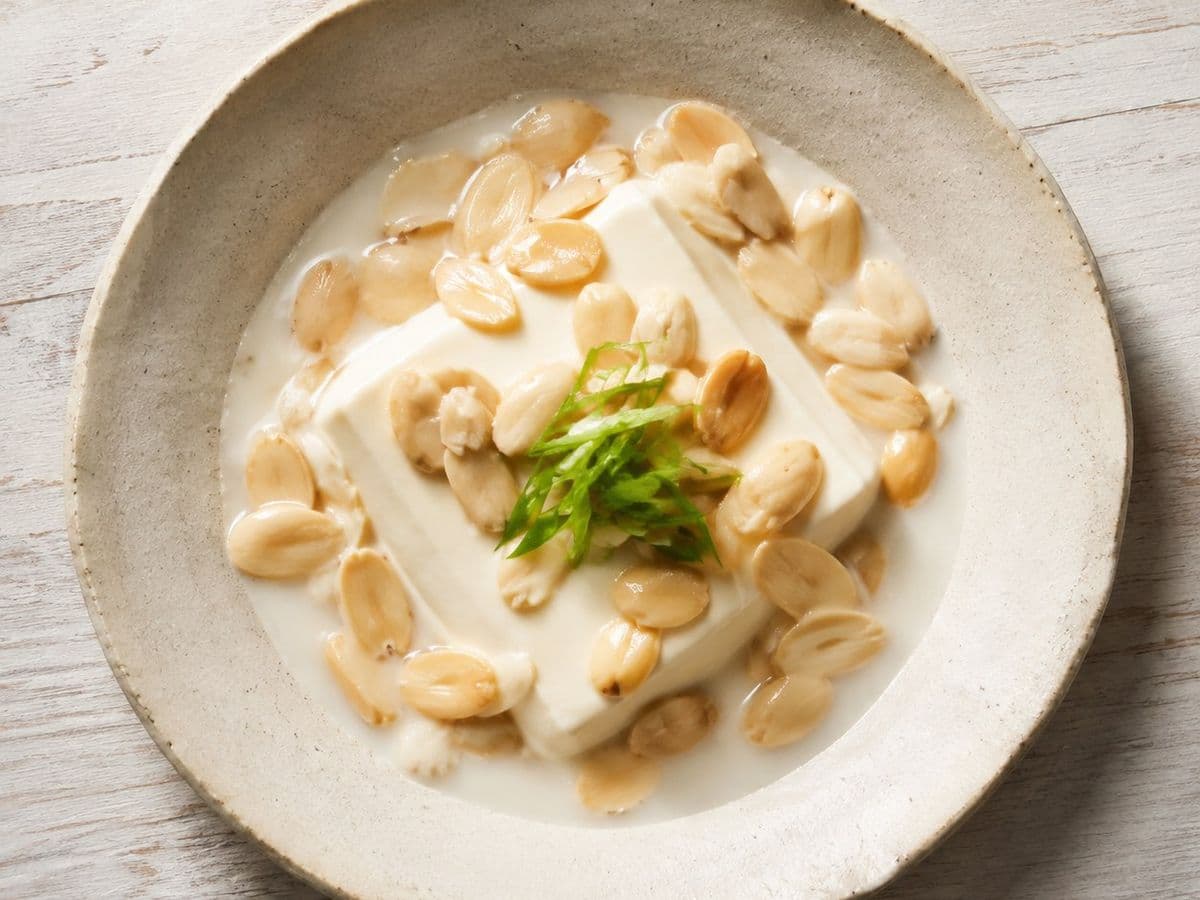
185 kcal a serving, against 466 for the traditional version. That is 281 kcal off, or 60%, with 9.7g of protein. Serves 6. 4 hours.
What the traditional version is
A rich mix of whole milk, double cream and crushed almonds, sweetened heavily with caster sugar. The mixture is heated to extract the nut flavour, strained, then set with agar or gelatine until firm. It's usually cut into diamonds and served swimming in an extra bowl of sugar syrup and tinned fruit.
What changed, and what each change costs
200g of blanched almonds and 150g of sugar down to 100g of almonds and 40g of sugar
Almonds bring incredible flavour but a massive amount of fat. Halving the nuts and dropping the sugar slashes the fat, letting the pure, clean almond taste come through without the cloying sweetness.
What it costs you. You lose the rich, milky opaqueness. This jelly sets slightly more translucent. A light palate cleanser, then. Not a thick, rich dessert, and I'm not going to pretend otherwise.
200g of double cream and 500g of whole milk for 600g of semi-skimmed milk
Cream makes the jelly heavy. Swapping to semi-skimmed milk keeps the fluid volume high so you still get a decent portion, but removes a staggering amount of dairy fat.
What it costs you. The mouthfeel is entirely different. Traditional almond tofu coats your tongue like melted ice cream. This dish is slippery and watery, breaking apart sharply in your mouth.
What goes in it
The ingredients, without the quantities. The weights are what the figures below are computed from, and they are in the book.
- Blanched almonds
- Semi-skimmed milk
- Caster sugar
- Gelatine
How it starts
- Put the blanched almonds into a large bowl and cover them with 400ml of boiling water.
- Tip the almonds and their soaking water into a blender.
- Pour the blended nut mixture through a fine sieve or a piece of muslin into a saucepan, pressing hard with the back of a spoon to extract every drop of liquid.
The rest of the method, and every weight, is in Authentic-ish Chinese.
The numbers
| Per serving | Traditional | Lightened |
|---|---|---|
| Calories | 466 | 185 |
| Protein | 12.8g | 9.7g |
| Fat | 32.2g | 10.7g |
| Saturated fat | 10.6g | 1.9g |
| Carbohydrate | 36.2g | 14.6g |
| Protein per 100 kcal | 2.8g | 5.2g |
Every figure is computed from the recipe's own weighed ingredient list against public food composition databases. The appendix in Authentic-ish Chinese prints the exact database row used for each ingredient, so any number here can be checked. How every number is computed sets out the method.
Allergens. milk, nuts.
The method is in the book
This is the first pudding in the book that feels completely different to the restaurant original. By stripping out the double cream and the syrup bath, you get a clean, sharp, wobbly jelly that tastes genuinely of fresh almonds. You do have to accept that it lacks that luxurious, fatty mouthfeel. The trade is simple. You give up the dense creaminess, and in return you lose a ridiculous amount of fat while keeping a decent hit of protein from the milk and gelatine. If you want a thick, dairy-heavy experience, go to a restaurant. If you want something cold, sweet and entirely sensible on a Tuesday night, make this.
The quantities and the method for this dish are in Authentic-ish Chinese, along with 55 more. Buy the paperback
More from Authentic-ish Chinese
- Wonton Soup, 363 kcal a serving, 19% off
- Hot and Sour Soup, 213 kcal a serving, 32% off
- Sweetcorn Soup, 281 kcal a serving, -7% off
- Wonton Noodle Soup, 470 kcal a serving, 39% off
- Steamed Egg Custard, 137 kcal a serving, 45% off
- Mango Pudding, 135 kcal a serving, 49% off
Every Chinese dish and its calories · Every dish in the series