Cypriot · Authentic-ish Cypriot
Pourgouri Pilafi
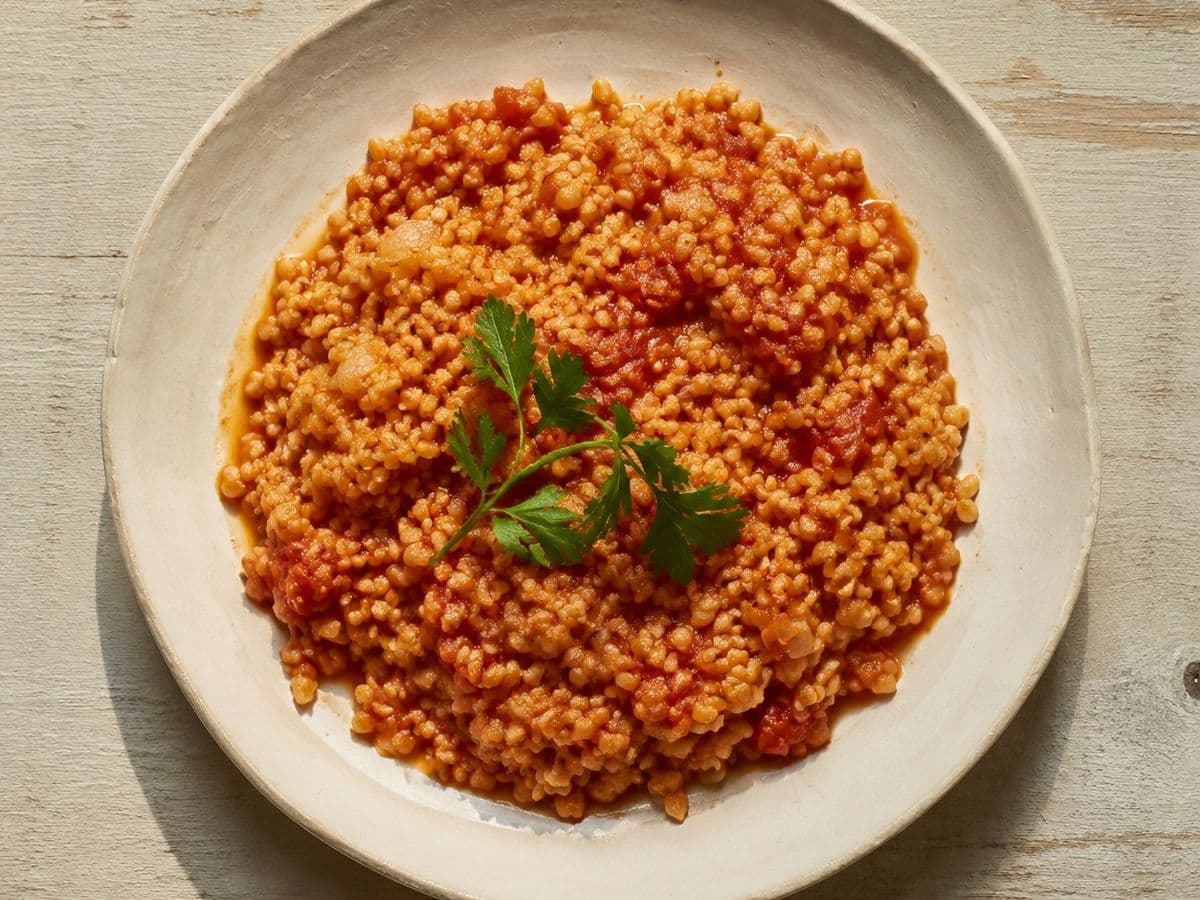
231 kcal a serving, against 283 for the traditional version. That is 52 kcal off, or 18%, with 8.1g of protein. Serves 6. 35 minutes.
What the traditional version is
The classic pourgouri pilafi is made by browning vermicelli noodles in olive oil or butter until they go golden and nutty, then adding bulgur wheat, onion, and fresh or tinned tomatoes. Some cooks add a cube of stock or a spoon of tomato puree. Water goes in, it all simmers until the bulgur is plump, and then it's finished with plenty of seasoning and parsley. The result is fragrant, gently oily and deeply moreish. It's mostly served as a side, but often eaten as a main too.
What changed, and what each change costs
Olive oil down from 35g to 10g
All the lovely browning on the vermicelli comes from a proper glug of oil. Problem is, 35g extra fat for a side is doing a lot of heavy lifting, and not in a good way. Cutting the oil to 10g still toasts the noodles enough for flavour, but you'll have to keep them moving so they don't catch.
What it costs you. The pilaf isn't as glossy or rich, and you lose a bit of that deep, savoury background. It's worth it if you're after a lighter bowl but if you're chasing the holiday memories, bring back a little more oil.
Vermicelli halved from 60g to 30g
Vermicelli in here is all about the toasty, chewy texture. By dropping half, you get most of that caramelised taste without bulking out the dish with pure starch.
What it costs you. It's obviously not as comforting, and the purists will miss the proper noodle-to-bulgur ratio. But the bulgur stands out more and you're not left scraping up sad little oily pasta bits that no one really wants.
Tomatoes-tinned increased from 400g to 500g
If you're losing oil and noodles, you want something else to perk it up. More tomato means a fresher, deeper flavour and an extra bit of body.
What it costs you. It's slightly more tangy than the norm. If you can't find decent tomatoes, don't bother - watery, tasteless tomato will just make a wet pilaf.
What goes in it
The ingredients, without the quantities. The weights are what the figures below are computed from, and they are in the book.
- Bulgur wheat
- Vermicelli pasta
- Olive oil
- Onion
- Tinned tomatoes
- Flat-leaf parsley
- Salt
- Black pepper
- Water
How it starts
- Break the vermicelli into short lengths - think about 2cm.
- Add the vermicelli and stir constantly for about 3 minutes.
- Throw in the finely chopped onion and cook for 4 minutes, until it goes soft.
The rest of the method, and every weight, is in Authentic-ish Cypriot.
The numbers
| Per serving | Traditional | Lightened |
|---|---|---|
| Calories | 283 | 231 |
| Protein | 8.5g | 8.1g |
| Fat | 6.8g | 2.5g |
| Saturated fat | 1g | 0.4g |
| Carbohydrate | 50.3g | 47.2g |
| Protein per 100 kcal | 3g | 3.5g |
Every figure is computed from the recipe's own weighed ingredient list against public food composition databases. The appendix in Authentic-ish Cypriot prints the exact database row used for each ingredient, so any number here can be checked. How every number is computed sets out the method.
Allergens. gluten.
The method is in the book
The two things you lose here are the deep oiliness and the full heavyweight comfort of a proper noodle-heavy pilaf. That's honesty for you. But the bulgur comes to the front, the tomato gives it backbone, and if you hit it with good parsley at the end, it's more than just a side. I'd say you wouldn't notice the missing fat after your third bite, but it isn't that kind of magic. It's just lighter, more protein in every mouthful, and still tastes like Cyprus. If you absolutely must have the original, you know what to do with the oil bottle.
The quantities and the method for this dish are in Authentic-ish Cypriot, along with 47 more. Buy the paperback
More from Authentic-ish Cypriot
- Fasolia Yiahni, 157 kcal a serving, 26% off
- Koukia, 523 kcal a serving, 14% off
- Anginares me Koukia, 215 kcal a serving, 36% off
- Tourlou, 198 kcal a serving, 21% off
- Kolokithakia Yemista, 177 kcal a serving, 56% off
- Salata Horiatiki Kypriaki, 170 kcal a serving, 41% off
Every Cypriot dish and its calories · Every dish in the series