German · Authentic-ish German
Fischbrötchen
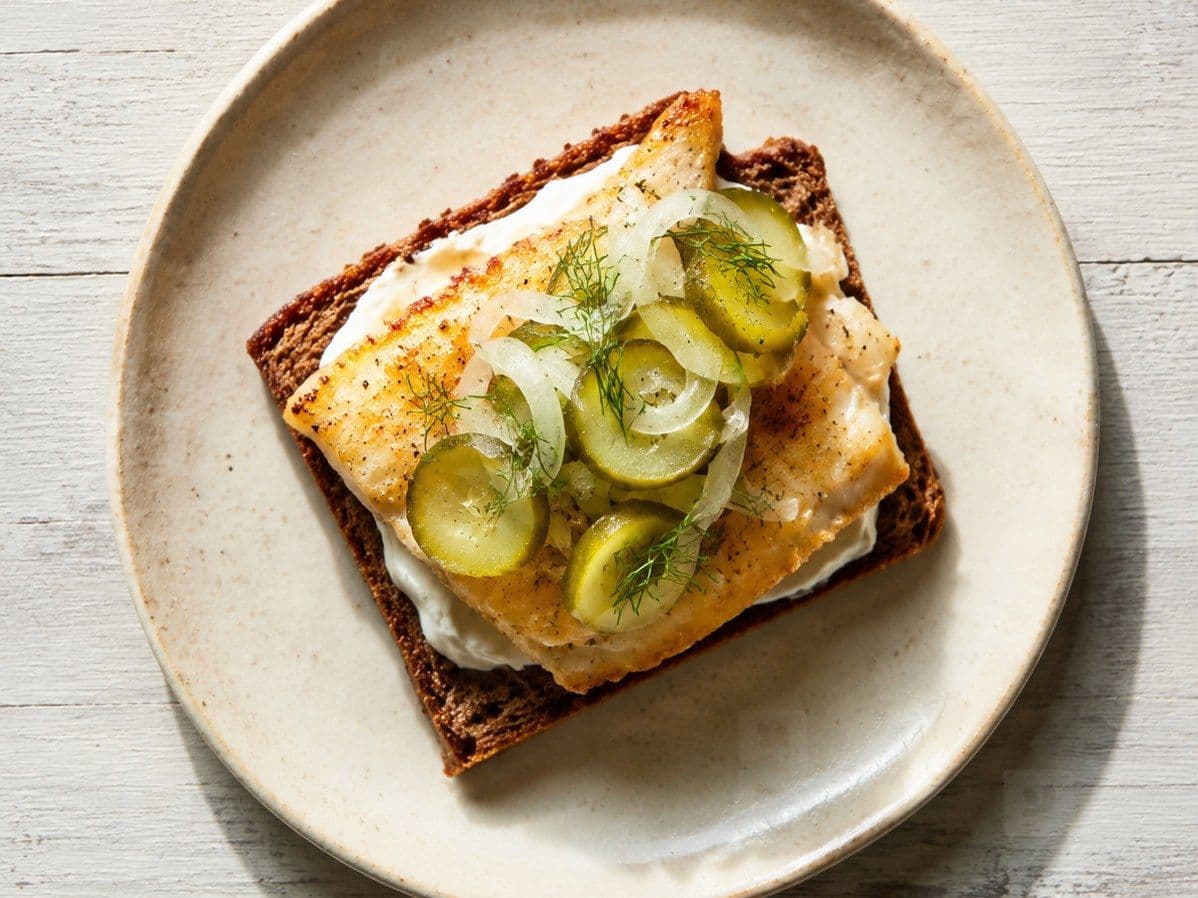
299 kcal a serving, against 542 for the traditional version. That is 243 kcal off, or 45%, with 24.9g of protein. Serves 4. 35 minutes.
What the traditional version is
Chewy white bread roll split open, stuffed with pickled herring fillets (or sometimes mackerel), raw onion rings, sliced gherkin, and a big dollop of remoulade. The remoulade is a mayonnaise with herbs, sometimes a bit of mustard. The whole thing is eaten standing up, washed down with beer, and usually leaves a slick of fat on your hands.
What changed, and what each change costs
Herring swapped for cod fillet, same weight (300g)
Herring is the traditional fish but it's as rich as it gets. Cod slashes the fat, bumps up the protein per calorie, and still works well with tangy things. It doesn't bring the same punch, but you won't have to wash your hands three times after eating.
What it costs you. You lose that deep, oily flavour and the chew of the herring. Cod is clean-tasting and a bit plain, so the sauce has to work harder. Anyone who grew up near the North Sea will notice. Sorry.
Mayonnaise-based remoulade out, quark and Dijon in (120g mayonnaise replaced by 120g quark plus extra Dijon and herbs)
The sauce is half the reason to eat this. Mayonnaise tastes like fat because it is fat - quark is fat-free and adds loads of protein. To stop it tasting like hospital pudding, I throw in a bit more mustard, parsley and black pepper.
What it costs you. What you've got is quark with ambition. Mayonnaise is a different dish and you know where to find it. The texture is thicker, but there's less richness and you don't get that glossy finish. If you want the real thing, use mayo and call this a treat.
Switch from white bread roll to rye bread (300g white bread to 300g rye bread)
White rolls in Germany are closer to baguette than to pre-sliced sandwich bread, but they're still just flour and air. Rye bread brings more chew, flavour and a better ratio of protein to calories. It's not traditional, but it's popular enough in the north that you won't get thrown off the quay for it.
What it costs you. You lose that soft, bouncy centre, and the sandwich is a bit sturdier. But the rye gives it backbone, and, frankly, doesn't fall to bits and smear fish down your shirt.
What goes in it
The ingredients, without the quantities. The weights are what the figures below are computed from, and they are in the book.
- Rye bread
- Cod fillet
- Quark
- Onion
- Gherkins
- Dijon mustard
- Flat-leaf parsley
- Black pepper
- Salt
- Lemon juice
How it starts
- Heat the oven to 200C.
- While the cod is baking, make the sauce.
- Slice the onions into thin rings and the gherkins into strips.
The rest of the method, and every weight, is in Authentic-ish German.
The numbers
| Per serving | Traditional | Lightened |
|---|---|---|
| Calories | 542 | 299 |
| Protein | 20.6g | 24.9g |
| Fat | 32.2g | 3.3g |
| Saturated fat | 5.7g | 0.6g |
| Carbohydrate | 41.4g | 41.9g |
| Protein per 100 kcal | 3.8g | 8.3g |
Every figure is computed from the recipe's own weighed ingredient list against public food composition databases. The appendix in Authentic-ish German prints the exact database row used for each ingredient, so any number here can be checked. How every number is computed sets out the method.
Allergens. gluten, fish, milk, mustard.
The method is in the book
If you want a real Fischbrötchen, you need herring and a kilo of mayonnaise. This one won't coat your lips in oil, but it's still satisfying - there's sharpness, salt, crunch and a decent smear of sauce. The rye bread keeps you honest, and the cod is gentle, not overwhelming. You do lose the deep hit of herring and the lushness of a proper mayo, but you gain a sandwich you can eat at lunch and not skip dinner. If anyone complains, remind them they can always use real mayo instead. Their waistline, their problem.
The quantities and the method for this dish are in Authentic-ish German, along with 54 more. Buy the paperback
More from Authentic-ish German
- Forelle Müllerin, 690 kcal a serving, 12% off
- Matjes, 400 kcal a serving, 29% off
- Backfisch, 272 kcal a serving, 50% off
- Labskaus, 496 kcal a serving, 17% off
- Schweinshaxe, 438 kcal a serving, 57% off
- Sauerbraten, 409 kcal a serving, 29% off
Every German dish and its calories · Every dish in the series