German · Authentic-ish German
Labskaus
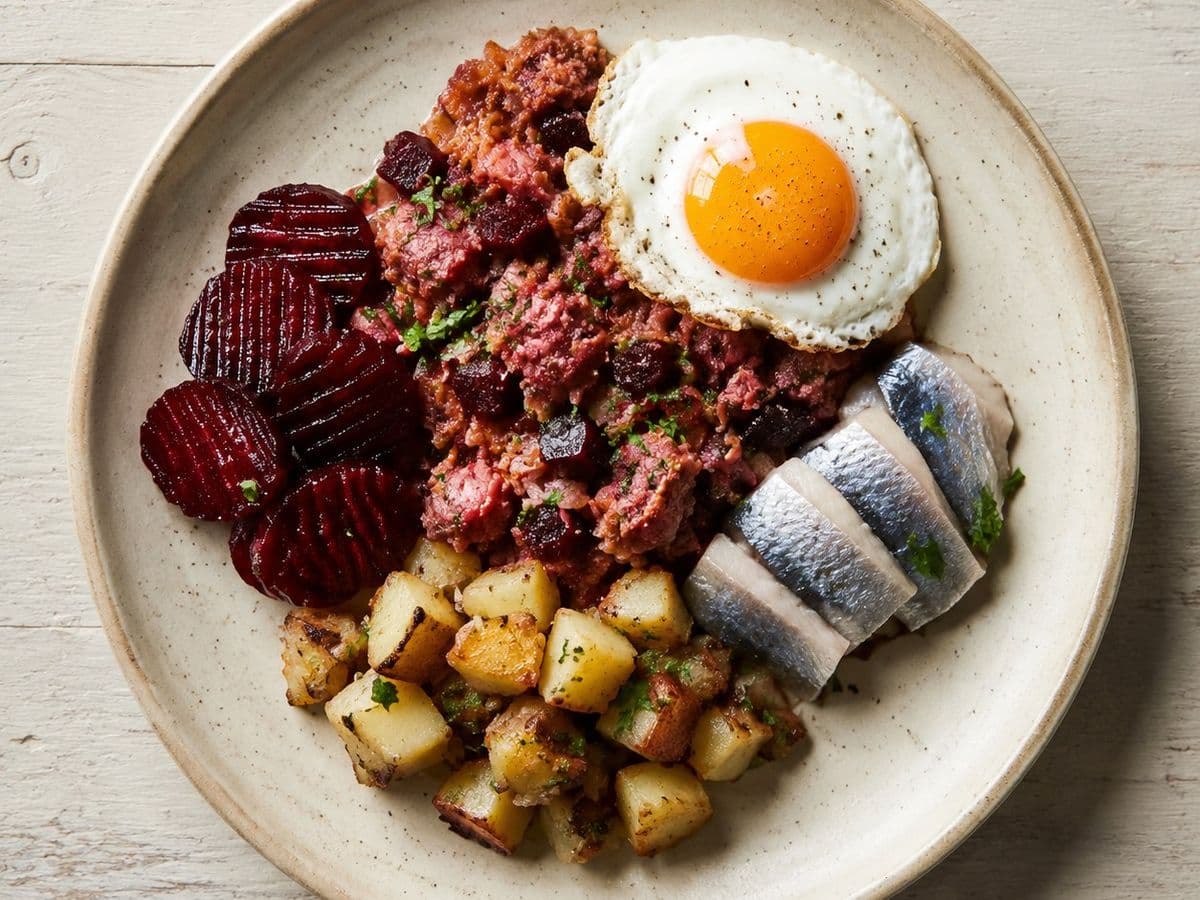
496 kcal a serving, against 600 for the traditional version. That is 104 kcal off, or 17%, with 41g of protein. Serves 4. 1 hour 30 minutes.
What the traditional version is
Labskaus is a sailor's hash made from tinned corned beef fried with onions, mashed with a load of buttery potato and pickled beetroot. It's served with a fried egg on top and a couple of brined herrings on the side. Occasionally you get some pickles too. It's salty, bracing, and not remotely photogenic.
What changed, and what each change costs
400g tinned corned beef to 400g lean beef brisket, cooked and shredded
Corned beef from a tin is cheap and easy but it brings a load of fat, often the type you don't want. Swapping it for brisket trimmed of fat, cooked until tender and shredded, drops the saturated fat without losing much protein.
What it costs you. Corned beef melts into the mash and gives Labskaus its signature texture and salty hit. Brisket is chunkier and needs a bit more seasoning, so you have to up the salt. If you're nostalgic for the tinned stuff, you'll miss it.
50g butter to 10g olive oil
Mashed potato doesn't need to be rich. Using just enough olive oil stops it going gluey and keeps the potato lively. You don't need a lot - just enough to carry the flavour.
What it costs you. You'll lose some of the creamy, fatty mouthfeel. The mash is a bit lighter, and the potato comes through more. Nobody will mistake it for buttery mash, but you also avoid the greasy lips.
Keep the herring and egg at the same weight but poach the egg instead of frying
Frying the egg in butter isn't honestly doing anything for you here. Poaching is cleaner, and you don't add more fat to a plate that's already quite salty. The herring is non-negotiable. You can't serve Labskaus without it.
What it costs you. A poached egg has a slightly softer feel, but it isn't a disaster. If you're the sort who can't eat a poached egg unless you post about it on Instagram, you can always fry it anyway and live with the consequences.
Add 200g extra beetroot
Boosting the beetroot means you can cut the potato without losing bulk. Beetroot brings more fibre and a bit of natural sweetness, which compensates for the lost fat.
What it costs you. You'll notice the mash is even pinker and a bit earthier. That's Labskaus for you - subtlety was never on the table.
800g potato to 500g potato
You don't need quite as much potato. Labskaus isn't supposed to be a solid wall of starch. More beetroot and lean beef mean you don't even miss it.
What it costs you. There's less stodginess, which is a win. The purists will moan, but show me a purist who eats this every week.
What goes in it
The ingredients, without the quantities. The weights are what the figures below are computed from, and they are in the book.
- Beef brisket
- Potato
- Olive oil
- Onion
- Beetroot
- Fresh sardines or herring
- Egg
- Salt
- Black pepper
How it starts
- First, cook the brisket.
- While that's going, peel and cut the potatoes into chunks.
- Chop the onions finely.
The rest of the method, and every weight, is in Authentic-ish German.
The numbers
| Per serving | Traditional | Lightened |
|---|---|---|
| Calories | 600 | 496 |
| Protein | 41.9g | 41g |
| Fat | 27.1g | 19.5g |
| Saturated fat | 11.6g | 5.6g |
| Carbohydrate | 46.9g | 38.6g |
| Protein per 100 kcal | 7g | 8.3g |
Every figure is computed from the recipe's own weighed ingredient list against public food composition databases. The appendix in Authentic-ish German prints the exact database row used for each ingredient, so any number here can be checked. How every number is computed sets out the method.
Allergens. fish, eggs.
The method is in the book
Labskaus looks like something you'd serve if you lost a bet, but it makes a surprisingly satisfying dinner. Swapping out tinned corned beef for lean brisket keeps the salty, beefy flavour and dials down the grease. More beetroot perks things up, and the mash is lighter but holds together. If anything, it feels closer to a proper meal than the traditional version, though you might get fewer funny looks if you eat it alone. It's still unmistakably Labskaus: pink, hearty, and not even pretending to be elegant.
The quantities and the method for this dish are in Authentic-ish German, along with 54 more. Buy the paperback
More from Authentic-ish German
- Forelle Müllerin, 690 kcal a serving, 12% off
- Matjes, 400 kcal a serving, 29% off
- Fischbrötchen, 299 kcal a serving, 45% off
- Backfisch, 272 kcal a serving, 50% off
- Schweinshaxe, 438 kcal a serving, 57% off
- Sauerbraten, 409 kcal a serving, 29% off
Every German dish and its calories · Every dish in the series