Japanese · Authentic-ish Japanese
Yakitori Momo
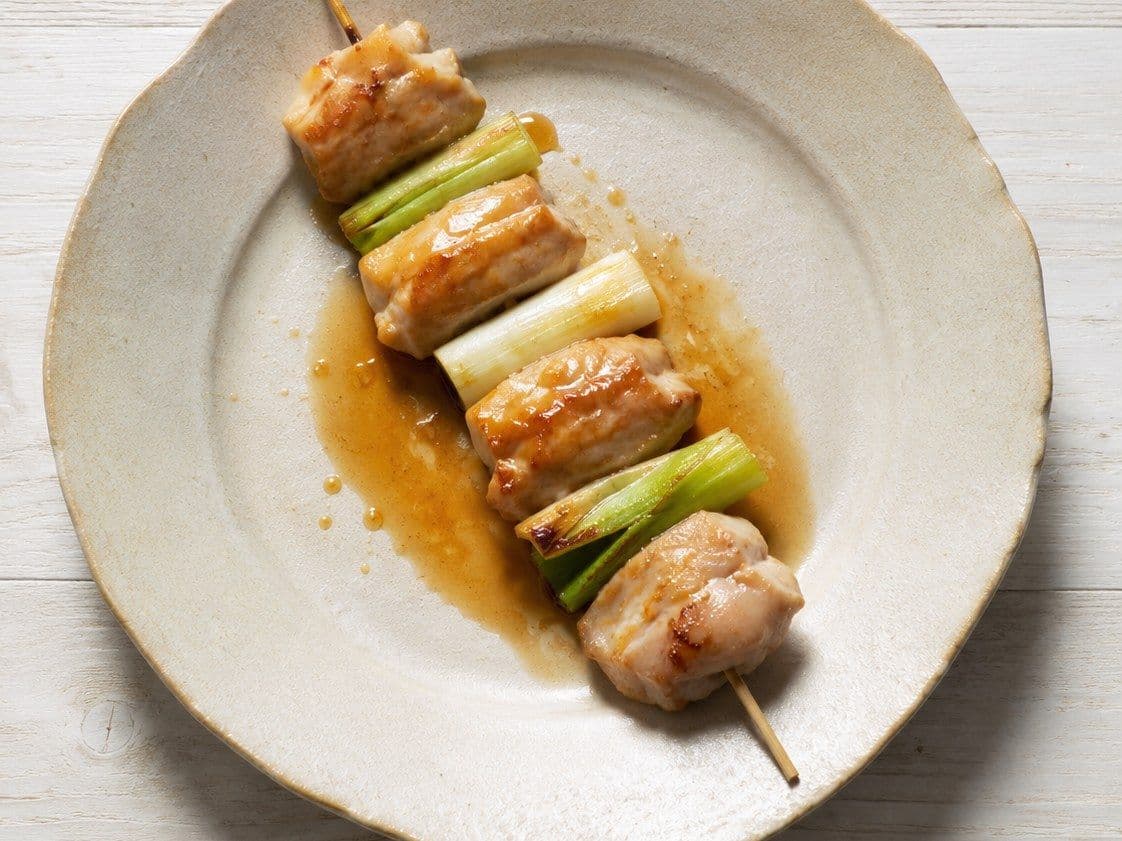
268 kcal a serving, against 470 for the traditional version. That is 202 kcal off, or 43%, with 33.9g of protein. Serves 4. .
What the traditional version is
Chicken thighs, skin-on, are cut into chunks and skewered onto bamboo sticks, alternating with spring onion. The skewers are grilled over charcoal, basted repeatedly with tare sauce (a sweet mix of soy sauce, mirin, sake and sugar) until glossy and crisp. Usually served hot off the grill with more tare for dipping and a raw spring onion garnish.
What changed, and what each change costs
Skin-on thigh for skinless thigh
Fat hides in the skin. You get a leaner, higher-protein bite using skinless thigh, but you'll need to watch the grill - there's nothing basting the meat as you go.
What it costs you. You lose that sticky, glistening finish and some of the richness, because the skin's the first thing to crisp up and drip flavour everywhere.
Tare sauce sugar cut by half
Tare needs sugar for that lacquered finish, but you can get by with less. Halving it won't save you from yourself, but it means the sauce is sweet, not sickly.
What it costs you. The glaze is thinner and doesn't set quite as glassy. You can brush on a second coat if you like, but don't expect that fairground toffee crackle.
Mirin trimmed down, sake left for aroma
Mirin is basically syrup with a badge. Less of it means less sugar overall, but you want to keep that slightly boozy note. Sake stays in. You'll barely miss the extra mirin unless you're a tare obsessive.
What it costs you. Lose a little depth and stickiness, but the sauce still works. If you want the real deal, double the mirin and don't blame me.
Everything else left alone
If you start taking away soy, you aren't making yakitori, you're grilling chicken. Spring onions stay - they're half the point.
What it costs you. No real loss. If you want to add more, go for it. It isn't traditional, but who's going to stop you?
What goes in it
The ingredients, without the quantities. The weights are what the figures below are computed from, and they are in the book.
- Chicken thighs
- Spring onions
- Soy sauce
- Mirin
- Sake
- Caster sugar
How it starts
- Soak wooden skewers in water for at least 30 minutes, or they turn into kindling.
- Cut the chicken thighs into bite-sized chunks - about 3-4 cm - aiming for even pieces.
- Slice the spring onions into 3 cm chunks.
The rest of the method, and every weight, is in Authentic-ish Japanese.
The numbers
| Per serving | Traditional | Lightened |
|---|---|---|
| Calories | 470 | 268 |
| Protein | 28.9g | 33.9g |
| Fat | 26.8g | 6.8g |
| Saturated fat | 7.3g | 1.8g |
| Carbohydrate | 23.1g | 12.9g |
| Protein per 100 kcal | 6.1g | 12.6g |
Every figure is computed from the recipe's own weighed ingredient list against public food composition databases. The appendix in Authentic-ish Japanese prints the exact database row used for each ingredient, so any number here can be checked. How every number is computed sets out the method.
Allergens. gluten, soybeans.
The method is in the book
The truth: skinless yakitori is chicken with a suntan. You get all the flavour of the grill, a proper hit from the tare, and lovely charred spring onion, but it's a leaner affair. The missing skin means you lose some of that dripping, sticky lacquer, and the thinner glaze is never going to fool anyone who grew up on the real thing. Still, it's moreish, properly savoury, and you can eat two more sticks before you start to notice.
The quantities and the method for this dish are in Authentic-ish Japanese, along with 48 more. Buy the paperback
More from Authentic-ish Japanese
- Yakitori Negima, 234 kcal a serving, 34% off
- Tsukune, 296 kcal a serving, 20% off
- Teriyaki Salmon, 541 kcal a serving, 26% off
- Buta no Shogayaki, 441 kcal a serving, 36% off
- Gyoza, 256 kcal a serving, 25% off
- Chicken Katsu, 502 kcal a serving, 41% off
Every Japanese dish and its calories · Every dish in the series