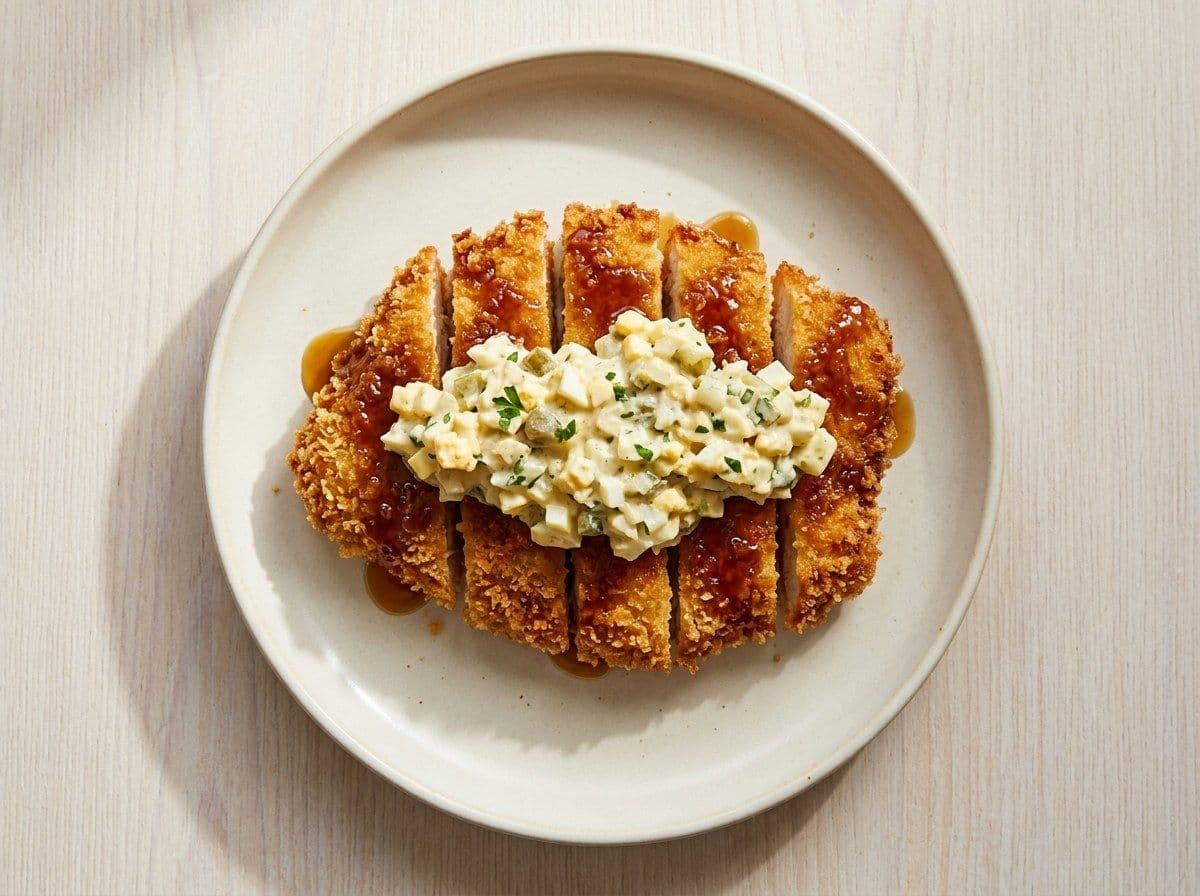
Katsudon, Karaage and 47 more Japanese classics, with the calories cut and the protein kept. 34% fewer calories on average, and every change costed.
Buy the paperbackKindle edition
What's in it
| Recipes | Chapters | Average calorie saving | Dishes rejected |
|---|---|---|---|
| 49 | 8 | 32% | 11 |
Every dish, and what came off it
Each figure is per serving, computed from the ingredient list. The traditional column is the real dish, not a strawman: it's costed from its own ingredient list so the saving is a measurement rather than a claim.
| Dish | Chapter | Traditional | This version | Saving | Protein |
|---|---|---|---|---|---|
| Chicken Katsu | fried | 857 kcal | 502 kcal | 41% | 37.3g |
| Tonkatsu | fried | 885 kcal | 430 kcal | 51% | 34.6g |
| Ebi Fry | fried | 457 kcal | 332 kcal | 27% | 35.4g |
| Tempura Moriawase | fried | 488 kcal | 245 kcal | 50% | 22.2g |
| Korokke | fried | 616 kcal | 281 kcal | 54% | 19g |
| Karaage | fried | 591 kcal | 291 kcal | 51% | 30.7g |
| Gyudon | rice | 1109 kcal | 750 kcal | 32% | 40.2g |
| Oyakodon | rice | 927 kcal | 711 kcal | 23% | 35.9g |
| Katsudon | rice | 909 kcal | 638 kcal | 30% | 50g |
| Chahan | rice | 771 kcal | 486 kcal | 37% | 21.2g |
| Onigiri | rice | 439 kcal | 319 kcal | 27% | 15.5g |
| Omurice | rice | 1134 kcal | 726 kcal | 36% | 42.4g |
| Tamago Kake Gohan | rice | 618 kcal | 389 kcal | 37% | 15.7g |
| Ramen, Tonkotsu | noodles | 1141 kcal | 651 kcal | 43% | 61.8g |
| Ramen, Shoyu | noodles | 966 kcal | 698 kcal | 28% | 67.4g |
| Ramen, Miso | noodles | 813 kcal | 622 kcal | 23% | 49.1g |
| Tsukemen | noodles | 1180 kcal | 786 kcal | 33% | 60.7g |
| Yakisoba | noodles | 594 kcal | 409 kcal | 31% | 23.1g |
| Zaru Soba | noodles | 335 kcal | 287 kcal | 14% | 21g |
| Kitsune Udon | noodles | 554 kcal | 422 kcal | 24% | 26.8g |
| Nabeyaki Udon | noodles | 973 kcal | 608 kcal | 38% | 48.5g |
| Yakitori Momo | grill | 470 kcal | 268 kcal | 43% | 33.9g |
| Yakitori Negima | grill | 355 kcal | 234 kcal | 34% | 29.6g |
| Tsukune | grill | 368 kcal | 296 kcal | 20% | 31.7g |
| Teriyaki Salmon | grill | 732 kcal | 541 kcal | 26% | 39.5g |
| Buta no Shogayaki | grill | 690 kcal | 441 kcal | 36% | 33.4g |
| Gyoza | grill | 343 kcal | 256 kcal | 25% | 16.1g |
| Nikujaga | simmered | 435 kcal | 378 kcal | 13% | 28.4g |
| Buta no Kakuni | simmered | 739 kcal | 461 kcal | 38% | 54.2g |
| Chikuzenni | simmered | 405 kcal | 285 kcal | 30% | 24.9g |
| Saba no Misoni | simmered | 723 kcal | 646 kcal | 11% | 37.6g |
| Oden | simmered | 422 kcal | 356 kcal | 16% | 42.3g |
| Sukiyaki | simmered | 649 kcal | 494 kcal | 24% | 47.6g |
| Shabu Shabu | simmered | 737 kcal | 518 kcal | 30% | 44.5g |
| Miso Shiru | soup | 95 kcal | 82 kcal | 14% | 8.7g |
| Tonjiru | soup | 241 kcal | 219 kcal | 9% | 27g |
| Goma-ae | vegetables | 117 kcal | 84 kcal | 28% | 6.2g |
| Kinpira Gobo | vegetables | 157 kcal | 100 kcal | 36% | 4.2g |
| Nasu Dengaku | vegetables | 320 kcal | 152 kcal | 52% | 5g |
| Japanese Potato Salad | vegetables | 445 kcal | 247 kcal | 44% | 13.3g |
| Okonomiyaki | fried | 636 kcal | 364 kcal | 43% | 22.2g |
| Takoyaki | fried | 367 kcal | 230 kcal | 37% | 21.6g |
| Chicken Nanban | fried | 926 kcal | 419 kcal | 55% | 45.2g |
| Curry Rice | rice | 807 kcal | 504 kcal | 38% | 32.1g |
| Hayashi Rice | rice | 625 kcal | 443 kcal | 29% | 28.6g |
| Dorayaki | pudding | 455 kcal | 362 kcal | 20% | 18.4g |
| Matcha Cheesecake | pudding | 537 kcal | 318 kcal | 41% | 12.8g |
| Anmitsu | pudding | 261 kcal | 184 kcal | 30% | 9.9g |
| Mochi | pudding | 351 kcal | 272 kcal | 23% | 8.7g |
The ones I wouldn't touch
Dishes drafted for this book that didn't survive. If every dish survived lightening, that chapter would be a marketing device and you should trust none of the rest. Why some dishes cannot be lightened goes through the reasoning.
Yakitori Kawa
Yakitori kawa is literally just grilled chicken skin and sauce. There's nothing left if I swap out the skin, so you can't lighten it without serving a stick of nothing.
Salt Grilled Mackerel, Shioyaki
I can't make shioyaki "lighter" in any honest way. If you cut the portion, you cut the protein. If you swap out the mackerel fat, you lose the entire point, plus half the taste. There's nothing here I can do that's not an insult to both the fish and the eater. This is already as high-protein and "lean" as this kind of food needs to get.
Kabocha no Nimono
Kabocha no nimono is squash simmered in dashi, soy, mirin and sugar. Cutting the sugar works and takes it to 183 kcal. Then I put chicken in to hold the protein for the calories up and it went to 246, which is heavier than where it started. Choose one: a lighter side dish with the sugar cut, or a main course. It cannot be both, so the sugar cut is written into the swap kit and the dish stays here.
Chawanmushi
Chawanmushi is dashi set with egg, at 145 kcal. I got it to 140, which is 3% and not worth printing as a recipe. The custard is already mostly stock. It is here as a dish that needs nothing rather than one that defeated me.
Dashi
Dashi is water, a strip of kelp and a handful of dried fish shavings, strained. A bowl of it is 13 kcal. There is nothing in here to take out, and every version I tried came back at exactly the same number because I was subtracting from nothing. It is in this chapter because it is the base of half the book and it deserves saying plainly: dashi is already free.
Suimono
Suimono is dashi with something small floating in it. The whole dish is 101 kcal a bowl. I added prawn to lift the protein and made it heavier, which is the honest outcome and not a recipe. Leave it exactly as it is.
Hiyayakko
Hiyayakko is a block of cold tofu with ginger and spring onion on it, at 108 kcal. The only way I made it better was by putting more tofu on the plate, which is a bigger dish rather than a lighter one. It needs nothing from me.
Agedashi Tofu
Agedashi tofu is a good example of what counting the oil honestly does to a book. Weigh the whole pan and it looks like a heavy dish that badly needs rescuing. Weigh only the fat the tofu actually takes up, which is what this book does, and a serving is 264 kcal and there is almost nothing to remove. What my version does do is raise the protein per 100 kcal from 3.1 to 7.9, by using firm tofu instead of silken and cutting the sugar in the broth. That is a real improvement and it is not a calorie saving, so it does not get to be a recipe. Use firm tofu, cut the mirin by a third, and fry it in a small pan.
Sunomono
Sunomono is cucumber, rice vinegar and a pinch of sugar, at 47 kcal a serving. Adding crab or prawn to raise the protein doubles it. That is a nicer starter and a worse answer to the question this book asks, so it stays where it is.
Tsukemono
Tsukemono is vegetables in salt. A serving is 41 kcal. Every attempt to give the pickle dish a job beyond being a pickle made it heavier, and pickles do not need a job. This is a method rather than a recipe, so the method is here and the arithmetic is left alone.
Edamame
Edamame is boiled soybeans in the pod with salt on them, at 109 kcal a serving and 11g of protein. It came out of every pass at exactly the same number, because there is nothing in it but the bean. The best snack in this book needed no work at all.
Where the numbers come from
- FoodData Central, SR Legacy Release (April 2018). U.S. Department of Agriculture, Agricultural Research Service. Public domain (U.S. Government work).
- McCance & Widdowson's Composition of Foods Integrated Dataset (CoFID) 2021. Public Health England / Office for Health Improvement and Disparities. Open Government Licence v3.0.
- FoodData Central, Branded Foods (October 2024 release). U.S. Department of Agriculture, Agricultural Research Service. Public domain (U.S. Government work).
Retrieved 2026-08-21. Nothing in these books is dietary or medical advice. Danny Vale is a cook.