Jewish · Authentic-ish Jewish
Pickled Herring
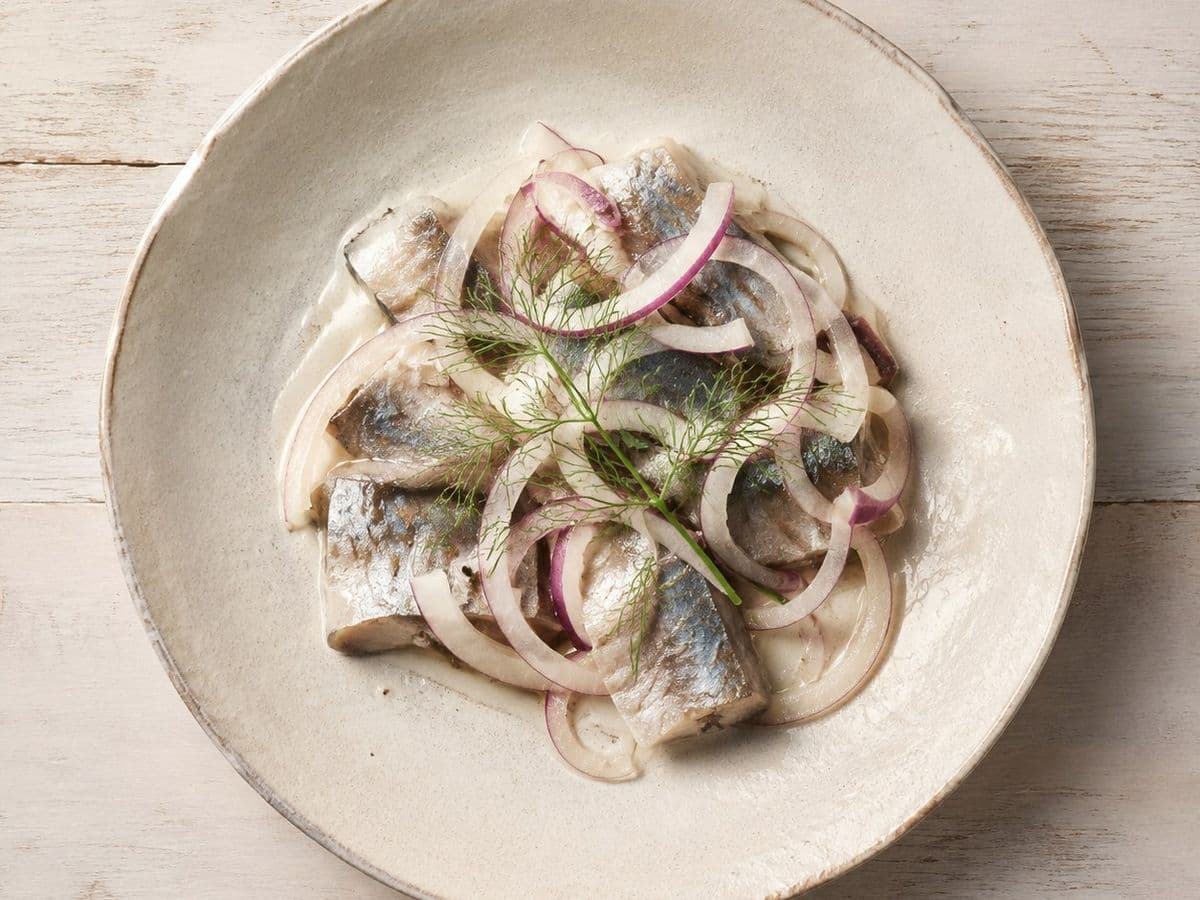
220 kcal a serving, against 326 for the traditional version. That is 106 kcal off, or 33%, with 21.7g of protein. Serves 6. .
What the traditional version is
Plump, oily herring fillets, sprinkled with salt and left overnight, then packed into jars with onion, black peppercorns, bay leaves and a hearty slick of sugar. The fish is submerged in boiling vinegar syrup and left a few days to soften, sweeten and take up the familiar glaze.
What changed, and what each change costs
Oily herring fillets for fresh sardines or herring, trimmed as lean as possible
The original herring is all about that soft, oily flesh, but most of the calories come straight from those healthy but heavy fats. Using leaner, smaller fillets means more protein per mouthful and less fat. It also lets you eat more fish for the same calories, which isn't the worst outcome for a family lunch.
What it costs you. You lose the lush, almost buttery feeling of proper herring. The texture is firmer, and nothing will quite replace that melt-in-the-mouth effect.
The sugar is replaced with a sugar substitute
No way round it: soft brown sugar gives the brine its classic, glossy glaze. Ditching it and going for a substitute keeps the sweet note without adding much of anything to the numbers. You end up with plenty of tang and far less stickiness on the fish.
What it costs you. The syrup is gone, replaced by a thinner, sharper liquid. You don't get the slow, sweet cling on your lips, just a clean lift and a sharper punch.
Upped the onion and dill by half
If you can't fill in with sugar and fat, you need flavour elsewhere. More fresh onion means extra bite, and doubling down on dill gives it a proper herbal kick. You'll notice it.
What it costs you. It's punchier and more fragrant, but you could scare off a vampire. Don't make this on a first date.
Trimmed the salt down slightly
Less fat in the fish means it takes up the brine quicker, so you don't need as much salt to get a cure. A slightly lighter hand still keeps the fish safe and tasty.
What it costs you. The fish has a milder saltiness. No one is going to beg for a glass of water after eating it, which I think is an improvement.
What goes in it
The ingredients, without the quantities. The weights are what the figures below are computed from, and they are in the book.
- Herring or sardine fillets
- Salt
- Sliced white onion
- Red wine vinegar
- Bay leaf
- Black pepper
- Fresh dill
- Tabletop sweetener - pick one that doesn't taste like regret
How it starts
- Lay the herring fillets on a board and check for bones.
- Scatter with the salt and leave the fillets in a shallow dish, loosely covered, in the fridge for 10-12 hours.
- Rinse the salt off thoroughly under cold running water, then pat the fillets dry with kitchen roll.
The rest of the method, and every weight, is in Authentic-ish Jewish.
The numbers
| Per serving | Traditional | Lightened |
|---|---|---|
| Calories | 326 | 220 |
| Protein | 27.5g | 21.7g |
| Fat | 13.7g | 10.7g |
| Saturated fat | 3.1g | 2.4g |
| Carbohydrate | 20.7g | 6.8g |
| Protein per 100 kcal | 8.4g | 9.8g |
Every figure is computed from the recipe's own weighed ingredient list against public food composition databases. The appendix in Authentic-ish Jewish prints the exact database row used for each ingredient, so any number here can be checked. How every number is computed sets out the method.
Allergens. fish, sulphites.
The method is in the book
The original is a celebration of fat, sugar and unapologetic comfort. What you get here is leaner, brighter and sharper: a proper pickle with a real punch of dill and onion, and enough acidity to wake you up after Shabbat lunch. You will miss the sweet sticky syrup - there's no way round it - but you can eat double the serving, and it's still unmistakably pickled herring. Not a bad trade if you ask me.
The quantities and the method for this dish are in Authentic-ish Jewish, along with 51 more. Buy the paperback
More from Authentic-ish Jewish
- Gefilte Fish, 125 kcal a serving, 17% off
- Chopped Herring, 132 kcal a serving, 14% off
- Chraime, 265 kcal a serving, 33% off
- Whitefish Salad, 270 kcal a serving, 51% off
- Smoked Mackerel Pate, 162 kcal a serving, 52% off
- Baked Carp with Lemon, 193 kcal a serving, 53% off
Every Jewish dish and its calories · Every dish in the series