Jewish · Authentic-ish Jewish
Smoked Mackerel Pate
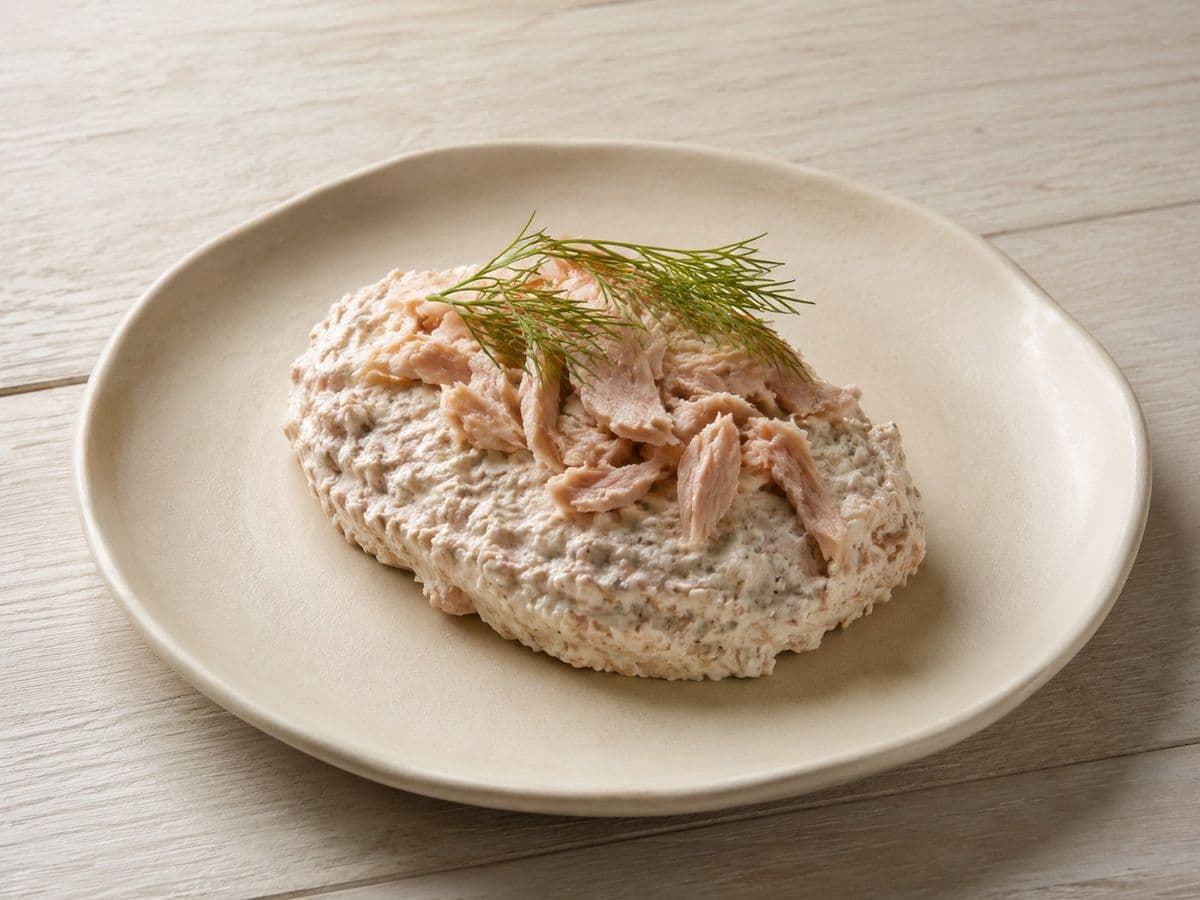
162 kcal a serving, against 339 for the traditional version. That is 177 kcal off, or 52%, with 17.9g of protein. Serves 4. 15 minutes.
What the traditional version is
Hot-smoked mackerel fillets are flaked and mixed with full-fat cream cheese, softened butter, a squeeze of lemon and a bit of horseradish. It's all mashed to a smooth paste, then seasoned and piled into bowls, ready to spread on rye or pumpernickel. The cheese and butter make it creamy and mild, rounding off all the fish edges so the smoked flavour is there, but not too wild. Chives or dill usually on top, if you're fancy.
What changed, and what each change costs
Full-fat cream cheese swapped for fat-free quark
Quark's got barely any fat, plenty of protein, and a bit of tang. It doesn't give you the same creamy mouthfeel as cream cheese, but it doubles the protein for almost no calories.
What it costs you. You lose the smoothness and all the richness. The pate's much tangier, and instead of the fish being softened by the cheese, the mackerel sits right up front and doesn't apologise for itself. Serve it to people who actually like fish, not those who just pretend.
All the butter left out
Butter's just here for creaminess and that slick texture. Take it away, save yourself a whole load of fat, and don't look back. You get a lighter spread, more actual mackerel, and you don't feel like you've eaten a brick.
What it costs you. What you gain in lightness, you lose in silkiness. The pate's a bit more crumbly, less like a restaurant starter, more like something you'd spread on rye for breakfast and not feel a bit guilty about. Not bad, just different.
Extra lemon juice added, doubled from 20g to 40g
Without all the dairy to round off the flavour, the mackerel needs a bit more acid to balance it out. Lemon juice keeps it fresh, and it stops the quark from tasting a bit wallpaper pastey.
What it costs you. It's tangier and sharper. The fish taste jumps out instead of being smoothed off. Not for anyone who wants a mild appetiser. I quite like it, but it won't win over the faint-hearted.
Chives left out, dill added and bumped up
Dill and mackerel are old friends. Chives are fine, but dill's got a bit more presence, especially when the base is sharper. Make it green enough so it actually tastes of something, not just a garnish.
What it costs you. You lose the gentle onion hum of chives. What you get is a fresher, more herbal finish. If you don't like dill, swap it back for the chives - no harm done.
What goes in it
The ingredients, without the quantities. The weights are what the figures below are computed from, and they are in the book.
- Smoked mackerel fillets
- Fat-free quark
- Fresh lemon juice
- Horseradish sauce or fresh
- Black pepper
- Fresh dill
How it starts
- Check your mackerel for bones by running your fingers along the flesh and pulling out anything sharp.
- Add the quark, lemon juice, horseradish (if you're using it), and a good crack of black pepper.
- Mash it all together with a fork or whizz it in a food processor if you want it really smooth.
The rest of the method, and every weight, is in Authentic-ish Jewish.
The numbers
| Per serving | Traditional | Lightened |
|---|---|---|
| Calories | 339 | 162 |
| Protein | 13.3g | 17.9g |
| Fat | 30.9g | 8.4g |
| Saturated fat | 15.6g | 2g |
| Carbohydrate | 2.7g | 3.3g |
| Protein per 100 kcal | 3.9g | 11.1g |
Every figure is computed from the recipe's own weighed ingredient list against public food composition databases. The appendix in Authentic-ish Jewish prints the exact database row used for each ingredient, so any number here can be checked. How every number is computed sets out the method.
Allergens. fish, milk, mustard.
The method is in the book
The classic version's smoother and much more luxurious. This one is punchier, lighter, and you actually taste the fish. If you're serving people who don't really like mackerel, don't bother - make egg mayo instead and call it a day. For me, it's the sort of thing I want for lunch on a Tuesday: not pretending to be posh, just a tin of fish dressed up and ready to go. If you want luxury, buy the proper stuff and close your eyes to the calories for a day.
The quantities and the method for this dish are in Authentic-ish Jewish, along with 51 more. Buy the paperback
More from Authentic-ish Jewish
- Gefilte Fish, 125 kcal a serving, 17% off
- Pickled Herring, 220 kcal a serving, 33% off
- Chopped Herring, 132 kcal a serving, 14% off
- Chraime, 265 kcal a serving, 33% off
- Whitefish Salad, 270 kcal a serving, 51% off
- Baked Carp with Lemon, 193 kcal a serving, 53% off
Every Jewish dish and its calories · Every dish in the series