Jewish · Authentic-ish Jewish
Beef Brisket
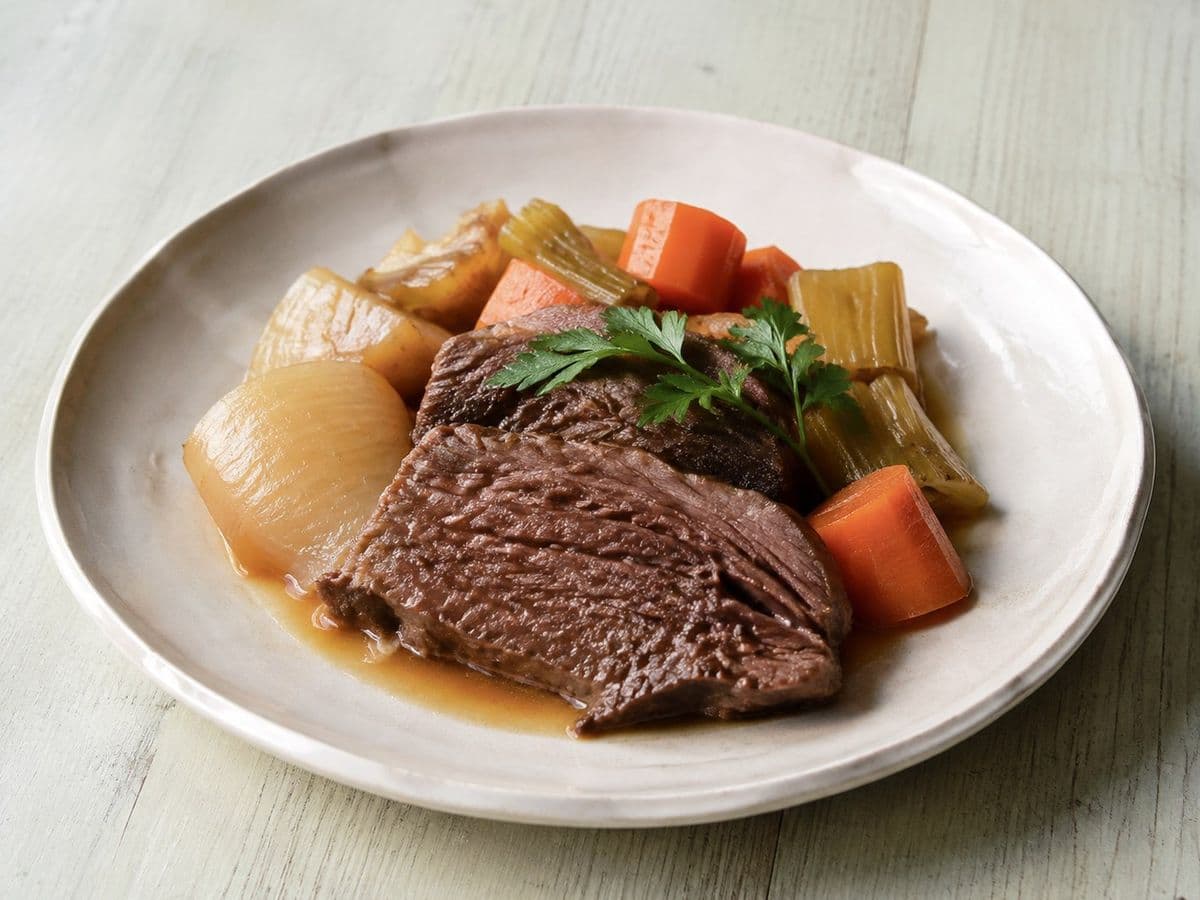
401 kcal a serving, against 544 for the traditional version. That is 143 kcal off, or 26%, with 45.4g of protein. Serves 8. 4 hours.
What the traditional version is
A whole piece of beef brisket, complete with its thick fat cap, seasoned generously and seared, then braised for at least 3 hours with sliced onions, garlic, and a bottle of sweet red wine. The finished brisket is carved thick, bathed in a sticky, nearly caramel sauce made from the reduced pan juices and the rendered beef fat, and served alongside potatoes or kugel for a proper feast.
What changed, and what each change costs
Beef brisket, fat cap on, switched for brisket with all visible fat trimmed off
The fat cap is what melts into the sauce, so it makes for a beautifully sticky end result. The trouble is, you end up eating most of it. By trimming the brisket before cooking, you keep the flavour of the beef, but lose most of the molten fat.
What it costs you. No sticky, wobbly top layer. The sauce doesn't glaze or coat the beef in quite the same way, and you'll have to chase the last bits of juice round the plate with your potato. The texture is leaner and a bit firmer, and you'll notice it if you're hoping for pudding on your meat.
Sweet red wine swapped for beef stock
A whole bottle of wine brings a ton of sugar and calories. I go for beef stock instead. You get enough depth if you cook the onions down well, and a much cleaner finish.
What it costs you. You lose the sweet, almost jammy glaze that wine reduction gives. The sauce just won't coat your lips the same way. The first mouthful is more about the beef, less about sauce sticking to your teeth.
More onions and carrots
With less fat and less wine, you need bulk and sweetness elsewhere. Upping the onions and carrots lets you keep a little sweetness in the final jus, and makes up for some of the depth that went missing with the wine.
What it costs you. It's a bit more savoury, and the sauce is lighter in colour and texture. I don't mind this, but if your fondest memory of brisket involves licking your fork, you'll spot what's missing.
What goes in it
The ingredients, without the quantities. The weights are what the figures below are computed from, and they are in the book.
- Brisket
- Vegetable oil
- Onion
- Garlic
- Carrot
- Celery
- Rich beef stock
- Salt
- Black pepper
How it starts
- Take a very sharp knife to your brisket and cut away every bit of visible fat you can find.
- Heat the oil in a big frying pan or casserole until it's properly hot.
- Take the beef out of the pan and throw in all the onions and carrots.
The rest of the method, and every weight, is in Authentic-ish Jewish.
The numbers
| Per serving | Traditional | Lightened |
|---|---|---|
| Calories | 544 | 401 |
| Protein | 53g | 45.4g |
| Fat | 22.3g | 16.3g |
| Saturated fat | 7g | 5.4g |
| Carbohydrate | 12.8g | 16.7g |
| Protein per 100 kcal | 9.7g | 11.3g |
Every figure is computed from the recipe's own weighed ingredient list against public food composition databases. The appendix in Authentic-ish Jewish prints the exact database row used for each ingredient, so any number here can be checked. How every number is computed sets out the method.
Allergens. celery.
The method is in the book
The honest truth: the original is better for sauce. There's nothing quite like the wine-and-fat lacquer you get from the traditional recipe. But for plenty of lean beef and a lighter result you can eat on a Wednesday without lying to yourself, this works. Serve it to people who actually like the taste of beef. Just don't bring a napkin expecting to wipe your lips clear of sticky glaze - it isn't that kind of brisket, it's brisket that gets the job done.
The quantities and the method for this dish are in Authentic-ish Jewish, along with 51 more. Buy the paperback
More from Authentic-ish Jewish
- Cholent, 282 kcal a serving, 51% off
- Meatballs in Tomato Sauce, 307 kcal a serving, 26% off
- Sweet and Sour Meatballs, 331 kcal a serving, 25% off
- Holishkes, 309 kcal a serving, 32% off
- Esik Fleisch, 321 kcal a serving, 29% off
- Braised Duck Legs, 539 kcal a serving, 64% off
Every Jewish dish and its calories · Every dish in the series