Jewish · Authentic-ish Jewish
Holishkes
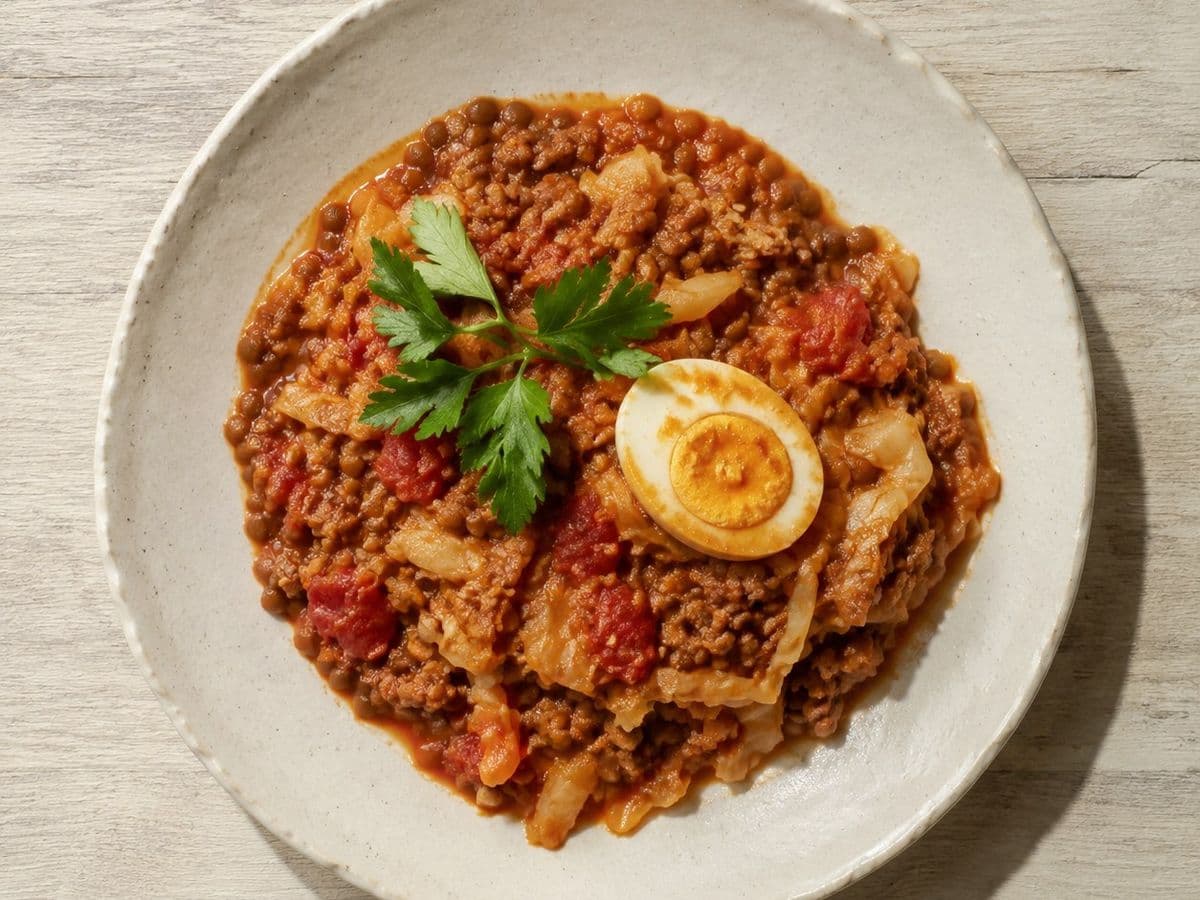
309 kcal a serving, against 456 for the traditional version. That is 147 kcal off, or 32%, with 31.5g of protein. Serves 6. 2 hours.
What the traditional version is
Beef mince (15% fat), white rice and fried onions are mixed with egg and rolled up in blanched cabbage leaves. The rolls are packed tightly in a dish, covered with a sauce made of tinned tomatoes, tomato puree, brown sugar, lemon juice and a splash of oil.
What changed, and what each change costs
Beef mince, 15% fat, swapped for 5% fat mince
The traditional fat gives you softness and stops the filling turning into a meatball gone wrong. Using lean mince means you get more of the actual beef and less of the calories that ride in on the fat. It's all about holding onto the protein and cutting what you won't miss, on paper at least.
What it costs you. The filling does go tighter. You lose a bit of that steamy juiciness, and the texture is closer to a meatball than the gentle, soft fall-apart original. Nobody mistakes this for a family recipe passed down generations.
Rice switched from white rice to cooked lentils
Lentils bring more protein for the same weight and don't spike blood sugar. They also soak up flavour just fine, even if they're less comforting than rice.
What it costs you. It isn't holishkes with rice, it's holishkes with pulses. The nutty lentil flavour comes in where the soft blandness of rice used to be. Some will say that's a crime against cabbage rolls, but your cholesterol may disagree.
Brown sugar in the tomato sauce cut from 50g down to 10g
You need a little sweetness to balance the tomatoes and lemon, but not the usual syrupy richness. Cutting most of the sugar lets the tomato taste speak up (whether you want it to or not).
What it costs you. The sauce is more tart than sweet. It's sharper, more grown-up, less like grandma's and more like something you'd be told is 'rustic' in a London bistro.
Vegetable oil in the filling and sauce left out entirely
Oil's only in the original to keep the mince moist and give the sauce a bit of body. With lean meat and a thick sauce, you can drop it.
What it costs you. You don't get the glossy finish or the extra richness. The rolls will be honest and a little spartan. If you miss the shine, you can always brush a little oil on top before baking, but I'd rather save it for the challah.
Onion upped from 120g to 180g, and not fried
More onion brings back some moisture and sweetness to balance out lean mince. Skipping the frying means one less pan to wash and one less source of fat.
What it costs you. You lose that deep onion flavour and caramelised taste. It's fresher, but a bit less sophisticated.
What goes in it
The ingredients, without the quantities. The weights are what the figures below are computed from, and they are in the book.
- Beef mince
- Lentils
- Onion
- 1 medium egg
- One large white cabbage
- Tinned plum tomatoes
- Tomato puree
- Soft brown sugar
- Lemon juice
- Salt
- Black pepper
How it starts
- Put a huge pot of water on to boil.
- Mix the beef mince, cooked lentils, raw onion, egg, salt and pepper in a big bowl.
- Lay out a cabbage leaf.
The rest of the method, and every weight, is in Authentic-ish Jewish.
The numbers
| Per serving | Traditional | Lightened |
|---|---|---|
| Calories | 456 | 309 |
| Protein | 25.1g | 31.5g |
| Fat | 21.4g | 6.5g |
| Saturated fat | 6.8g | 2.6g |
| Carbohydrate | 41.4g | 32.5g |
| Protein per 100 kcal | 5.5g | 10.2g |
Every figure is computed from the recipe's own weighed ingredient list against public food composition databases. The appendix in Authentic-ish Jewish prints the exact database row used for each ingredient, so any number here can be checked. How every number is computed sets out the method.
Allergens. eggs.
The method is in the book
If you want the classic, go to your aunt's house and let her do the work. These are more firm, less juicy, and definitely less sweet or rich. The first bite is the real test - if you miss the soft, fatty comfort of the original, you're not alone. But if you want to feed six people something filling and still feel like you can get up afterwards, these'll do nicely. The best bit is, you can eat a couple and not immediately need a nap.
The quantities and the method for this dish are in Authentic-ish Jewish, along with 51 more. Buy the paperback
More from Authentic-ish Jewish
- Beef Brisket, 401 kcal a serving, 26% off
- Cholent, 282 kcal a serving, 51% off
- Meatballs in Tomato Sauce, 307 kcal a serving, 26% off
- Sweet and Sour Meatballs, 331 kcal a serving, 25% off
- Esik Fleisch, 321 kcal a serving, 29% off
- Braised Duck Legs, 539 kcal a serving, 64% off
Every Jewish dish and its calories · Every dish in the series