Soul Food · Authentic-ish Soul Food
Pulled Pork Shoulder
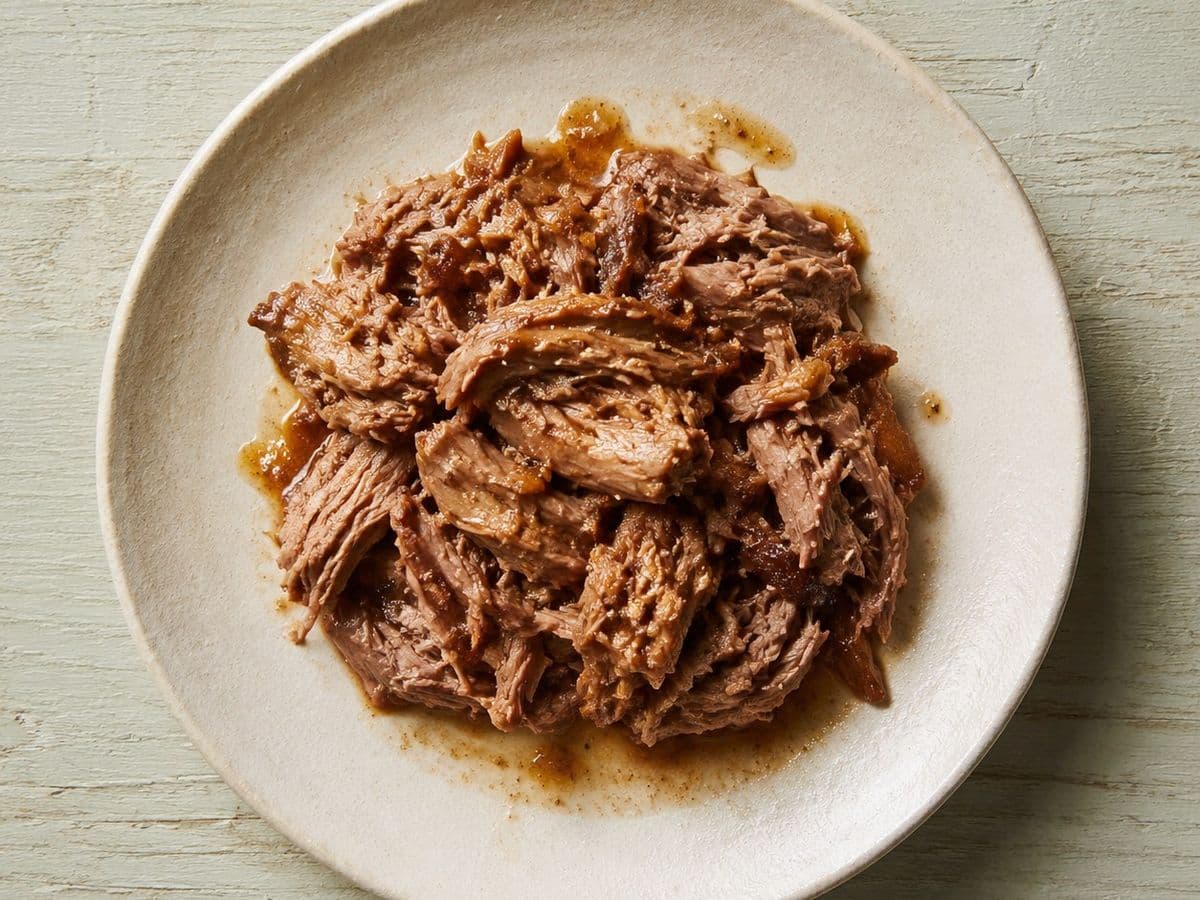
319 kcal a serving, against 790 for the traditional version. That is 471 kcal off, or 60%, with 51.4g of protein. Serves 8. 6 hours (plus optional overnight marinating).
What the traditional version is
Traditionally, this calls for a whole pork shoulder, skin on and bone in, rubbed generously with spices and salt, then slow-roasted or smoked at a low temperature (110-120C) for 8-10 hours. The layers of fat keep the meat moist as it softens, and the outside develops a bark from hours of rendering. The joint is then pulled apart and doused in its own juices, often with barbecue sauce. Served as is or in a bun, usually with a slaw.
What changed, and what each change costs
Fatty pork shoulder for boneless, skinless pork loin joint
Pork shoulder's job is to bring fat - loads of interstitial stuff that bastes the meat as it cooks. Pork loin is much leaner and higher in protein per bite, but if you braise it gently, you'll still get the right texture, even if it's never as juicy.
What it costs you. Flavour and succulence both take a hit. No bark, no melting rivers of fat, and the outside doesn't crisp up. You can fake some of it with stock and spice, but carnivores will notice.
Low, uncovered roasting for a covered braise in stock
Without fat to baste it, a pork leg roast would dry out and sulk. So I swap to a gentle braise in seasoned chicken stock. It keeps the meat shreddable without going rubbery.
What it costs you. You lose the bark and proper caramelised edges. It's all interior - no chewy bits for the lucky guest.
Brown sugar for a bit of smoked paprika and more vinegar
The sugar is mostly for bark and background sweetness, but you can get a smoky-sweet tang from doubling down on the smoked paprika and upping the vinegar. The meat stays punchy without the sugar rush.
What it costs you. That brown sugar glow is gone, and you'll never get a deep, glassy crust. If you need sweet sauce, add it at the end.
Lean pork and extra garlic for more meaty punch
Losing the fat means losing some flavour, so I up the garlic and go heavier with the spices. The meat absorbs more seasoning than you'd expect.
What it costs you. You can overdo it. Hold back a bit - if you make it taste like a garlic press, it's on you.
What goes in it
The ingredients, without the quantities. The weights are what the figures below are computed from, and they are in the book.
- Pork loin
- Salt
- Black pepper
- Paprika
- Smoked paprika
- Garlic
- Prepared mustard
- Vinegar
- Chicken stock
How it starts
- If you've got time, rub the pork loin with salt, black pepper, both types of paprika, half the garlic (crushed), and mustard.
- Preheat the oven to 140C (fan 120C).
- Put the pork in a snug casserole dish or deep roasting tin.
The rest of the method, and every weight, is in Authentic-ish Soul Food.
The numbers
| Per serving | Traditional | Lightened |
|---|---|---|
| Calories | 790 | 319 |
| Protein | 54.8g | 51.4g |
| Fat | 59.3g | 9.3g |
| Saturated fat | 19.9g | 2.7g |
| Carbohydrate | 5.5g | 4.7g |
| Protein per 100 kcal | 6.9g | 16.1g |
Every figure is computed from the recipe's own weighed ingredient list against public food composition databases. The appendix in Authentic-ish Soul Food prints the exact database row used for each ingredient, so any number here can be checked. How every number is computed sets out the method.
Allergens. mustard, sulphites.
The method is in the book
This gets you a solid heap of pulled pork without needing to lay down a bed of kitchen roll under it. It's proper, meaty stuff - honestly quite satisfying, especially if you drench it with sharp vinegar and a little smoky sauce. But the classic wins: fat brings that sticky, shiny finish, and you'll never get a bark here, just gentle shreds. It's not a "wow" moment, but you can eat a whole plate and not feel like you need a nap. Good for feeding a crowd who want the essence of pulled pork, not the full experience with rivers of fat.
The quantities and the method for this dish are in Authentic-ish Soul Food, along with 50 more. It is not out yet. The swap kit is free in the meantime.
More from Authentic-ish Soul Food
- Chitterlings, 358 kcal a serving, 27% off
- Barbecue Ribs, 348 kcal a serving, 57% off
- Neck Bones, 588 kcal a serving, 19% off
- Hog Maws, 388 kcal a serving, 33% off
- Southern Fried Chicken, 479 kcal a serving, 58% off
- Fried Catfish, 314 kcal a serving, 41% off
Every Soul Food dish and its calories · Every dish in the series