Spanish · Authentic-ish Spanish
Meatballs in Tomato Sauce
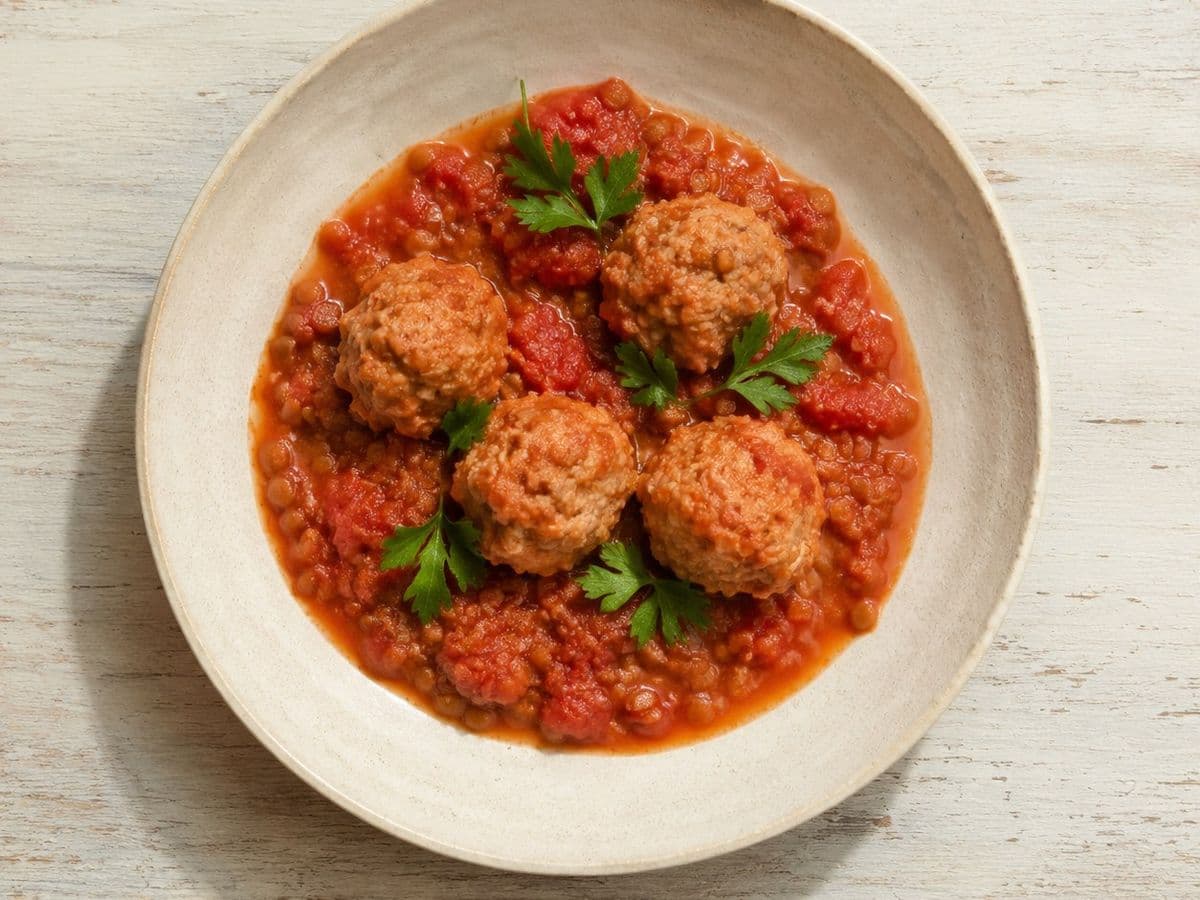
330 kcal a serving, against 511 for the traditional version. That is 181 kcal off, or 35%, with 32.4g of protein. Serves 4. 1 hour.
What the traditional version is
Classic Spanish meatballs - albóndigas - are made with a mix of pork and beef mince (sometimes all pork), bound with breadcrumbs, egg and a touch of garlic. They're formed into small balls and shallow-fried until the outside is golden, soaking up about 12% of their weight in oil.
What changed, and what each change costs
Pork shoulder and beef mince swapped for turkey thigh mince
Both pork shoulder and beef mince bring fat, which means flavour and that lush, almost creamy bite. Turkey thigh mince is lower in fat but not as dry as breast, so you get a halfway decent texture without eating a hockey puck.
What it costs you. You'll lose that soft, juicy crumb and a fair bit of the meat's natural richness. The turkey balls are firmer and need a bolder sauce to hold their own. If someone complains they're bland, hand them the salt and move on.
Deep-frying swapped for baking on a hot tray
Frying meatballs means they soak up a good bit of oil. By baking them on a hot oven tray, you skip most of the added fat and a lot of the mess. There's no crispy shell, but they won't stick to the pan and you get to keep your shirt clean.
What it costs you. You won't get the golden crust you see in the traditional plate - it's a more honest, home-cooked look, paler but leaner. The texture is denser, less melting, and they're more likely to hold together in the sauce (whether that's a blessing is up to you).
Breadcrumbs trimmed back and swapped for a mix of breadcrumbs and cooked lentils
Breadcrumbs bulk out the meat, but don't bring protein and love to take up fat. Using a mix of breadcrumbs and lentils cuts some starch and gives you a nudge more protein per bite. Lentils also soak up sauce like nobody's business.
What it costs you. A pure breadcrumb binder means fluffier, looser meatballs. The lentils make them a little grainier. But submerged in tomato sauce, you'll barely notice unless you're a purist (in which case you've picked the wrong book).
Egg doubled for binding and bumping up protein
More egg means fewer crumbs needed, and it adds protein without bringing much fat. You need the extra strength to keep the turkey balls together when baked.
What it costs you. If you're sensitive to egg, you'll spot it - these need the double egg for structure, so swap out if you must, but expect looser results.
What goes in it
The ingredients, without the quantities. The weights are what the figures below are computed from, and they are in the book.
- Turkey thigh mince
- Cooked lentils
- Dried breadcrumbs
- 2 medium eggs
- Olive oil
- Onion
- Garlic
- Tinned plum tomatoes
- Smoked paprika
- Salt
- Flat-leaf parsley
- Black pepper
How it starts
- Cook the lentils in unsalted water until tender.
- Heat the oven to 220C and put a heavy roasting tray in to get properly hot.
- In a big bowl, mix the turkey mince, cooled lentils, breadcrumbs, eggs, half the parsley (chopped), and half the garlic (finely minced).
The rest of the method, and every weight, is in Authentic-ish Spanish.
The numbers
| Per serving | Traditional | Lightened |
|---|---|---|
| Calories | 511 | 330 |
| Protein | 27.1g | 32.4g |
| Fat | 37.6g | 15g |
| Saturated fat | 10.1g | 3.8g |
| Carbohydrate | 15.8g | 17.2g |
| Protein per 100 kcal | 5.3g | 9.8g |
Every figure is computed from the recipe's own weighed ingredient list against public food composition databases. The appendix in Authentic-ish Spanish prints the exact database row used for each ingredient, so any number here can be checked. How every number is computed sets out the method.
Allergens. gluten, eggs.
The method is in the book
This isn't quite the albóndigas you get in a neon-lit bodega after three vermouths. The classic fried balls melt apart and taste deeply savoury thanks to all the fat. These are firmer, a bit nobler, and wear their "sauce vehicle" badge with some pride. If you want that old-school richness, fry your meatballs and don't feel bad about it - but if you're after a leaner, more protein-forward plate, this baked version keeps you full and your frying pan clean. The sauce does most of the heavy lifting, so don't skimp on it.
The quantities and the method for this dish are in Authentic-ish Spanish, along with 57 more. Buy the paperback
More from Authentic-ish Spanish
- Slow Cooked Oxtail, 624 kcal a serving, 6% off
- Pork Cheek Stew, 462 kcal a serving, 29% off
- Garlic Chicken, 320 kcal a serving, 55% off
- Carrilladas de Cerdo, 523 kcal a serving, 37% off
- Pollo al Chilindron, 394 kcal a serving, 40% off
- Filete Empanado, 518 kcal a serving, 13% off
Every Spanish dish and its calories · Every dish in the series