Spanish · Authentic-ish Spanish
Pork Cheek Stew
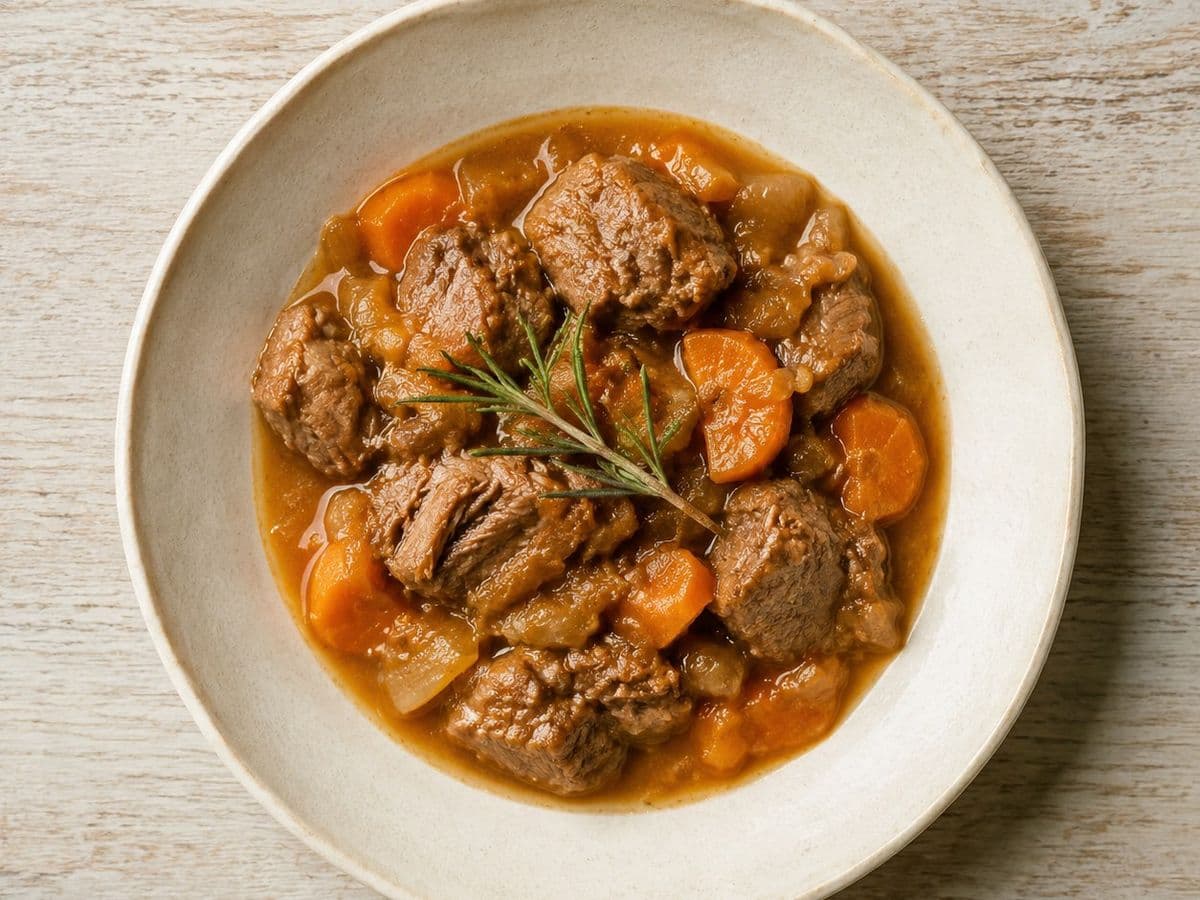
462 kcal a serving, against 651 for the traditional version. That is 189 kcal off, or 29%, with 41.6g of protein. Serves 4. 3 hours.
What the traditional version is
The proper version calls for pork cheeks, onions, garlic, carrots, a bucket of red wine and sometimes a bit of stock. Everything's browned, simmered gently for hours, and finished with a glossy sauce that coats your spoon in piggy silk. Served with bread or chips if you're lucky. The fat melts right into the sauce, making it rich and sticky, and the cheeks go spoon-tender.
What changed, and what each change costs
Pork cheeks swapped for lean pork shoulder, all fat trimmed
Cheeks are marbled and capped with a thick layer of fat. Trimming the shoulder and fishing out every bit of visible fat means you drop most of the fat that would have ended up in the sauce.
What it costs you. Meat isn't as soft. You'll need a sharp knife instead of a spoon. The flavour still lands, but you lose some of the lushness and that lip-coating finish real cheeks give you.
Olive oil halved
You don't need to fry the life out of shoulder, just a touch of colour does it. Cutting the oil down works so long as you use a heavy pan and don't wander off checking your phone.
What it costs you. Brown bits in the bottom may need a drop of stock to stop burning. Anyway, the main brown comes from the braise, not the frying.
Cornflour used to thicken instead of relying on rendered fat and gelatine
With all the fat trimmed off, the sauce goes thin. A quick slurry tightens it up at the end. You don't get that rich, wobbly texture, but it's not watery either.
What it costs you. Can't lie, it isn't the silky, sticky sauce you'll remember from a proper bar in León. It's smoother than nothing, but you won't be licking lips all afternoon.
What goes in it
The ingredients, without the quantities. The weights are what the figures below are computed from, and they are in the book.
- Lean pork shoulder
- Onion
- Carrot
- Garlic
- Red wine
- Beef stock
- Olive oil
- Bay leaf
- Fresh thyme
- Salt
- Black pepper
- Cornflour
How it starts
- Cut every visible bit of fat off the pork shoulder.
- Get a heavy casserole pan hot, add half the olive oil, and brown the pork in batches.
- Add the rest of the oil, then toss in the chopped onion, carrot, and garlic.
The rest of the method, and every weight, is in Authentic-ish Spanish.
The numbers
| Per serving | Traditional | Lightened |
|---|---|---|
| Calories | 651 | 462 |
| Protein | 36.9g | 41.6g |
| Fat | 41.2g | 17g |
| Saturated fat | 13.2g | 5.4g |
| Carbohydrate | 13g | 15.3g |
| Protein per 100 kcal | 5.7g | 9g |
Every figure is computed from the recipe's own weighed ingredient list against public food composition databases. The appendix in Authentic-ish Spanish prints the exact database row used for each ingredient, so any number here can be checked. How every number is computed sets out the method.
Allergens. sulphites.
The method is in the book
If you're after that pure, spoon-soft cheek, you'll miss the wobble. Nobody is fooled. But you'll still get a porky, winey stew with real depth - and you can eat it at lunchtime without booking an armchair for the afternoon. Cutting the fat gives you leaner pieces you actually have to chew, and the sauce needs a helping hand. It's a worthy swap, but I'm not throwing out my butcher's number for pork cheeks just yet.
The quantities and the method for this dish are in Authentic-ish Spanish, along with 57 more. Buy the paperback
More from Authentic-ish Spanish
- Meatballs in Tomato Sauce, 330 kcal a serving, 35% off
- Slow Cooked Oxtail, 624 kcal a serving, 6% off
- Garlic Chicken, 320 kcal a serving, 55% off
- Carrilladas de Cerdo, 523 kcal a serving, 37% off
- Pollo al Chilindron, 394 kcal a serving, 40% off
- Filete Empanado, 518 kcal a serving, 13% off
Every Spanish dish and its calories · Every dish in the series