Spanish · Authentic-ish Spanish
Octopus with Paprika
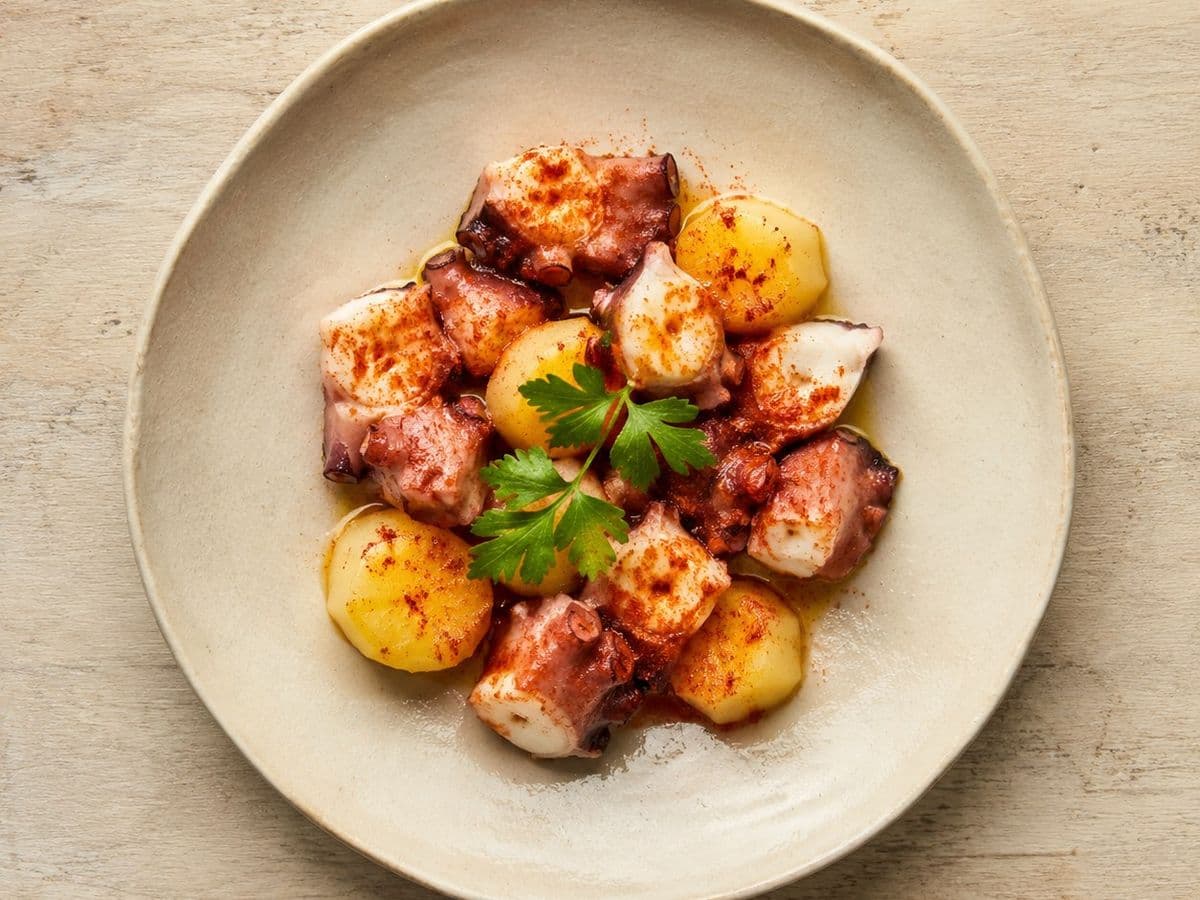
368 kcal a serving, against 505 for the traditional version. That is 137 kcal off, or 27%, with 36.9g of protein. Serves 4. 1 hour 30 minutes.
What the traditional version is
Classic pulpo a la gallega: the octopus is simmered gently (sometimes after a polite whack to tenderise it), sliced over hot boiled potatoes, then drowned in olive oil and dusted with smoked paprika and flaked salt. The oil is poured with a free hand - the more the better - and the whole thing is eaten still warm, preferably with a glass of something cold and very dry.
What changed, and what each change costs
Olive oil strictly measured (28g instead of 100g)
Spanish pulpo dishes are, let's face it, an oil spill by design. Everyone drowns the octopus and potatoes in a little olive grove. The octopus and potatoes are both naturally light, but that oil soaks right in and doubles the whole thing.
What it costs you. You lose the glossy oil puddle, and the potatoes don't get quite the same richness. Measured oil means you have to toss and brush, not drench. The taste? Still plenty - pimentón does most of the talking anyway. You'll miss the oil if you're Spanish, but probably not if you're British, so I count it as a win.
Slightly more octopus (900g instead of 800g)
Since you're saving a bucket of oil, I bump the octopus a notch to keep it filling. Octopus is basically all protein and pride anyway, and you get more of what you came for.
What it costs you. Nobody mourns an extra chunk of octopus. The only thing it costs is a slightly longer wrestle with the tentacles in the pot.
Salt held steady, smoked paprika generous
Most people keep the paprika at a whisper. I say, make it shout - it boosts flavour, and you're not losing anything by throwing the jar at the plate.
What it costs you. You'll get crimson fingers, but the potatoes taste of Spain and not boiled dinner, so call it a good deal.
What goes in it
The ingredients, without the quantities. The weights are what the figures below are computed from, and they are in the book.
- Frozen octopus
- Waxy potatoes
- Olive oil
- Smoked paprika
- Salt
How it starts
- If you're starting with a frozen octopus, let it thaw overnight.
- Bring a large pan of unsalted water to the boil.
- Once you've played dunking games, return the octopus to the pan, cover, and simmer gently for about 60 minutes until a sharp knife slides in easily.
The rest of the method, and every weight, is in Authentic-ish Spanish.
The numbers
| Per serving | Traditional | Lightened |
|---|---|---|
| Calories | 505 | 368 |
| Protein | 33.1g | 36.9g |
| Fat | 27.4g | 9.7g |
| Saturated fat | 4g | 1.6g |
| Carbohydrate | 31.4g | 32.3g |
| Protein per 100 kcal | 6.6g | 10g |
Every figure is computed from the recipe's own weighed ingredient list against public food composition databases. The appendix in Authentic-ish Spanish prints the exact database row used for each ingredient, so any number here can be checked. How every number is computed sets out the method.
Allergens. molluscs.
The method is in the book
The honest truth is, this is the rare Spanish dish where you aren't missing much by trimming the oil. The octopus is still meltingly soft, the potatoes still get their bath, and smoked paprika does most of the charm work. You'll be less afraid of your cholesterol, and you can actually taste the octopus for once. If you want the full Spanish-pensioner experience, bring a small jug of olive oil to the table and let everybody do what they like. Otherwise, you might find you don't miss the oil at all.
The quantities and the method for this dish are in Authentic-ish Spanish, along with 57 more. Buy the paperback
More from Authentic-ish Spanish
- Hake in Green Sauce, 231 kcal a serving, 48% off
- Salt Cod Fritters, 449 kcal a serving, 22% off
- Sea Bass baked in salt, 338 kcal a serving, 21% off
- Suquet de Peix, 369 kcal a serving, 28% off
- Marmitako, 345 kcal a serving, 24% off
- Merluza a la Vasca, 313 kcal a serving, 21% off
Every Spanish dish and its calories · Every dish in the series