Spanish · Authentic-ish Spanish
Sea Bass baked in salt
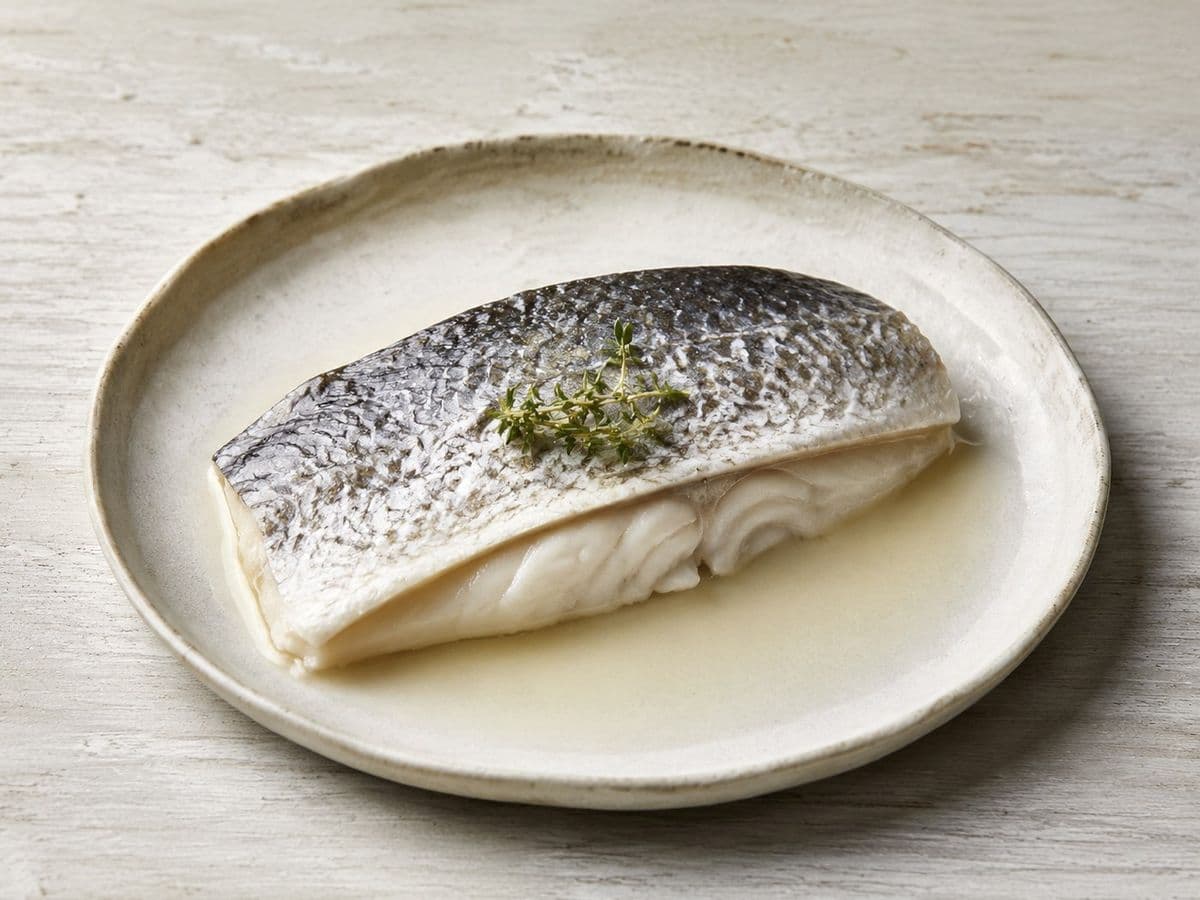
338 kcal a serving, against 426 for the traditional version. That is 88 kcal off, or 21%, with 44.7g of protein. Serves 4. 50 minutes.
What the traditional version is
Whole sea bass, gutted but otherwise left in one glorious piece, is packed in a thick crust of damp salt and baked until the flesh is just cooked but still juicy. Crack the salt, then serve the fish immediately, flaking it at the table. In restaurants, it often comes with a generous helping of salsa verde - think olive oil, herbs, garlic and vinegar - sometimes with two spoons on the side for those who are heavy-handed with sauce. The fish is the star, the sauce just tags along.
What changed, and what each change costs
Salsa verde portioned out, not poured on
Traditional has you with half a plate of green oil and the fish waving for help somewhere in the middle. The fish is so moist and delicate, it doesn't need more than a good tablespoon of salsa verde per person.
What it costs you. You don't get the luxury of mopping up with bread, and anyone hoping for olive oil with every bite will have to look elsewhere. The fish itself is completely unchanged - if anything, the sauce doesn't get in the way of the bass at all.
Olive oil in salsa verde halved
Most salsa verde recipes are more oil than anything else. I cut the olive oil right down so it's just enough to bind, not enough to float the fish.
What it costs you. The sauce is sharper and less rich, but the herbs and capers punch harder. It's easier to taste the fish, though you'll miss a little silkiness if you loved the original.
What goes in it
The ingredients, without the quantities. The weights are what the figures below are computed from, and they are in the book.
- Whole sea bass
- Coarse sea salt for baking
- Olive oil
- Flat-leaf parsley
- Garlic
- Lemon juice
- Red wine vinegar
- Capers
How it starts
- Heat the oven to 220C.
- Mix the coarse salt with a splash of water so it clumps together.
- Lay a thin bed of salt on the tray, roughly the size of your fish.
The rest of the method, and every weight, is in Authentic-ish Spanish.
The numbers
| Per serving | Traditional | Lightened |
|---|---|---|
| Calories | 426 | 338 |
| Protein | 44.7g | 44.7g |
| Fat | 25.9g | 15.9g |
| Saturated fat | 4g | 2.7g |
| Carbohydrate | 1.4g | 1.4g |
| Protein per 100 kcal | 10.5g | 13.2g |
Every figure is computed from the recipe's own weighed ingredient list against public food composition databases. The appendix in Authentic-ish Spanish prints the exact database row used for each ingredient, so any number here can be checked. How every number is computed sets out the method.
Allergens. fish, sulphites.
The method is in the book
The fish stays the same: soft, juicy and miles ahead of anything fried. Cutting down the salsa verde isn't a loss, it's more like finally letting the bass have a solo. If you want to make friends with your cardiologist, this is the way. If you can resist the urge to bathe it in olive oil, you're one step ahead of me some days.
The quantities and the method for this dish are in Authentic-ish Spanish, along with 57 more. Buy the paperback
More from Authentic-ish Spanish
- Hake in Green Sauce, 231 kcal a serving, 48% off
- Octopus with Paprika, 368 kcal a serving, 27% off
- Salt Cod Fritters, 449 kcal a serving, 22% off
- Suquet de Peix, 369 kcal a serving, 28% off
- Marmitako, 345 kcal a serving, 24% off
- Merluza a la Vasca, 313 kcal a serving, 21% off
Every Spanish dish and its calories · Every dish in the series