Spanish · Authentic-ish Spanish
Basque Cheesecake
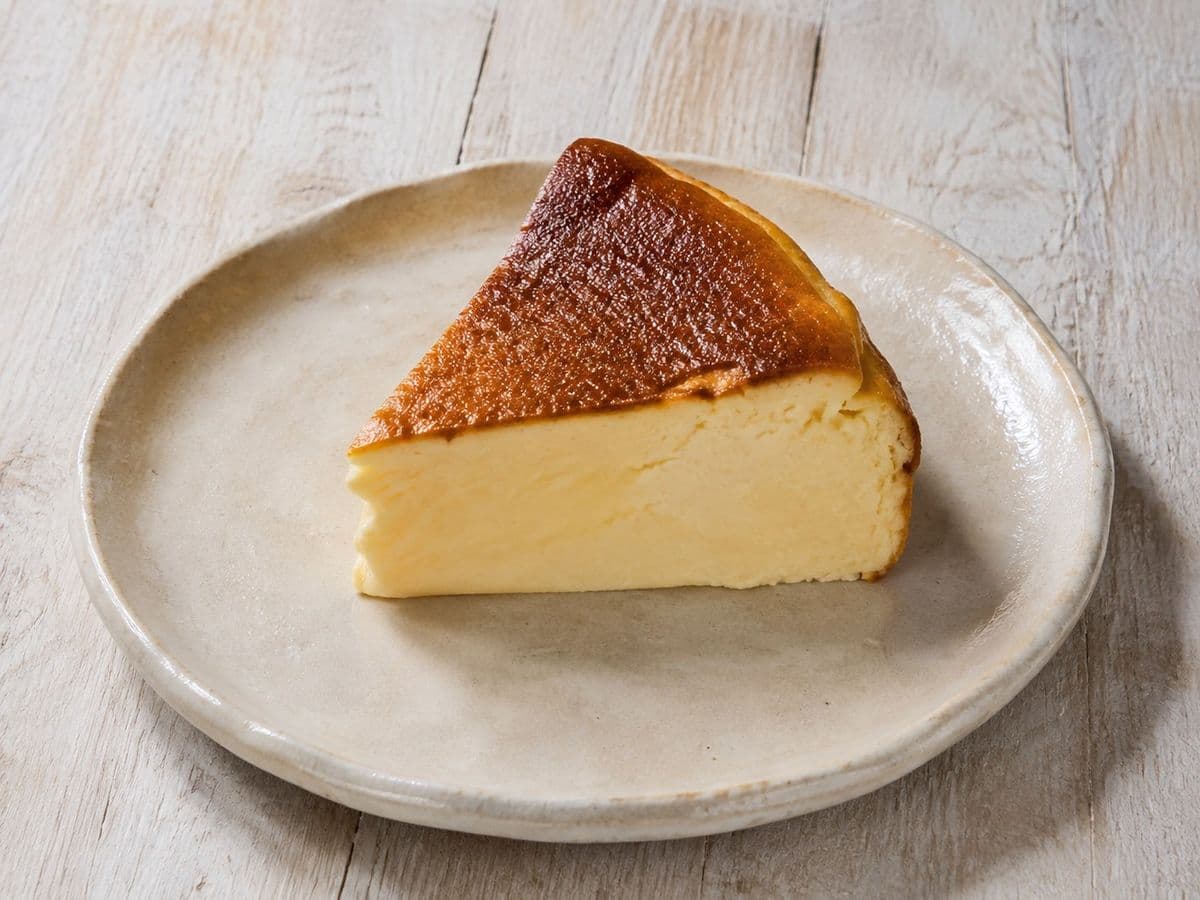
334 kcal a serving, against 543 for the traditional version. That is 209 kcal off, or 38%, with 14.6g of protein. Serves 8. 1 hour plus cooling.
What the traditional version is
Basque cheesecake is a crustless affair, baked at nearly 240C, so the outside is dark and bittersweet while the inside stays soft and wobbly. It's a mix of full-fat cream cheese, double cream, eggs, sugar and a little plain flour, beaten together and poured straight into a lined tin. It puffs up, then collapses into a creamy crater. Unapologetically rich, and more pudding than cake.
What changed, and what each change costs
Full-fat cream cheese swapped for light cream cheese
Cream cheese is carrying most of the weight here, literally and figuratively. Using light cream cheese drops a good chunk of the fat and calorie load.
What it costs you. You'll get a firmer, slightly spongier texture, and lose some richness. The tang is still there though, so you don't just end up with a block of sadness.
Double cream replaced with single cream
Double cream is about as subtle as a brick, and the point is to get some softness without all the fat. Single cream will do the job of smoothing out the batter and making sure the edges don't dry out.
What it costs you. You don't get the same ooze in the centre. That's the main event in the original, and yes, it's a loss. Call it a sliceable cheese pudding instead. No one will mistake it for San Sebastián but they'll still ask for seconds.
Sugar cut by a third
You won't be fooling anyone into thinking this is a fruit salad, but taking out a third of the sugar stops it from just being a sugar rush. The caramelised top is still there.
What it costs you. The burnt-sugar punch is a little less fierce. The upside is, you can actually taste the cheese.
Protein powder added and flour dialled back
Adding a bit of whey protein sneaks the numbers up, and you don't need as much flour for stability because the cake will set solid with the lower fat.
What it costs you. Protein powder is the first thing to make a difference you'd spot if you were looking for it. The texture is a touch heavier, but nothing tragic. Pick unflavoured if you don't want cheese and vanilla colliding.
What goes in it
The ingredients, without the quantities. The weights are what the figures below are computed from, and they are in the book.
- Light cream cheese
- Single cream
- Whole eggs
- Caster sugar
- Plain flour
- Unflavoured whey protein powder
- Salt
How it starts
- Heat your oven to 240C (or as high as yours will go) and line a 22cm springform tin with baking paper so it overhangs the sides by a good 5cm.
- In a large bowl, beat together the light cream cheese and sugar until smooth and glossy.
- Crack in the eggs and whisk thoroughly - no streaks, no lumps.
The rest of the method, and every weight, is in Authentic-ish Spanish.
The numbers
| Per serving | Traditional | Lightened |
|---|---|---|
| Calories | 543 | 334 |
| Protein | 9.9g | 14.6g |
| Fat | 42.4g | 20.3g |
| Saturated fat | 24.8g | 11.1g |
| Carbohydrate | 32.8g | 23.7g |
| Protein per 100 kcal | 1.8g | 4.4g |
Every figure is computed from the recipe's own weighed ingredient list against public food composition databases. The appendix in Authentic-ish Spanish prints the exact database row used for each ingredient, so any number here can be checked. How every number is computed sets out the method.
Allergens. eggs, gluten, milk.
The method is in the book
No one is going to mistake this for the original if they're standing in the shadow of San Sebastián cathedral, but that's fine. The famous ooze is the price for cutting out all the fat, and nothing short of magic brings it back. Still, it's got that burnt top, the cheese tang, and enough creamy wobble to convince anyone by the third bite. If you want the full glory, go original and don't count a single calorie. If you want a pudding you can eat after a meal and still walk home, this does the job.
The quantities and the method for this dish are in Authentic-ish Spanish, along with 57 more. Buy the paperback
More from Authentic-ish Spanish
- Churros, 204 kcal a serving, 48% off
- Crema Catalana, 219 kcal a serving, 21% off
- Santiago Almond Cake, 226 kcal a serving, 37% off
- Arroz con Leche, 276 kcal a serving, 20% off
- Leche Frita, 294 kcal a serving, 52% off
- Patatas Bravas, 220 kcal a serving, 63% off
Every Spanish dish and its calories · Every dish in the series