Spanish · Authentic-ish Spanish
Tigres
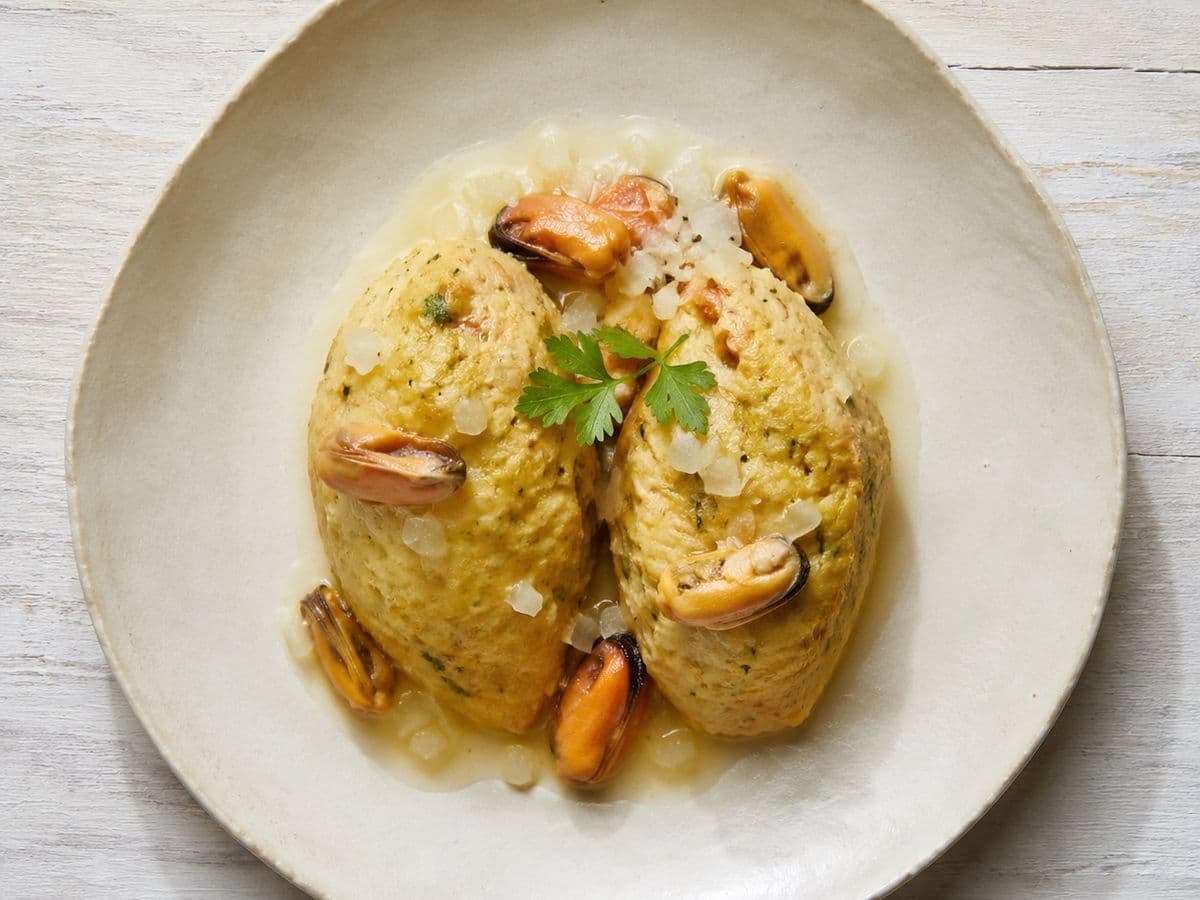
323 kcal a serving, against 734 for the traditional version. That is 411 kcal off, or 56%, with 30.5g of protein. Serves 4. 1 hour 15 minutes.
What the traditional version is
Each tigre is half a mussel shell stuffed with bechamel (made with flour, butter, milk), mixed with the chopped mussel meat and a bit of onion and parsley, then coated in flour, egg and breadcrumbs before being deep-fried until crisp and brown.
What changed, and what each change costs
Butter swapped for a whisper of olive oil
Butter gives the sauce richness and that unmistakeable flavour, but it brings a lot of fat for not much protein. A dab of olive oil (or none at all, if you're brave) will hold the sauce together with a lot less.
What it costs you. Lose the butter and you lose a bit of the sauce's silkiness. The olive oil is fine but can't give you the same warmth or depth. If you're desperate, use half-butter half-oil, but then you're only halfway on the road to lighter.
Whole milk switched to skimmed
Swapping whole for semi-skimmed milk shaves off almost all the milk fat and still gives you a decent bechamel, especially if you keep it thick.
What it costs you. Bechamel made with semi-skimmed milk is lighter and not as velvety. It's much more about the mussels than the sauce. If you want the velvet, you need the fat.
Add extra mussels, cut the flour
Stuffing in more chopped mussel bumps up the protein and bulk, so you don't need quite as much bechamel to fill the shells. The result is a filling that's actually about the seafood, not just thick white sauce.
What it costs you. With less flour and more mussel, the filling is chunkier and not as smooth. It's a fair trade for more actual mussel flavour, but if you want the classic creamy interior, this isn't it.
Baked in a hot oven instead of deep-fried
If you bake them at high heat with a very light spray of oil, you can get a decent crust on the breadcrumbs and keep the calories out of the clouds.
What it costs you. Let's not kid ourselves: you lose the full shatter and glory of deep-fried breading. The shells are crisp and browned, but not truly crunchy. You'll miss the butter-fried bit - but you can eat twice as many without needing a nap.
Eggs for coating cut to just one
Traditionally you grab 2 eggs for coating, but the volume here is less and you can stretch one out. This cuts a fraction of fat and a gram or two of protein, but you'll make up for that with the mussels.
What it costs you. Don't start this when you're running out of eggs. If your eggs are small, use two.
What goes in it
The ingredients, without the quantities. The weights are what the figures below are computed from, and they are in the book.
- In shells
- Olive oil
- Plain flour
- Skimmed or semi-skimmed milk
- Onion
- Flat-leaf
- 1 egg
- Dried breadcrumbs
- Salt
How it starts
- Scrub and debeard the mussels.
- Pop the mussels out of their shells, keeping the best half-shells for stuffing (you'll need about 40).
- Heat the olive oil in a non-stick pan, add the onion and cook gently until soft.
The rest of the method, and every weight, is in Authentic-ish Spanish.
The numbers
| Per serving | Traditional | Lightened |
|---|---|---|
| Calories | 734 | 323 |
| Protein | 26.6g | 30.5g |
| Fat | 56.1g | 9.4g |
| Saturated fat | 14.1g | 2.5g |
| Carbohydrate | 29.3g | 27.3g |
| Protein per 100 kcal | 3.6g | 9.4g |
Every figure is computed from the recipe's own weighed ingredient list against public food composition databases. The appendix in Authentic-ish Spanish prints the exact database row used for each ingredient, so any number here can be checked. How every number is computed sets out the method.
Allergens. gluten, milk, eggs, molluscs.
The method is in the book
If you want the true bar version - deep, golden, molten and fried - this isn't it, it's the home game. But you get more actual mussel in every bite, a fraction of the fat, and no need to run the extractor fan for an hour. The shell is still a party trick, and nobody ever said no to baking crumbs. Eat twice as many and feel no shame; just remember, you're eating baked bechamel out of a shell, not a salad.
The quantities and the method for this dish are in Authentic-ish Spanish, along with 57 more. Buy the paperback
More from Authentic-ish Spanish
- Patatas Bravas, 220 kcal a serving, 63% off
- Croquetas de Jamon, 369 kcal a serving, 42% off
- Garlic Prawns, 146 kcal a serving, 57% off
- Chorizo in Wine, 326 kcal a serving, 38% off
- Pimientos de Padron, 33 kcal a serving, 74% off
- Boquerones en Vinagre, 180 kcal a serving, 42% off
Every Spanish dish and its calories · Every dish in the series