Thai · Authentic-ish Thai
Panang Curry
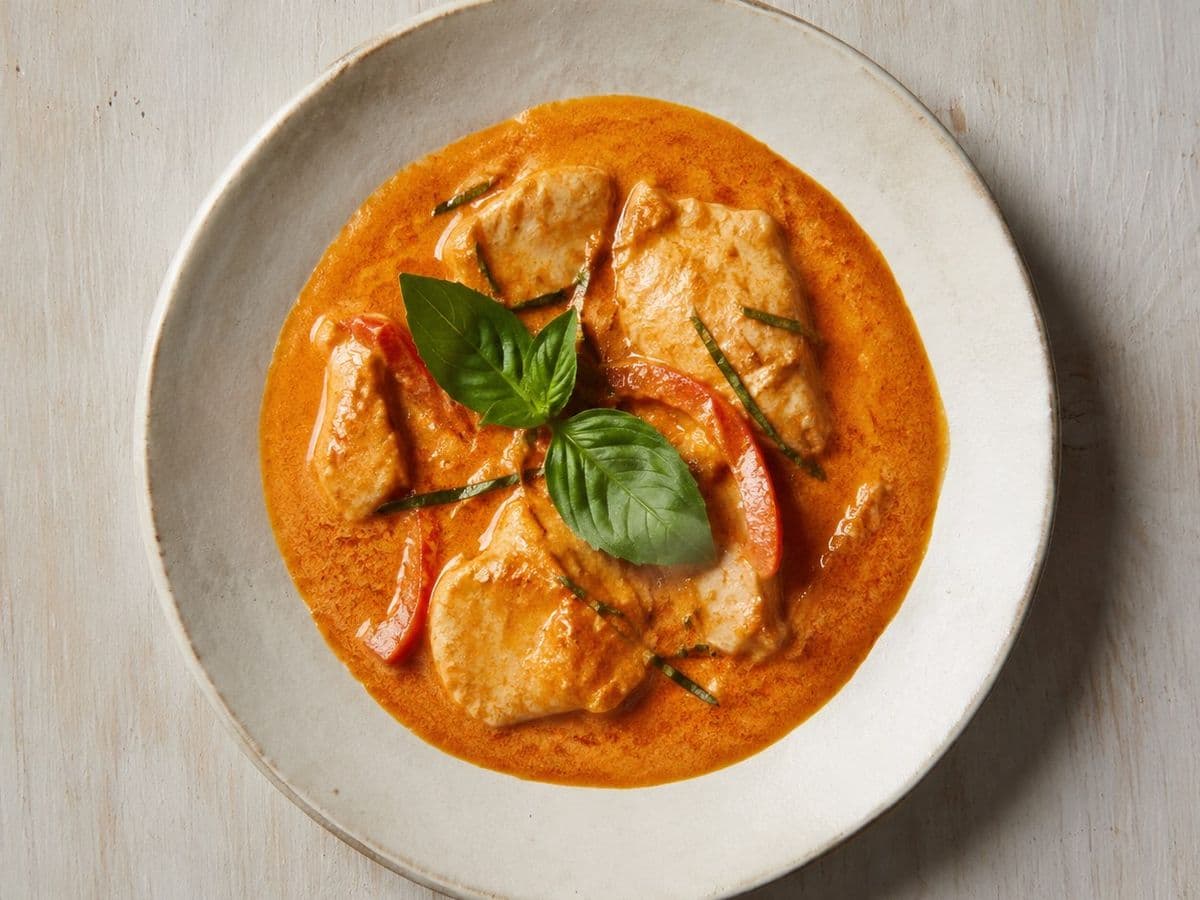
421 kcal a serving, against 720 for the traditional version. That is 299 kcal off, or 42%, with 39.2g of protein. Serves 4. 55 minutes.
What the traditional version is
Thick, rich coconut cream is simmered with Panang curry paste until it splits, releasing its oils.
What changed, and what each change costs
Beef brisket swapped for chicken breast, same weight (600g)
Chicken breast is leaner and packs in more protein for fewer calories.
What it costs you. You'll get a lighter, slightly drier bite. Don't expect the deep, sticky chew you'd get from brisket. The sauce can't cling quite the same way, but you do get a good mouthful of tender meat.
Full-fat coconut cream (400g) switched to coconut milk (300g)
The cream is where most of the fat - and all of the silkiness - lives. By using less and swapping to coconut milk, you lose some of that thick, oily body.
What it costs you. The mouthfeel is thinner. If you're after the classic oil slick floating on top, you'll be disappointed. But you won't miss the greasy lips afterwards and it still tastes like a real curry.
Cut palm sugar from 30g to 10g
Palm sugar is the second enemy here - it rounds out the sauce, but too much and you're in pudding territory.
What it costs you. The sauce loses its mellow, almost toffee-like undertone. It's more direct, a bit savoury, not the classic sweet roundness. If you want the dessert finish, you'll miss it.
Drop peanuts from 40g to 20g
Peanuts thicken the sauce and add some of that classic nutty aroma, but you can cut them without destroying the dish.
What it costs you. The nut flavour is in the background, not front and centre. The sauce won't thicken quite as much but there's still enough to coat every bite.
Omit the oil
Traditional Panang cooks the paste in oil first, but there's plenty of fat floating around from the coconut.
What it costs you. The curry paste won't fry and split quite as well, so some of the aroma is toned down. You get a cleaner, fresher sauce, but if you love that deep, fried-paste smokiness, it's not the same.
Add extra chicken stock (100g) to replace lost liquid and bulk
Cutting coconut cream also cuts sauce. The extra stock gives you enough sauce to coat the chicken without flooding the bowl.
What it costs you. It dilutes things a little, so the sauce isn't as concentrated or sticky. If you're here for punch-you-in-the-face curry, this is a shade gentler.
What goes in it
The ingredients, without the quantities. The weights are what the figures below are computed from, and they are in the book.
- Chicken breast
- Tinned coconut milk
- Panang curry paste
- Chicken stock
- Fish sauce
- Palm sugar
- Peanuts
- Kaffir lime leaves
How it starts
- Slice your chicken breast against the grain into bite-sized pieces.
- If you're feeling energetic, bash your peanuts in a pestle and mortar until fine.
- Scoop a little of the coconut milk (about 50g) into a large non-stick frying pan or wok.
The rest of the method, and every weight, is in Authentic-ish Thai.
The numbers
| Per serving | Traditional | Lightened |
|---|---|---|
| Calories | 720 | 421 |
| Protein | 39.3g | 39.2g |
| Fat | 56.4g | 25.9g |
| Saturated fat | 35.6g | 15.4g |
| Carbohydrate | 18.5g | 8.1g |
| Protein per 100 kcal | 5.5g | 9.3g |
Every figure is computed from the recipe's own weighed ingredient list against public food composition databases. The appendix in Authentic-ish Thai prints the exact database row used for each ingredient, so any number here can be checked. How every number is computed sets out the method.
Allergens. fish, milk, peanuts.
The method is in the book
Is it as decadent as proper Panang? No. The trade-off is all about losing that thick, sweet finish and full-fat silk. What you get instead is a vivid, punchy curry that hits you with lime and spice rather than a flood of coconut oil. If you want to eat Panang every week and not make your GP sigh, it's a good deal. The sauce's thinner, but the chicken makes up for it, and there's still plenty for your rice to soak up. It's not fooling anyone's Thai auntie, but you won't mind once you've licked the plate.
The quantities and the method for this dish are in Authentic-ish Thai, along with 48 more. Buy the paperback
More from Authentic-ish Thai
- Green Chicken Curry, 470 kcal a serving, 33% off
- Massaman Beef Curry, 488 kcal a serving, 40% off
- Red Curry with Duck, 389 kcal a serving, 49% off
- Yellow Chicken Curry, 716 kcal a serving, 27% off
- Pineapple Curry with Prawns, 304 kcal a serving, 43% off
- Steamed Fish Curry Custard, 230 kcal a serving, 23% off