Thai · Authentic-ish Thai
Jungle Curry with Pork
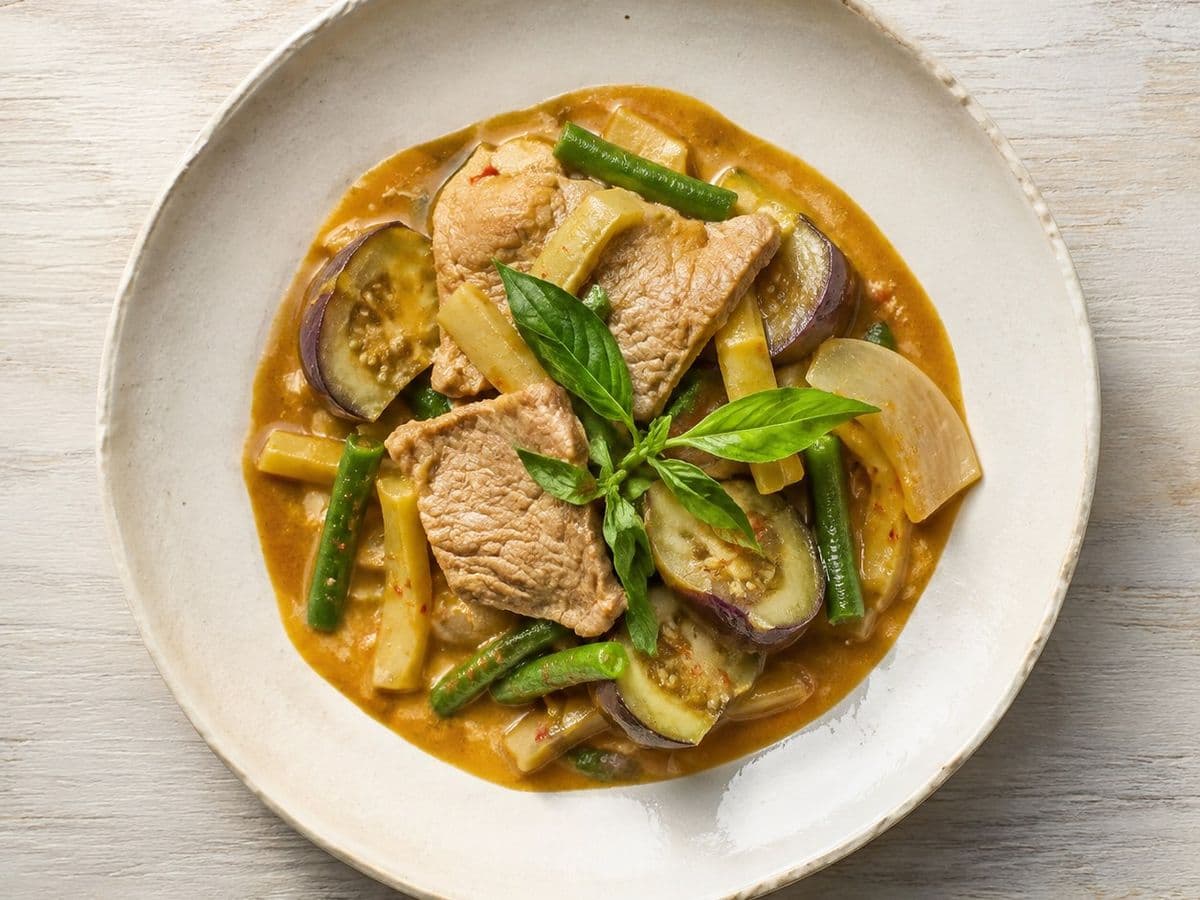
319 kcal a serving, against 400 for the traditional version. That is 81 kcal off, or 20%, with 36g of protein. Serves 4. 45 minutes.
What the traditional version is
Pork shoulder, hacked into rough pieces, fried in a generous pour of oil together with homemade jungle curry paste - lemongrass, garlic, fresh green peppercorn, red chilli, galangal, wild ginger, kaffir lime leaves.
What changed, and what each change costs
40g vegetable oil down to 8g (just enough to grease the pan lightly)
If you're serious about knocking some weight off a curry, the fry-up is the obvious place to start. That oil is where most of the magic happens - aromas bloom, paste darkens, everything gets friendlier. But. it also floats straight to your hips.
What it costs you. You lose some of the roasted edge. The curry ends up tasting fresher and more like a hot broth than a proper slap of steamrollered herbs. The smell doesn't fill the house like the original. Still, it's recognisable and doesn't taste half-baked.
Pork shoulder (500g) to pork loin (500g)
Pork loin is less fatty and brings more lean protein for your trouble. It's not as meltingly soft as shoulder, but unless you've got all afternoon to simmer, you're better off with a lean cut that cooks in the time you're willing to wait.
What it costs you. Not as much sticky, deep pork flavour and a bit less tenderness. You gain a firmer, more honest chew and don't end up with a film of fat on the lips.
Double the veg: more aubergine, green beans, and bamboo shoot
Bulk it out with veg and the pork goes further. Jungle curry is supposed to be a riot of colours and textures anyway. No one's going to complain about extra aubergine soaking up the juices.
What it costs you. Lighter on the meat, heavier on the chew. You might - just - miss a bit of that fatty pork in every spoonful, but the bowl looks brilliant and you get to the end without feeling you need a nap.
Keep the curry paste sharp by adding an extra chilli and more fresh herbs at the end
With less oil to carry the aromatics, I throw in more chillies for heat and a bigger handful of coriander and basil to make up for the missing punch.
What it costs you. Extra heat, more perfume, less roundness. If you don't like it hot, this isn't your curry anyway.
What goes in it
The ingredients, without the quantities. The weights are what the figures below are computed from, and they are in the book.
- Pork loin
- Vegetable oil
- Onion
- Garlic
- Fresh ginger
- Lemongrass
- Red chilli
- Bamboo shoots
- Aubergine
- Snake beans or French beans
- Fish sauce
- Chicken stock
- Fresh coriander
- Thai basil or regular
- Makrut lime leaves
- Black pepper
- Juice of 1 lime
How it starts
- Start by prepping everything - trust me, this goes quickly once the heat's on.
- Heat a large non-stick frying pan or wok.
- Add the pork and stir so it picks up the aromatics.
The rest of the method, and every weight, is in Authentic-ish Thai.
The numbers
| Per serving | Traditional | Lightened |
|---|---|---|
| Calories | 400 | 319 |
| Protein | 31.9g | 36g |
| Fat | 21.2g | 9.1g |
| Saturated fat | 5g | 2.3g |
| Carbohydrate | 20.1g | 24g |
| Protein per 100 kcal | 8g | 11.3g |
Every figure is computed from the recipe's own weighed ingredient list against public food composition databases. The appendix in Authentic-ish Thai prints the exact database row used for each ingredient, so any number here can be checked. How every number is computed sets out the method.
Allergens. fish.
The method is in the book
The first thing to go is that cloud of aroma you get from throwing a ladle of oil round a wok. What you keep is a bright, fragrant broth with enough heat to clear a blocked nose and plenty of honest pork. It's not as lush or lip-smacking as the shoulder version, but you won't end up with a greasy sheen on your lips. The veg do half the work and you can eat a big bowl without feeling like you've got to sleep it off. Hard to argue with that.
The quantities and the method for this dish are in Authentic-ish Thai, along with 48 more. Buy the paperback
More from Authentic-ish Thai
- Green Chicken Curry, 470 kcal a serving, 33% off
- Massaman Beef Curry, 488 kcal a serving, 40% off
- Panang Curry, 421 kcal a serving, 42% off
- Red Curry with Duck, 389 kcal a serving, 49% off
- Yellow Chicken Curry, 716 kcal a serving, 27% off
- Pineapple Curry with Prawns, 304 kcal a serving, 43% off