British · Authentic-ish British
Pan-fried Mackerel
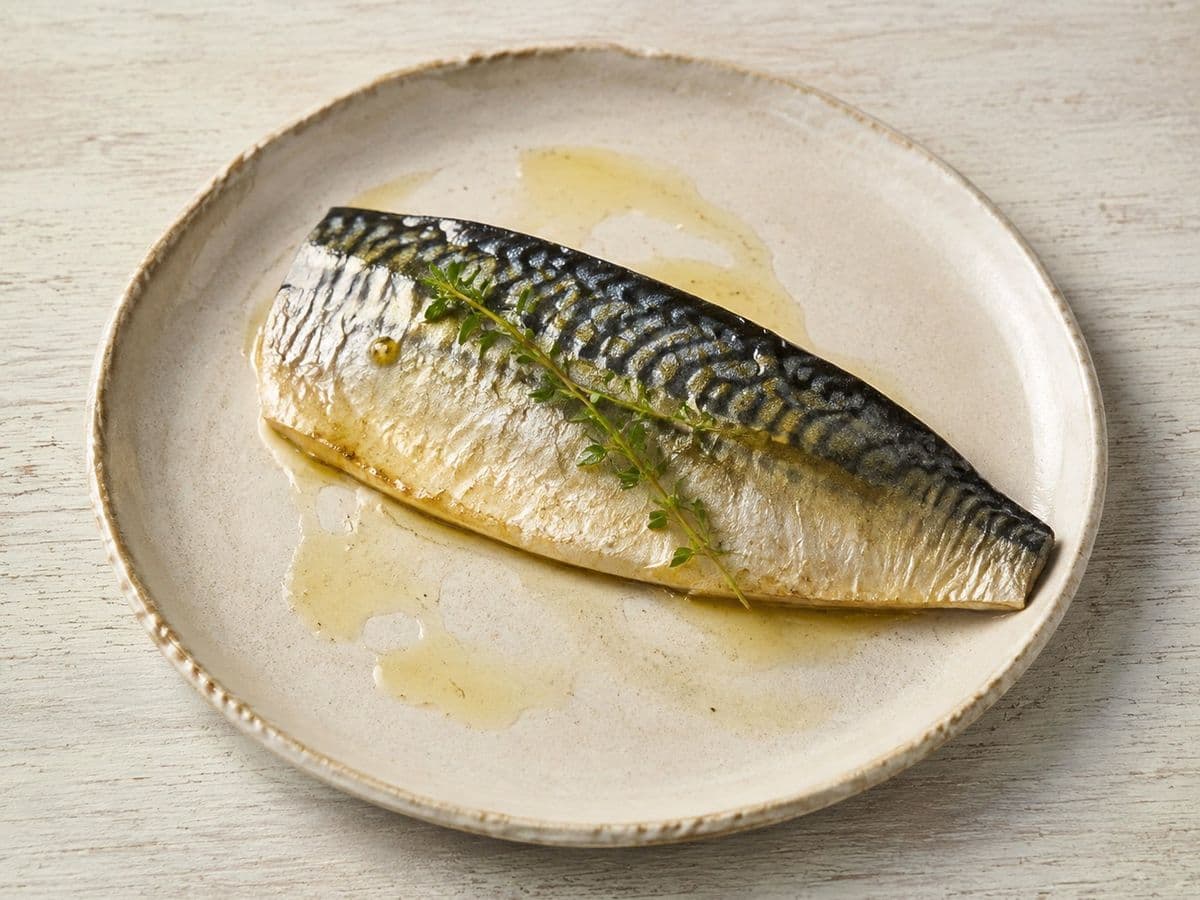
329 kcal a serving, against 645 for the traditional version. That is 316 kcal off, or 49%, with 31.1g of protein. Serves 2. 25 minutes.
What the traditional version is
The standard: fresh mackerel fillets, dusted with a bit of flour and fried in a generous knob of butter. A quick pan sauce follows, using the brown butter, a splash of white wine, a spoonful of double cream, lemon, and parsley. The sauce is poured over the fish and usually mopped up with bread.
What changed, and what each change costs
Butter-fried to dry-fried mackerel
Mackerel is naturally oily. Get a non-stick frying pan hot and put the scored fillets in skin-side down, and they release enough oil to crisp up beautifully without any help from butter.
What it costs you. Forget the nutty, brown-butter flavour you get with the original. The skin's still crisp, but the depth is missing. You're leaning entirely on the fish. Good news if you like it, not if you're here for the butter bath.
Flour dusting out, just seasoned
The flour soaks up a bit of butter and helps the skin colour, but the real reason it's there is to give you a crust. If we're not using butter, you don't need it, and you save some pointless calories and gluten.
What it costs you. You lose that extra crunch. The skin gets crispy enough, but you don't get the same textured bite. The fish is now the main event, for better or worse.
Cream and wine sauce to a yoghurt-lemon dressing
Double cream and wine produce a sauce that's rich enough to make you check your pulse. You can fake something similar with strained fat-free Greek yoghurt, lemon, and parsley. It's tangy, not lush, but it brings some brightness. The texture's thinner, but you won't need a nap.
What it costs you. Call this a sauce only if you're feeling charitable. There's no gloss or luxurious thickness - just a clean, cool tang. If you want the velvet, you need the cream. No judgement.
Bread out entirely
The bread is mostly there to mop up the butter and sauce. If they're both lighter, the bread's not doing much work, so you can skip it.
What it costs you. Less to fill you up, so the meal's all about the fish. If you're starving or want to stretch it, serve with salad or boiled new potatoes on the side - but that's another recipe.
What goes in it
The ingredients, without the quantities. The weights are what the figures below are computed from, and they are in the book.
- Fresh mackerel fillets
- Fat-free Greek yoghurt
- Lemon juice
- Fresh parsley
- Salt
- Black pepper
How it starts
- Pat the mackerel fillets dry with kitchen paper.
- Season both sides with salt and a smidge of black pepper.
- Get a non-stick frying pan hot - almost smoking.
The rest of the method, and every weight, is in Authentic-ish British.
The numbers
| Per serving | Traditional | Lightened |
|---|---|---|
| Calories | 645 | 329 |
| Protein | 32.4g | 31.1g |
| Fat | 43.3g | 21g |
| Saturated fat | 18.5g | 4.9g |
| Carbohydrate | 24.9g | 2.1g |
| Protein per 100 kcal | 5g | 9.5g |
Every figure is computed from the recipe's own weighed ingredient list against public food composition databases. The appendix in Authentic-ish British prints the exact database row used for each ingredient, so any number here can be checked. How every number is computed sets out the method.
Allergens. fish, milk.
The method is in the book
You lose something by ditching the butter and cream. The sauce doesn't cling, and there's no nutty, toasted edge. But the fish tastes clean and strong, and the yoghurt brings enough sharpness to balance the oiliness. If the original is a pub lunch with a pint, this is more Tuesday night with a glass of water. The difference is obvious, but you can eat this one and still fancy a walk up the stairs afterwards.
The quantities and the method for this dish are in Authentic-ish British, along with 56 more. Buy the paperback
More from Authentic-ish British
- Battered Cod and Chips, 476 kcal a serving, 39% off
- Smoked Haddock Kedgeree, 370 kcal a serving, 34% off
- Fish Pie, 386 kcal a serving, 38% off
- Scampi and Chips, 405 kcal a serving, 49% off
- Deep-fried Whitebait, 332 kcal a serving, 22% off
- Cullen skink, 245 kcal a serving, 39% off
Every British dish and its calories · Every dish in the series