Chinese · Authentic-ish Chinese
Char Siu
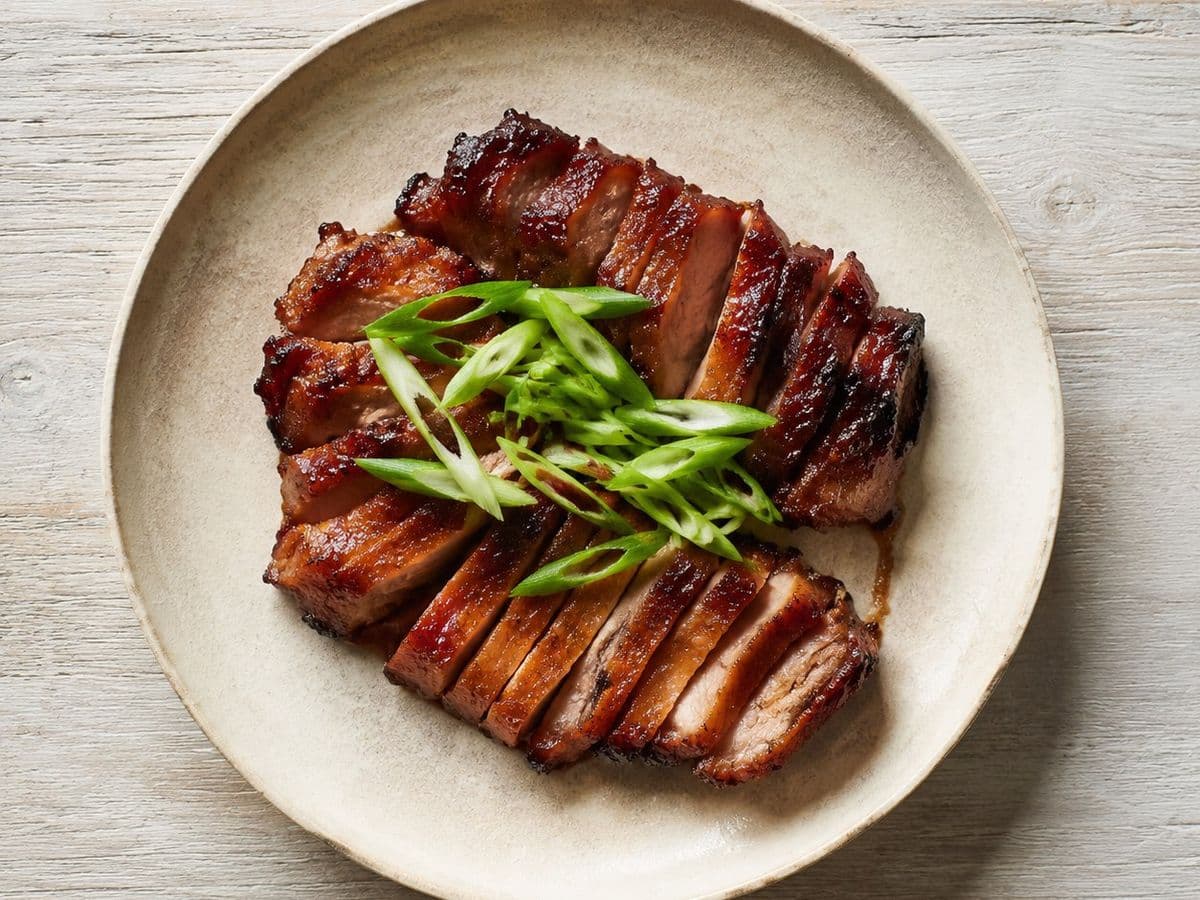
322 kcal a serving, against 530 for the traditional version. That is 208 kcal off, or 39%, with 33.9g of protein. Serves 6. 5 hours.
What the traditional version is
Thick strips of extremely fatty pork belly or untrimmed shoulder left to sit in a highly sweetened paste of hoisin, soy sauce, sesame oil and yellow rock sugar. The meat is roasted at a high heat until the fat renders out and the sugar forms a thick, heavy, slightly charred lacquer on the outside.
What changed, and what each change costs
1000g of fatty pork for 1000g of lean pork shoulder
Ditching the thick layers of fat reduces the overall load massively while retaining a solid, dense chunk of meat.
What it costs you. You lose the melt-in-the-mouth texture of rendered belly fat. Lean shoulder has a firmer, meatier bite. You end up with a proper roast joint. The version that's a jelly-like pork sweet is still out there and still better.
120g of sugar down to 60g
Halving the sugar strips out dead weight while keeping just enough sweetness to balance the salty soy sauce and hoisin.
What it costs you. The glaze is thinner and less brilliantly sticky. You won't get that thick, glass-like coating that sticks to your teeth.
15g of sesame oil dropped entirely
The hoisin already brings enough flavour to the marinade. Extra oil just runs off the meat and into the roasting tin anyway.
What it costs you. You miss a slight toasted aroma on the finish, but the five-spice powder steps up nicely to cover the gap.
What goes in it
The ingredients, without the quantities. The weights are what the figures below are computed from, and they are in the book.
- Pork shoulder
- Caster sugar
- Hoisin sauce
- Light soy sauce
- Shaoxing wine
- Five-spice powder
How it starts
- Cut the lean pork into long strips, roughly 5cm thick.
- Mix the sugar, hoisin, soy sauce, shaoxing and five-spice in a large bowl.
- Drop the pork strips into the bowl and turn them over until every piece is completely coated.
The rest of the method, and every weight, is in Authentic-ish Chinese.
The numbers
| Per serving | Traditional | Lightened |
|---|---|---|
| Calories | 530 | 322 |
| Protein | 29.9g | 33.9g |
| Fat | 33g | 12.4g |
| Saturated fat | 10.8g | 4.2g |
| Carbohydrate | 25.6g | 15.6g |
| Protein per 100 kcal | 5.7g | 10.5g |
Every figure is computed from the recipe's own weighed ingredient list against public food composition databases. The appendix in Authentic-ish Chinese prints the exact database row used for each ingredient, so any number here can be checked. How every number is computed sets out the method.
Allergens. gluten, soybeans, sulphites.
The method is in the book
Serve this hot with a pile of steamed greens and you'll realise how well the lean shoulder holds up. The salty, sweet bark gives you the classic char siu flavour profile, while the meat itself is firm and incredibly filling. It absolutely lacks the sheer richness of a fatty restaurant belly cut, and you'll miss that luxurious mouthfeel if you expect it. Accept the compromise. You get a massive hit of savoury protein that you can actually eat on a Tuesday night without feeling terrible.
The quantities and the method for this dish are in Authentic-ish Chinese, along with 55 more. Buy the paperback
More from Authentic-ish Chinese
- Hong Shao Rou, 382 kcal a serving, 38% off
- Twice Cooked Pork, 314 kcal a serving, 44% off
- Steamed Minced Pork with Egg, 265 kcal a serving, 37% off
- Sweet and Sour Pork, 339 kcal a serving, 58% off
- Kung Pao Chicken, 352 kcal a serving, 32% off
- Mapo Tofu, 314 kcal a serving, 28% off
Every Chinese dish and its calories · Every dish in the series