Chinese · Authentic-ish Chinese
Steamed Minced Pork with Egg
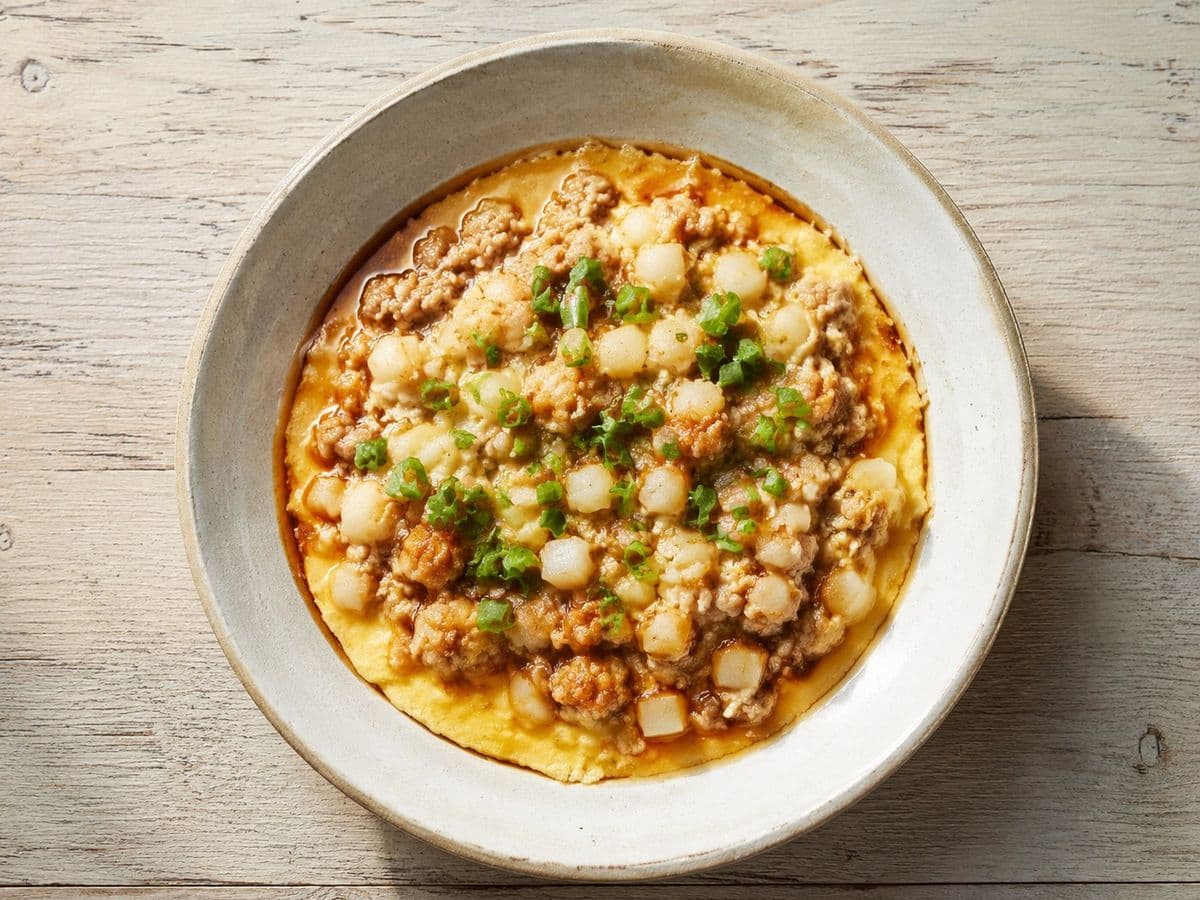
265 kcal a serving, against 418 for the traditional version. That is 153 kcal off, or 37%, with 33.6g of protein. Serves 4. 35 minutes.
What the traditional version is
Hand-chopped pork belly or heavily marbled fatty shoulder, mixed with soy sauce and wine, then formed into a giant patty. Steamed with whole eggs cracked over the top, resulting in a rich, oily pool of meat juices that demands to be soaked up with steaming hot rice.
What changed, and what each change costs
500g of fatty pork for 4% fat lean pork mince
Fatty pork melts as it steams, creating a luscious texture. Lean pork mince drops the fat down to almost nothing while keeping the meaty base intact.
What it costs you. You lose the melt-in-the-mouth magic. The lean mince is firmer and takes more chewing, even with the extra liquid beaten into it.
15g of sesame oil down to 5g
I use just enough sesame oil for the aroma. Dropping the quantity saves pure fat without sacrificing that distinct nutty smell.
What it costs you. The finished dish lacks that slick, oily sheen on top that makes the traditional version look so deeply appealing.
Adding 50g of chopped water chestnuts
Without the fat to lubricate the mince, the patty can feel slightly dense. The water chestnuts add tiny pockets of crunch that break up the heavy protein.
What it costs you. Purists might argue they distract from the pure meatiness of the dish. You'll definitely notice the crunchy bits.
What goes in it
The ingredients, without the quantities. The weights are what the figures below are computed from, and they are in the book.
- Pork mince
- Light soy sauce
- Shaoxing wine
- Toasted sesame oil
- Fresh ginger
- Spring onions
- Water chestnuts
- Egg
- Salt
How it starts
- Finely chop the water chestnuts and slice the spring onions.
- Put the lean pork mince, soy sauce, shaoxing wine, sesame oil, ginger, and salt into a large mixing bowl.
- Stir everything together in one direction using a pair of chopsticks or a fork.
The rest of the method, and every weight, is in Authentic-ish Chinese.
The numbers
| Per serving | Traditional | Lightened |
|---|---|---|
| Calories | 418 | 265 |
| Protein | 28.6g | 33.6g |
| Fat | 31.1g | 11.1g |
| Saturated fat | 9.9g | 3.5g |
| Carbohydrate | 2.1g | 5.4g |
| Protein per 100 kcal | 6.8g | 12.7g |
Every figure is computed from the recipe's own weighed ingredient list against public food composition databases. The appendix in Authentic-ish Chinese prints the exact database row used for each ingredient, so any number here can be checked. How every number is computed sets out the method.
Allergens. eggs, gluten, sesame, soybeans, sulphites.
The method is in the book
This dish is a massive win for your daily protein intake, but This is a firmer, meatier dish. Nobody is going to mistake it for an exact replica. The texture is undeniably denser. Beating water into the lean mince helps immensely, and the water chestnuts add a brilliant crunch, but you can definitely tell the fatty pork belly is missing. That said, breaking a runny, golden yolk over savoury, soy-scented meat is still one of the best things you can eat. It provides a huge hit of savoury comfort, and you won't need a nap afterwards.
The quantities and the method for this dish are in Authentic-ish Chinese, along with 55 more. Buy the paperback
More from Authentic-ish Chinese
- Char Siu, 322 kcal a serving, 39% off
- Hong Shao Rou, 382 kcal a serving, 38% off
- Twice Cooked Pork, 314 kcal a serving, 44% off
- Sweet and Sour Pork, 339 kcal a serving, 58% off
- Kung Pao Chicken, 352 kcal a serving, 32% off
- Mapo Tofu, 314 kcal a serving, 28% off
Every Chinese dish and its calories · Every dish in the series