Chinese · Authentic-ish Chinese
Egg Fried Rice
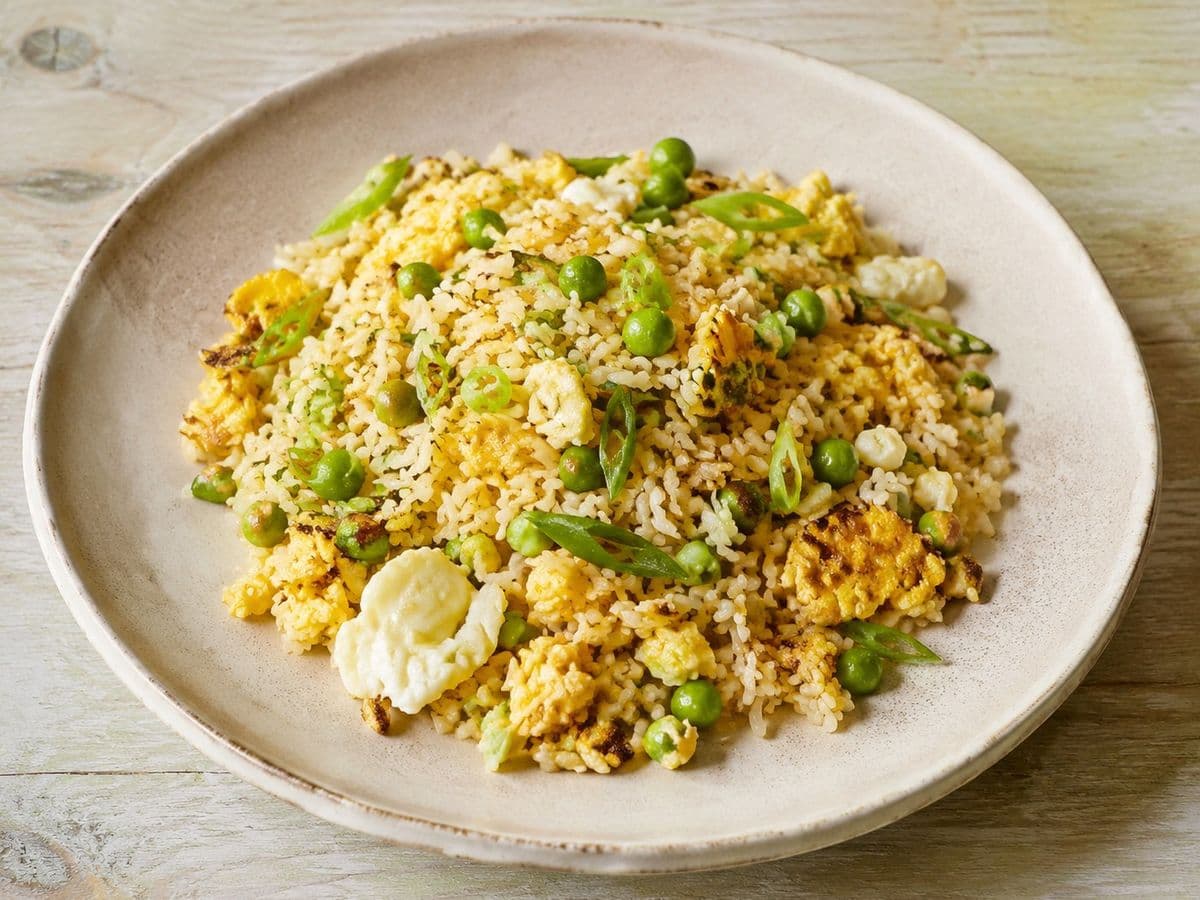
359 kcal a serving, against 563 for the traditional version. That is 204 kcal off, or 36%, with 14.1g of protein. Serves 4. 15 minutes.
What the traditional version is
A mountain of day-old white rice tossed in a fiercely hot wok with an excessive amount of oil. 3 whole eggs are scrambled into the fat, followed by spring onions and soy sauce. The massive oil content ensures every single grain is separated, slippery and golden.
What changed, and what each change costs
80g of groundnut oil down to 15g
Oil is the only reason takeaway rice separates so perfectly. Slashing the fat load massively changes the profile of the dish, removing the heavy grease.
What it costs you. The rice will clump slightly. You have to work the pan much harder to stop the starches catching, and it won't have that slick, slippery mouthfeel.
Swapping half the whole eggs for 150g of pure egg white
Egg yolks carry fat. Swapping some out for pure egg white boosts the protein through the roof without dragging the calories back up.
What it costs you. You lose a little of the rich, golden colour that coats the rice in the traditional dish.
Dropping 50g of rice and adding 100g of frozen peas
Shaving off a fraction of the starch makes room for peas, which bring a tiny bit of protein and a lot of extra bulk to the plate.
What it costs you. Purists hate peas in fried rice. A home-cooked dinner, then. Not a traditional street food staple anymore, and I'm not going to pretend otherwise.
What goes in it
The ingredients, without the quantities. The weights are what the figures below are computed from, and they are in the book.
- Long-grain white rice
- Groundnut oil
- Egg
- Egg white
- Frozen peas
- Spring onions
- Light soy sauce
- Toasted sesame oil
- Salt
How it starts
- If you're cooking the rice fresh today, you must let it go completely cold before frying.
- Crack the whole eggs into a jug, add the egg whites and beat them together with a fork.
- Put your largest frying pan over the highest heat your stove can manage.
The rest of the method, and every weight, is in Authentic-ish Chinese.
The numbers
| Per serving | Traditional | Lightened |
|---|---|---|
| Calories | 563 | 359 |
| Protein | 12.5g | 14.1g |
| Fat | 29.1g | 8g |
| Saturated fat | 5.6g | 1.7g |
| Carbohydrate | 61.6g | 56g |
| Protein per 100 kcal | 2.2g | 3.9g |
Every figure is computed from the recipe's own weighed ingredient list against public food composition databases. The appendix in Authentic-ish Chinese prints the exact database row used for each ingredient, so any number here can be checked. How every number is computed sets out the method.
Allergens. peanuts, eggs, soybeans, gluten, sesame.
The method is in the book
This is the first thing I cook when I have leftover rice in the fridge. You've got to accept that less oil means more effort. You'll be stood over the stove, smashing clumps of rice with a wooden spoon and sweating over a smoking hot pan. The trade is completely worth it. You get a massive pile of deeply savoury, satisfying food with a huge protein hit, and you won't feel heavily weighed down for the rest of the night. Don't skip the furious tossing at the end, or you'll end up with a burnt omelette mixed with sad rice.
The quantities and the method for this dish are in Authentic-ish Chinese, along with 55 more. Buy the paperback
More from Authentic-ish Chinese
- Chow Mein, 341 kcal a serving, 55% off
- Dan Dan Noodles, 475 kcal a serving, 48% off
- Beef Ho Fun, 495 kcal a serving, 33% off
- Congee, 284 kcal a serving, 32% off
- Singapore Noodles, 492 kcal a serving, 34% off
- Beef Brisket Noodle Soup, 590 kcal a serving, 29% off
Every Chinese dish and its calories · Every dish in the series