Chinese · Authentic-ish Chinese
Dan Dan Noodles
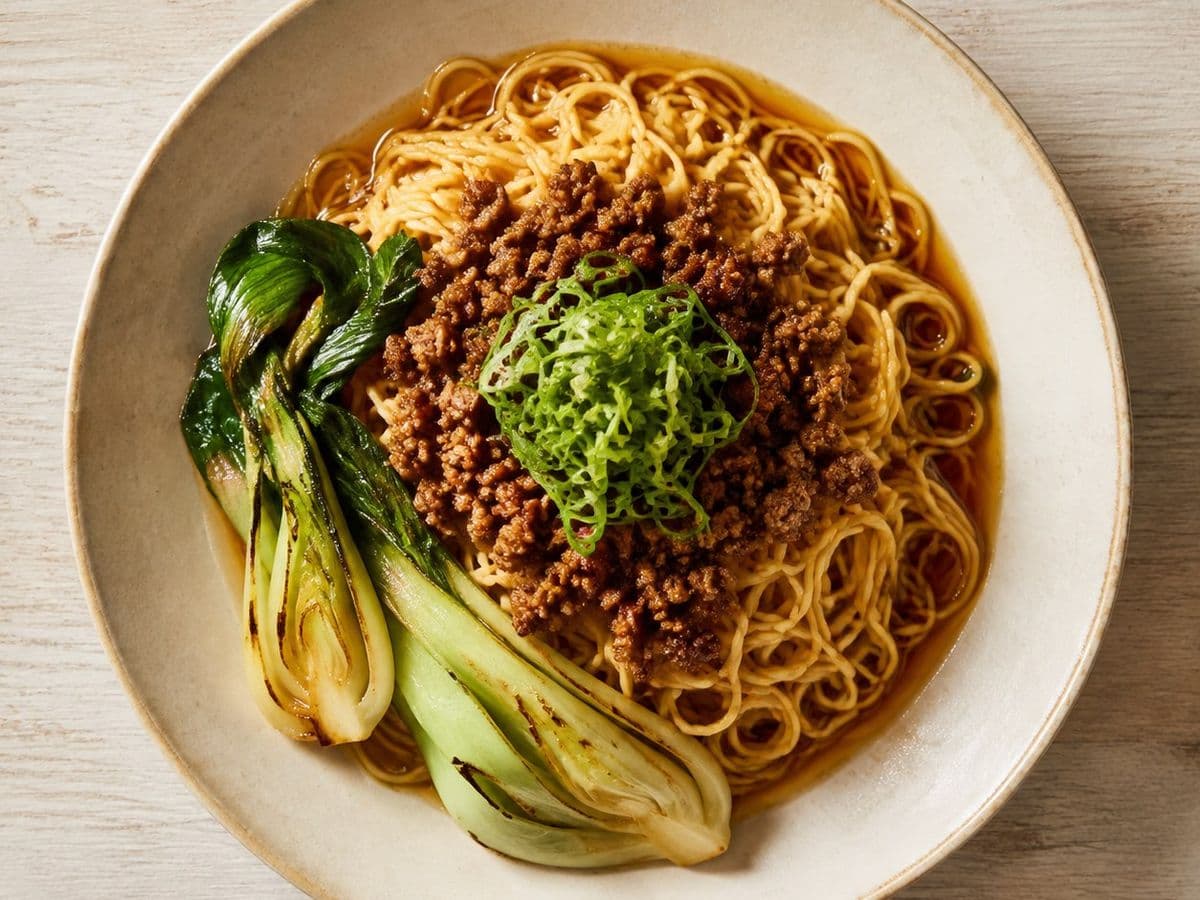
475 kcal a serving, against 906 for the traditional version. That is 431 kcal off, or 48%, with 34.7g of protein. Serves 4. 20 minutes.
What the traditional version is
Fatty minced pork fried until crisp, served over a massive portion of wheat noodles. The whole lot sits in a deep bath of roasted sesame paste, soy sauce and heavily spiced chilli oil.
What changed, and what each change costs
80g of chilli oil and 100g of sesame paste down to 15g of oil and 25g of paste
Oil and nut pastes are dense with fat. Cutting them right down drops a staggering amount of grease from the bowl while keeping a ghost of that roasted flavour.
What it costs you. You lose the famous red oil slick. This is a tight, highly seasoned dressing that clings to the noodles. Nobody is going to mistake it for a deep pool of slick red grease.
300g of fatty pork for 400g of lean pork mince
Lean pork gives you much more meat and a massive protein hit without pouring rendered animal fat into your bowl.
What it costs you. Very lean pork dries out quickly in a hot frying pan. You have to watch it closely and get it out of the heat the second it finishes browning.
400g of egg noodles down to 250g, adding 300g of pak choi
Taking away 150g of dried noodles removes a big block of pure starch. Dumping in loads of fresh green pak choi keeps the bowl looking huge and adds great crunch.
What it costs you. It feels more like a noodle salad than a heavy pasta dish. The greens dilute the sauce slightly, so you have to toss it thoroughly.
What goes in it
The ingredients, without the quantities. The weights are what the figures below are computed from, and they are in the book.
- Dried egg noodles
- Pork mince
- Pak choi
- Chicken stock
- Light soy sauce
- Sesame paste
- Sunflower oil
- Garlic
- Dried chilli flakes
How it starts
- Put a large pan of salted water on to boil for your noodles and greens.
- Mix the sesame paste, soy sauce, 50g of the chicken stock and the chilli flakes in a bowl.
- Heat the sunflower oil in a large frying pan over a high heat.
The rest of the method, and every weight, is in Authentic-ish Chinese.
The numbers
| Per serving | Traditional | Lightened |
|---|---|---|
| Calories | 906 | 475 |
| Protein | 33g | 34.7g |
| Fat | 51.7g | 15g |
| Saturated fat | 9.9g | 3.2g |
| Carbohydrate | 79.9g | 52.3g |
| Protein per 100 kcal | 3.6g | 7.3g |
Every figure is computed from the recipe's own weighed ingredient list against public food composition databases. The appendix in Authentic-ish Chinese prints the exact database row used for each ingredient, so any number here can be checked. How every number is computed sets out the method.
Allergens. eggs, gluten, milk, sesame, soybeans.
The method is in the book
You give up the rich, oily mouthfeel of a restaurant noodle dish. There is no hiding that. The slick, heavy comfort of drinking pure sesame oil is gone entirely. What you gain is a sharp, fiercely savoury bowl of noodles that you can eat on a Tuesday lunchtime. The lean pork delivers plenty of flavour, and the pak choi brings a fresh crunch that the original completely lacks. It hurts to lose the grease, but your waistline will thank you.
The quantities and the method for this dish are in Authentic-ish Chinese, along with 55 more. Buy the paperback
More from Authentic-ish Chinese
- Chow Mein, 341 kcal a serving, 55% off
- Egg Fried Rice, 359 kcal a serving, 36% off
- Beef Ho Fun, 495 kcal a serving, 33% off
- Congee, 284 kcal a serving, 32% off
- Singapore Noodles, 492 kcal a serving, 34% off
- Beef Brisket Noodle Soup, 590 kcal a serving, 29% off
Every Chinese dish and its calories · Every dish in the series