German · Authentic-ish German
Leberkase
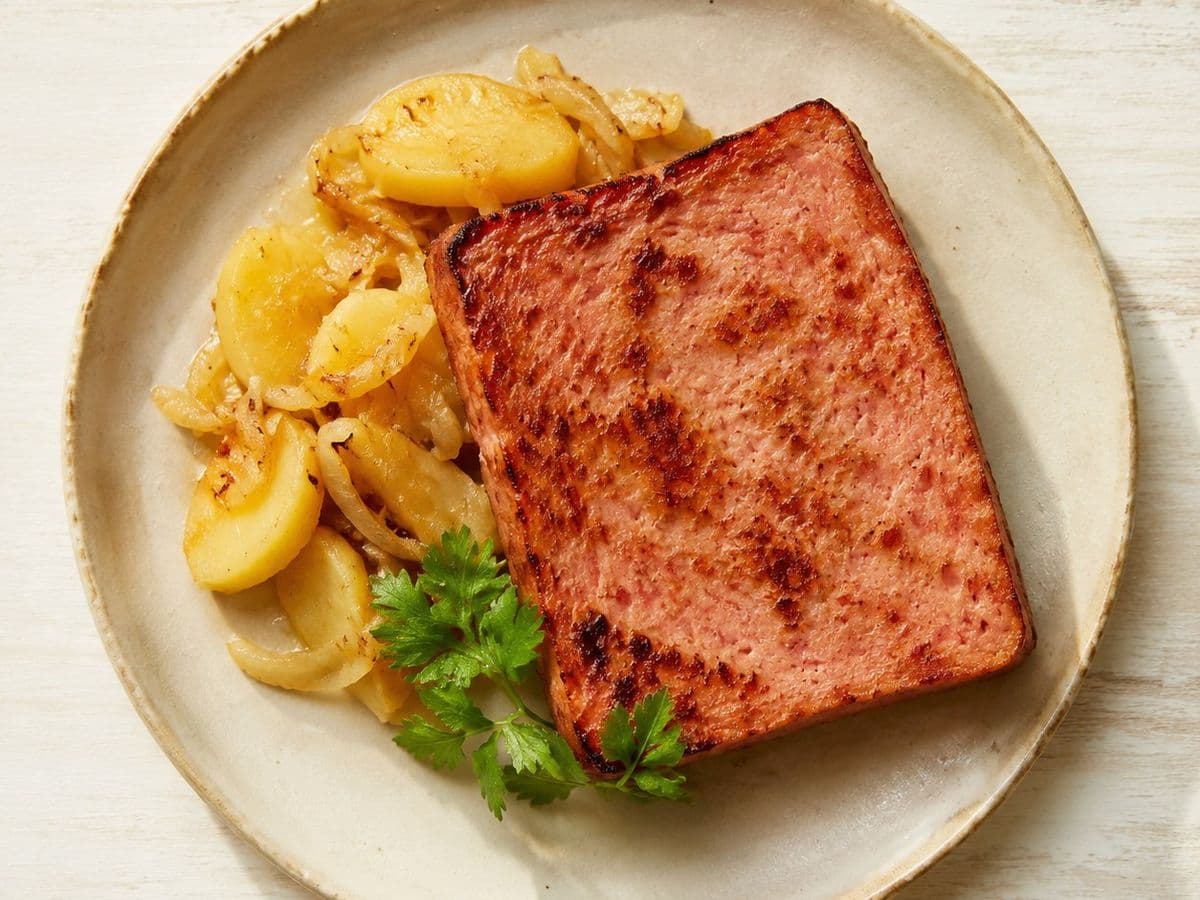
300 kcal a serving, against 560 for the traditional version. That is 260 kcal off, or 46%, with 35.4g of protein. Serves 6. 2 hours.
What the traditional version is
The classic recipe blitzes pork shoulder, veal, and pork belly or back fat together with ice, onions, and seasoning, then bakes the mixture in a loaf tin. Sliced thick, it's served with mustard in a roll, or fried. Some versions tip extra lard on top for a shiny crust. It's unapologetically hefty.
What changed, and what each change costs
600g of pork shoulder (with fat) and 50g of butter down to 400g turkey mince and 400g pork shoulder, fat trimmed, no butter at all
The fatty pork and butter are what make Leberkase so rich and glossy. I use lean pork shoulder (trimmed hard) and turkey mince instead, keeping the texture light but still meaty. The turkey knocks the fat and calories down, and you still get some proper pork flavour.
What it costs you. The bounce isn't the same. There's a bit less succulence, and it won't crisp up round the edges in quite the same way when you fry it. The trade? You actually feel like eating another bite rather than heading straight for a nap.
300g veal down to 200g chicken breast, blitzed raw
Veal is lean, but expensive and awkward. Chicken breast is affordable, extremely lean, and once blitzed, nobody will know it's not veal. This keeps the overall texture light and the protein high.
What it costs you. Some flavour depth is lost, but let's be honest - Leberkase was never about subtlety. The seasoning does the heavy lifting anyway.
200g whole milk down to 120g semi-skimmed milk
Semi-skimmed milk hydrates the mix well enough, and you don't need the extra fat. You lose a little creaminess but the loaf stays moist.
What it costs you. The top crust doesn't go as glossy because there's no fat bubbling up, but you can live without it.
2 whole eggs down to 2 egg whites
Egg whites hold everything together and boost the protein. You lose the golden tinge and a little tenderness from the yolks.
What it costs you. It won't slice quite as neatly, and will feel a bit firmer. Honestly, nothing to lose sleep over.
Frying slices in butter down to just dry-frying or using a slick of vegetable oil in a non-stick pan
No butter in the frying. Just don't.
What it costs you. You lose that buttery aroma and crisp golden edge. But it's still satisfying.
What goes in it
The ingredients, without the quantities. The weights are what the figures below are computed from, and they are in the book.
- Pork shoulder
- Turkey mince
- Chicken breast
- Onion
- Semi-skimmed milk
- Egg white
- Salt
- Black pepper
- Nutmeg
- Plain flour
- Vegetable oil
How it starts
- Preheat the oven to 170C fan.
- Roughly chop the pork shoulder and chicken breast.
- Add the egg whites and keep blitzing, scraping down the sides.
The rest of the method, and every weight, is in Authentic-ish German.
The numbers
| Per serving | Traditional | Lightened |
|---|---|---|
| Calories | 560 | 300 |
| Protein | 38g | 35.4g |
| Fat | 40.1g | 13g |
| Saturated fat | 16.6g | 3.8g |
| Carbohydrate | 9.6g | 9g |
| Protein per 100 kcal | 6.8g | 11.8g |
Every figure is computed from the recipe's own weighed ingredient list against public food composition databases. The appendix in Authentic-ish German prints the exact database row used for each ingredient, so any number here can be checked. How every number is computed sets out the method.
Allergens. gluten, eggs, milk.
The method is in the book
There's no pretending this version is as satisfying as the real deal if you want that shattering crust and buttery mouthfeel, but it's close enough for a Tuesday night. You still get a warm, savoury slice, good texture, and real pork flavour. It might not bounce off the plate, but you can eat it without feeling like you've overdone it. The reduction in fat is obvious, but getting to eat Leberkase regularly is a win in itself.
The quantities and the method for this dish are in Authentic-ish German, along with 54 more. Buy the paperback
More from Authentic-ish German
- Zwiebelkuchen, 331 kcal a serving, 33% off
- Flammkuchen, 406 kcal a serving, 21% off
- Obatzda, 154 kcal a serving, 52% off
- Rollmops, 112 kcal a serving, 44% off
- Heringssalat, 286 kcal a serving, 40% off
- Wurstsalat, 210 kcal a serving, 58% off
Every German dish and its calories · Every dish in the series