German · Authentic-ish German
Wurstsalat
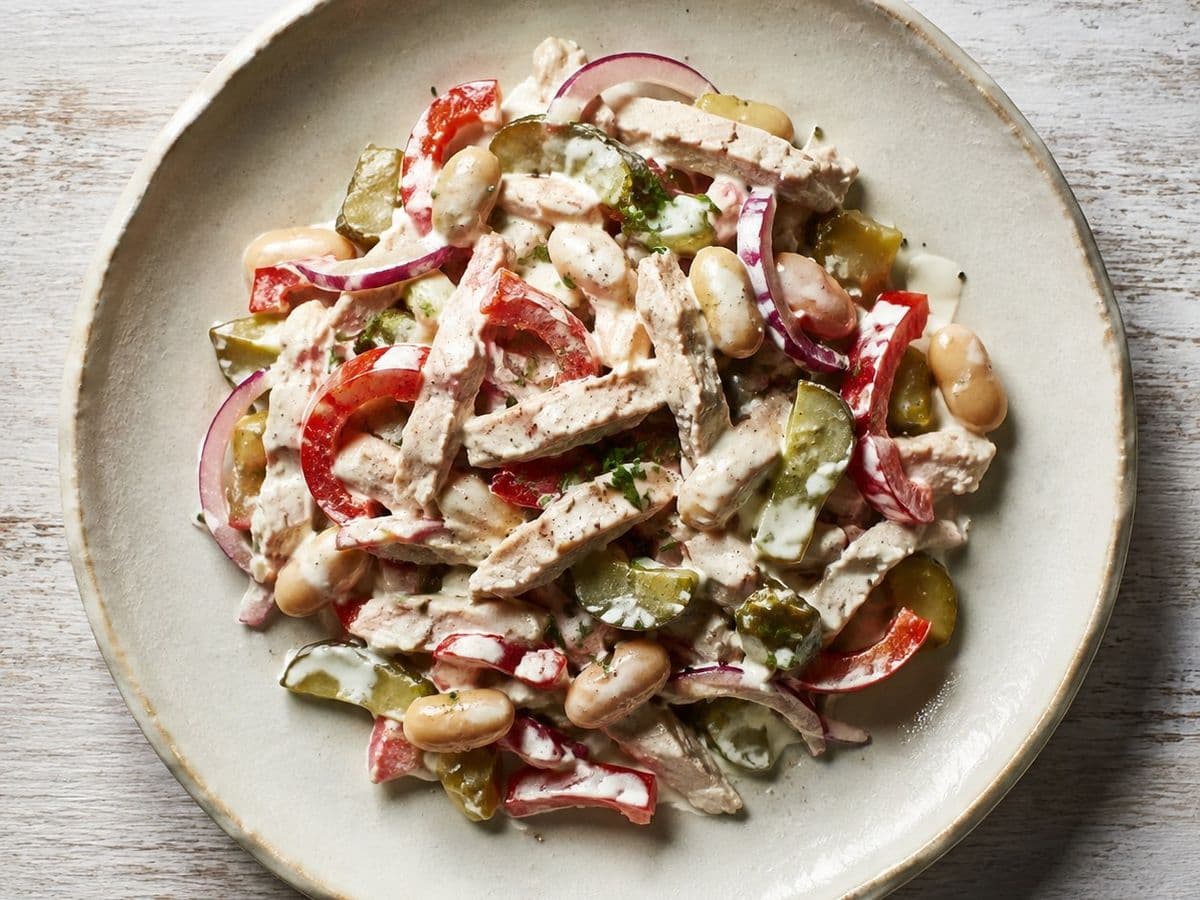
210 kcal a serving, against 505 for the traditional version. That is 295 kcal off, or 58%, with 28.8g of protein. Serves 4. 30 minutes.
What the traditional version is
Wurstsalat means "sausage salad" and the sausage is usually Lyoner, Regensburger or Fleischwurst: heavy, pale, German bologna. It gets sliced into matchsticks, mixed with raw onion, gherkins, and sometimes cubes of Emmental, and drowned in a simple vinaigrette. You eat it with crusty bread and beer, probably after a long walk.
What changed, and what each change costs
400g of Lyoner or bologna sausage swapped for 400g poached chicken breast
Sausage is mostly fat, salt and nostalgia, and it isn't getting you anywhere in the protein stakes. Slicing up lean chicken breast gives you nearly triple the protein, a fraction of the fat, and keeps the texture: if you chill the meat well and slice it thin, it stands up in the salad and takes the dressing.
What it costs you. Wurstsalat without sausage is heresy, and no Bavarian would call this salad. It lacks the gentle squidge and smoky, fatty sausage flavour. You gain a load of protein, but you lose the pub nostalgia. I can't magic the taste of sausage out of chicken, whatever you brine it in.
120g of Emmental swapped for 100g of quark
Emmental is there for a bit of richness and that glossy cheese pull. Quark has almost as much protein for less than half the calories, and helps coat everything in the dressing.
What it costs you. You lose the cheese's rubbery texture and nutty sweetness. Quark is creamy but bland. It works as glue for the dressing, but there's no way it's as good as Emmental.
30g of olive oil cut down to 10g
The salad is swimming in oil in the original, which is unnecessary with the chicken and quark. Cut the oil to just enough to lubricate the dressing and get the acidity across.
What it costs you. You lose some of that mouth-coating richness that makes pub salads so friendly to beer. The vinegar is a bit sharper. If that offends you, pour yourself another drink.
Adds 80g of sliced red pepper and 100g of tinned cannellini beans
The original is all about the sausage, but swapping in beans and red pepper bulks up the salad, adds fibre and extra protein, and gets a few vegetables onto your plate. It's not authentic. It is a decent lunch.
What it costs you. You'll notice this straight away. It looks bright, not beige. The beans add substance but they aren't fooling anyone into thinking they are pork.
What goes in it
The ingredients, without the quantities. The weights are what the figures below are computed from, and they are in the book.
- Chicken breast
- Onion
- Gherkins
- Quark
- Olive oil
- White wine vinegar
- Black pepper
- Salt
- Red pepper
- Tinned cannellini beans
How it starts
- Poach the chicken breasts.
- As soon as the chicken is cooked, pull it out, dry it, and let it cool completely.
- While the chicken cools, slice the onions paper thin.
The rest of the method, and every weight, is in Authentic-ish German.
The numbers
| Per serving | Traditional | Lightened |
|---|---|---|
| Calories | 505 | 210 |
| Protein | 19.8g | 28.8g |
| Fat | 41.7g | 5.7g |
| Saturated fat | 15.9g | 1g |
| Carbohydrate | 13.7g | 10.1g |
| Protein per 100 kcal | 3.9g | 13.7g |
Every figure is computed from the recipe's own weighed ingredient list against public food composition databases. The appendix in Authentic-ish German prints the exact database row used for each ingredient, so any number here can be checked. How every number is computed sets out the method.
Allergens. milk, sulphites.
The method is in the book
It is not a sausage salad. It is a chicken and bean salad wearing a German hat. I have to say, though, it's actually a good lunch: high in protein, fills you up, and the dressing is sharp enough to wake you up after an afternoon beer. No one will mistake it for the stuff served in a Bavarian pub, but if you want a salad that doesn't leave you hungry in half an hour, you could do a lot worse.
The quantities and the method for this dish are in Authentic-ish German, along with 54 more. Buy the paperback
More from Authentic-ish German
- Zwiebelkuchen, 331 kcal a serving, 33% off
- Flammkuchen, 406 kcal a serving, 21% off
- Obatzda, 154 kcal a serving, 52% off
- Leberkase, 300 kcal a serving, 46% off
- Rollmops, 112 kcal a serving, 44% off
- Heringssalat, 286 kcal a serving, 40% off
Every German dish and its calories · Every dish in the series