German · Authentic-ish German
Rollmops
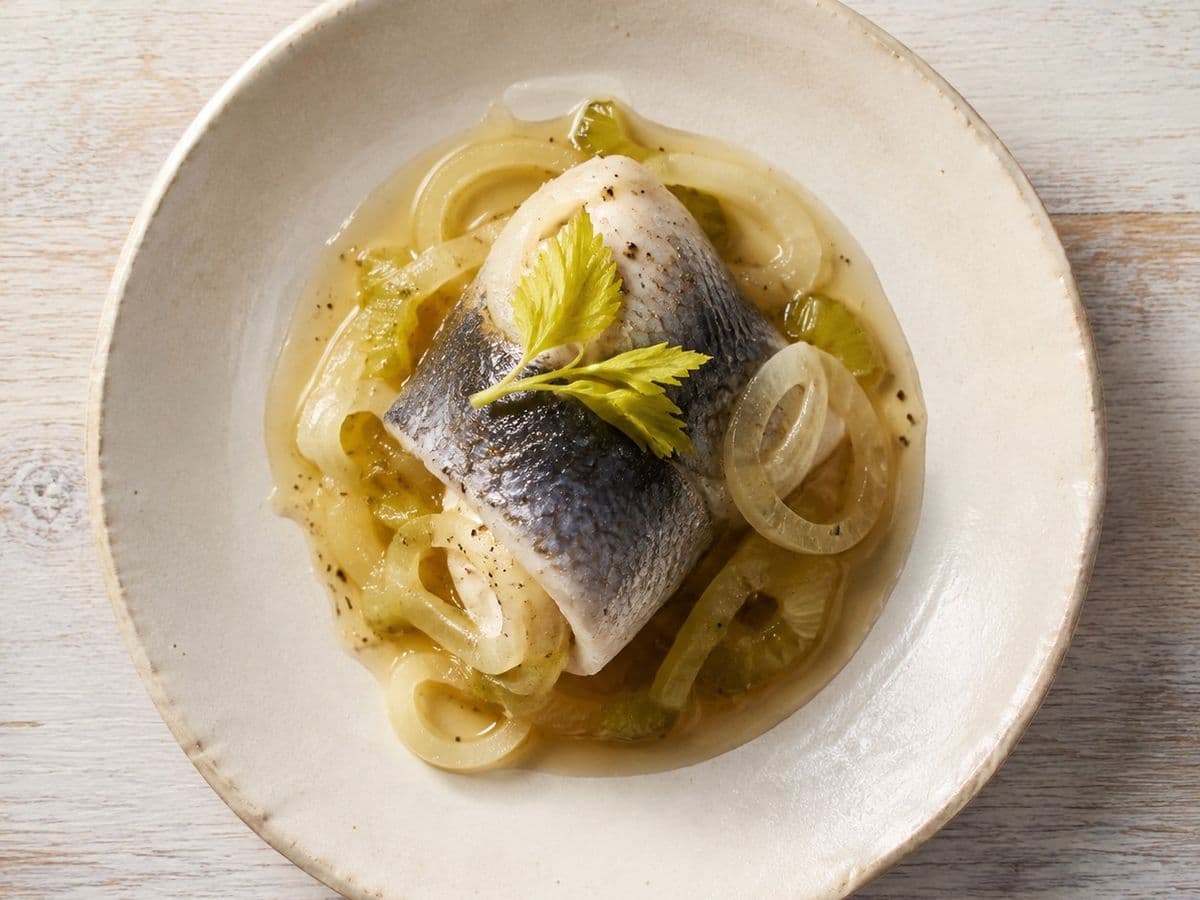
112 kcal a serving, against 200 for the traditional version. That is 88 kcal off, or 44%, with 18.2g of protein. Serves 6. 25 minutes plus marinating.
What the traditional version is
Proper rollmops are classic German beer accompaniments. You start with herring fillets (or sometimes sardines), cure them in a brine of white wine vinegar with onions, bay leaf, peppercorns, and other aromatics, then roll them round strips of gherkin or pickled onion. You spear them to hold their shape and leave them to pickle further in the fridge. The result is soft, salty, tangy, and goes perfectly with rye bread and a cold spirit.
What changed, and what each change costs
600g herring down to 600g cod fillet
Herring is a lovely oily fish, and exactly the point of rollmops, but it's high in fat. Cod is the first swap that comes to mind: sturdy enough for pickling, vastly leaner, and you can still roll it around a pickle if you're persistent.
What it costs you. The taste and texture change completely. Herring cures beautifully, picking up sharpness and staying soft. Cod just gets firmer and blander in vinegar. If you want that dark, slightly unctuous tang, you'll need to go to Hamburg and eat the real thing.
White wine vinegar and wine to cider vinegar, holding the onions, bay and pepper
White wine vinegar is more traditional, but I use cider vinegar because it's everywhere here and has a softer tang. It's also sometimes less likely to contain hidden added sulphites. Either will work, so use what you have.
What it costs you. A proper rollmop has a gentle floral sharpness from the wine and vinegar. Cider vinegar comes off a touch more blunt. It isn't the end of the world, but it's not what your German aunt would use.
Gherkin down to celery for crunch, as there's no key for gherkin
No gherkin in my store cupboard, so celery steps in for crunch. It's plain, but it does the job just enough to remind you what's missing.
What it costs you. Without the gherkin or proper pickled onion, what you get is a faint echo of the real thing. You'll want to add a slice of rye bread and pretend.
What goes in it
The ingredients, without the quantities. The weights are what the figures below are computed from, and they are in the book.
- Cod fillet
- Onion
- Dry cider
- Celery
- Bay leaf
- Black pepper
- Salt
- Caster sugar
How it starts
- Slice the cod fillets lengthways into strips about 3cm wide.
- In a saucepan, heat the cider with the vinegar (if using; see below), salt, sugar, bay leaf, and pepper.
- Cut the celery into thin batons - enough to fit the length of the cod strips.
The rest of the method, and every weight, is in Authentic-ish German.
The numbers
| Per serving | Traditional | Lightened |
|---|---|---|
| Calories | 200 | 112 |
| Protein | 18.4g | 18.2g |
| Fat | 9.2g | 0.8g |
| Saturated fat | 2.1g | 0.2g |
| Carbohydrate | 5.4g | 5.8g |
| Protein per 100 kcal | 9.2g | 16.2g |
Every figure is computed from the recipe's own weighed ingredient list against public food composition databases. The appendix in Authentic-ish German prints the exact database row used for each ingredient, so any number here can be checked. How every number is computed sets out the method.
Allergens. fish, celery.
The method is in the book
Honestly, this is a fishy pickle by association. Cod will never be herring, and celery isn't a gherkin. It's fine as a sharp, refreshing plate to wake you up, but nobody's grandmother would call this rollmops. Still, if you want that vinegary bite without the oily calories, it's a decent stand-in that does notch up the protein by a good bit. Just don't serve it to a German expecting the real deal.
The quantities and the method for this dish are in Authentic-ish German, along with 54 more. Buy the paperback
More from Authentic-ish German
- Zwiebelkuchen, 331 kcal a serving, 33% off
- Flammkuchen, 406 kcal a serving, 21% off
- Obatzda, 154 kcal a serving, 52% off
- Leberkase, 300 kcal a serving, 46% off
- Heringssalat, 286 kcal a serving, 40% off
- Wurstsalat, 210 kcal a serving, 58% off
Every German dish and its calories · Every dish in the series