Japanese · Authentic-ish Japanese
Goma-ae
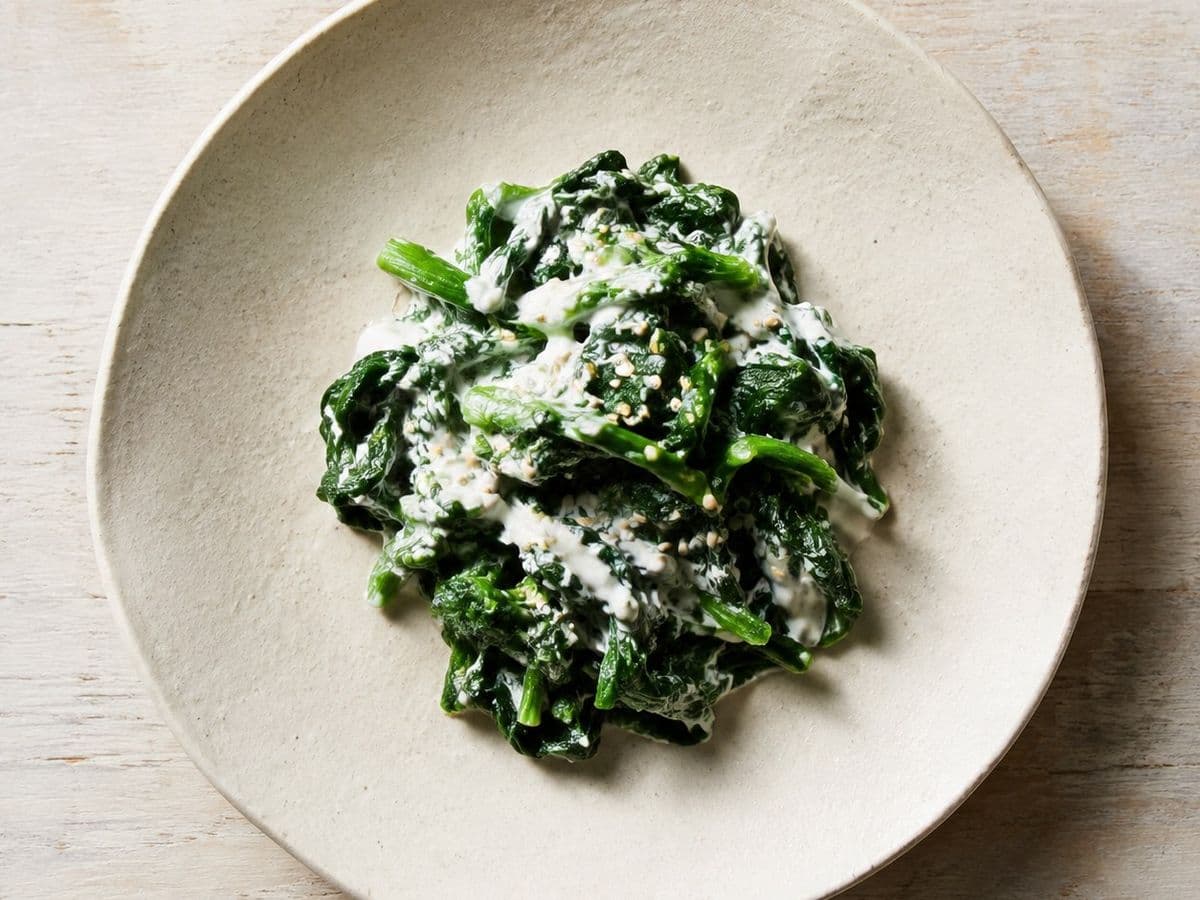
84 kcal a serving, against 117 for the traditional version. That is 33 kcal off, or 28%, with 6.2g of protein. Serves 4. .
What the traditional version is
A classic side plate found everywhere from home kitchens to bento boxes. You blanch a pile of spinach, squeeze it dry, and toss it with a dressing made by grinding toasted sesame seeds, sweetening them with sugar, and adding soy sauce and a drip of dashi. The dressing is thick, creamy, and in no way shy with the sesame.
What changed, and what each change costs
Halved the sesame seeds, swapped in fat-free Greek yoghurt
Sesame is the main event, but it's also where all the fat comes from. Greek yoghurt pulls in thickness and protein, and keeps the dressing creamy. Still tastes like sesame - mostly.
What it costs you. You lose some punchy, rich flavour. Yoghurt never stands in fully for ground seeds, and you'll spot the tang. But it's not sad, just different.
Cut sugar by a third
Goma-ae's not meant to be candy, but some recipes treat it that way. There's enough sugar left to round off the edge, but not so much you'll swear off pudding.
What it costs you. It's a little less dreamy - the sauce is less sticky and the subtle caramel note is missing. Still, every bit of spinach is coated.
Left the soy sauce and dashi alone
If you drop the salt, the dressing turns bland. Not worth it for a couple of grams.
What it costs you. You keep the core savouriness, and frankly, spinach needs the help.
What goes in it
The ingredients, without the quantities. The weights are what the figures below are computed from, and they are in the book.
- Spinach
- Toasted sesame seeds
- Fat-free Greek yoghurt
- Caster sugar
- Light soy sauce
- Dashi stock
How it starts
- Toast the sesame seeds in a dry frying pan over medium heat, swirling often, until they smell nutty and a few start to pop.
- Tip the toasted seeds into a mortar and grind until most are a coarse powder, but you can still see some flecks.
- Stir in the sugar, soy sauce, dashi, and fat-free Greek yoghurt.
The rest of the method, and every weight, is in Authentic-ish Japanese.
The numbers
| Per serving | Traditional | Lightened |
|---|---|---|
| Calories | 117 | 84 |
| Protein | 5.8g | 6.2g |
| Fat | 6.7g | 3.6g |
| Saturated fat | 0.9g | 0.5g |
| Carbohydrate | 11.4g | 9g |
| Protein per 100 kcal | 4.9g | 7.4g |
Every figure is computed from the recipe's own weighed ingredient list against public food composition databases. The appendix in Authentic-ish Japanese prints the exact database row used for each ingredient, so any number here can be checked. How every number is computed sets out the method.
Allergens. fish, gluten, milk, sesame, soybeans.
The method is in the book
The first bite tells the story - this isn't the pure sesame hit you get from the real deal, it's a bit lighter and the yoghurt comes through if you're looking. But the dressing clings, the greens taste fresher, and you can actually eat a whole portion without feeling like you've just mainlined halva. You'll miss the lush, nutty velvet of the original if it's one of your all-time favourites. For a Tuesday lunch, though, I happily take the trade. Serve it straight out of the fridge - it perks up even leftovers.
The quantities and the method for this dish are in Authentic-ish Japanese, along with 48 more. Buy the paperback
More from Authentic-ish Japanese
- Kinpira Gobo, 100 kcal a serving, 36% off
- Nasu Dengaku, 152 kcal a serving, 52% off
- Japanese Potato Salad, 247 kcal a serving, 44% off
- Chicken Katsu, 502 kcal a serving, 41% off
- Tonkatsu, 430 kcal a serving, 51% off
- Ebi Fry, 332 kcal a serving, 27% off
Every Japanese dish and its calories · Every dish in the series