Japanese · Authentic-ish Japanese
Tonkatsu
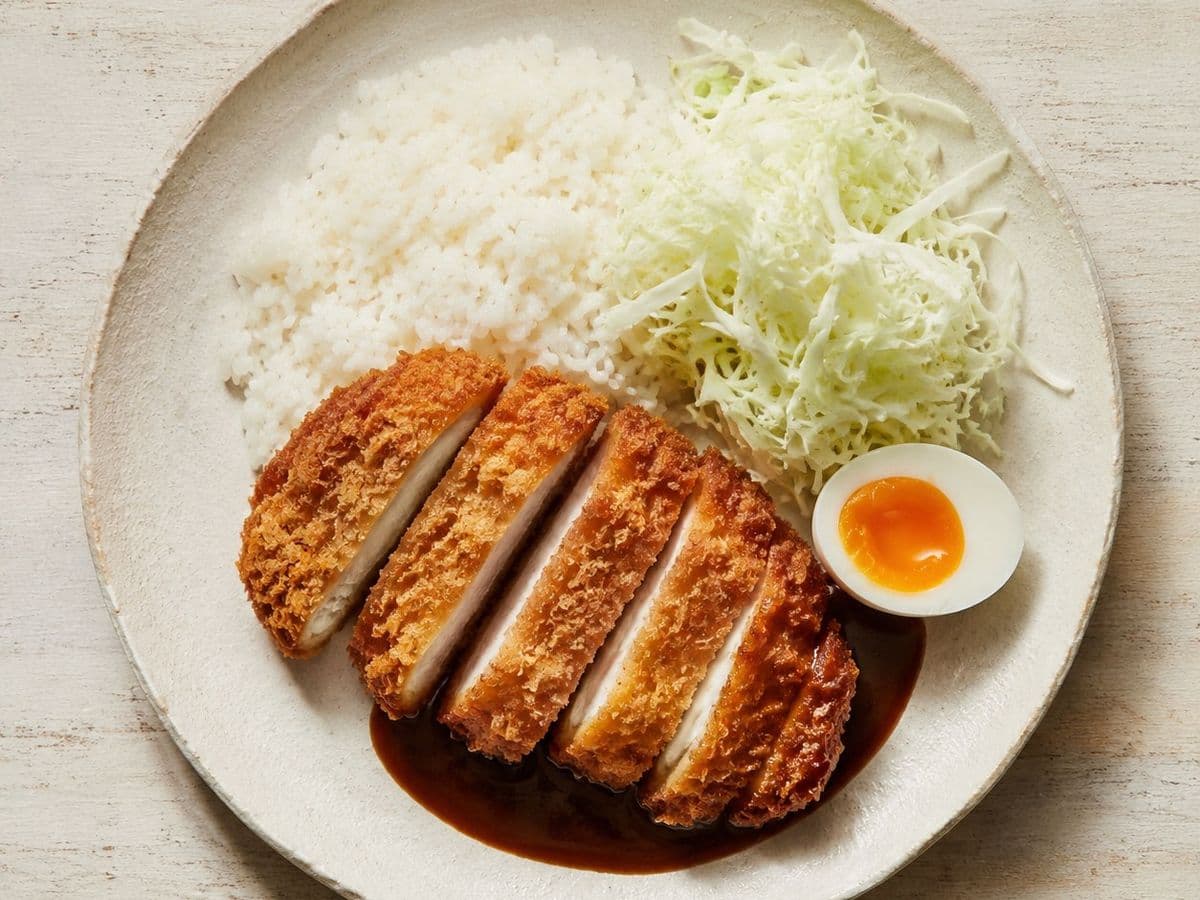
430 kcal a serving, against 885 for the traditional version. That is 455 kcal off, or 51%, with 34.6g of protein. Serves 4. .
What the traditional version is
Classic tonkatsu uses a 2cm-thick pork loin with a fat cap, coated in plain flour, then egg, then panko crumbs. It's deep-fried in a litre of oil until crisp and golden, rested, then sliced and served with shredded cabbage, rice and tonkatsu sauce (never homemade, always straight from the bottle).
What changed, and what each change costs
Pork loin, fat cap removed, trimmed to 120g each
The fat edge does most of the heavy flavour lifting, but also half the fat and a chunk of the calories. Taking it off gets you leaner pork and doesn't leave you chewing at the rind.
What it costs you. With the fat gone, you lose most of the juiciness and a lot of that richness. The pork dries out faster, so you mustn't overcook it. Resting is now your rescue plan.
Dry-toast the panko in a frying pan, not in oil
Toasting panko in a dry pan gives you the brown without the bath. Spread it thin and keep it moving over medium heat.
What it costs you. You don't get every crumb glassy and shattering, but you do get crunch and colour. It's not quite deep-fried, but it's a long way from limp oven crumbs.
Bake in a hot oven on a rack, not deep-fry
Deep-frying is lovely but there's no honest way round the oil you soak up. Baking at 220C gives you a decent crust, and a rack gets the air round all sides.
What it costs you. The baked crust never fools anyone - you miss the little oil blisters and that sense of danger on the edge. It's less messy, though, and you won't spend 20 minutes scrubbing oil from every surface.
Use just one egg for coating
Leaner pork means you don't need the full double-dip. One egg is enough to stick the panko and save a couple of yolks for another day.
What it costs you. You'll get a slightly thinner crust, so really pack on the crumbs before baking.
Rice and sauce halved
Half the rice, half the sauce. The pork is the main event, so you don't need a pillow of starch to fill out the plate. And the sweetness in the sauce can drown out the flavour of the meat.
What it costs you. This is the first thing rice lovers will moan about. If you need a duvet of rice, serve extra, but don't pretend you're trimming.
What goes in it
The ingredients, without the quantities. The weights are what the figures below are computed from, and they are in the book.
- Pork loin
- Plain flour
- 1 medium egg
- Panko breadcrumbs
- White cabbage
- Cooked rice
- Tonkatsu sauce
How it starts
- Heat oven to 220C (fan if you've got it).
- Toast the panko in a dry frying pan over medium heat, shaking often, for about 5 minutes till they're golden.
- Pat the pork dry, then bash each piece with a rolling pin to about 1.5cm thick.
The rest of the method, and every weight, is in Authentic-ish Japanese.
The numbers
| Per serving | Traditional | Lightened |
|---|---|---|
| Calories | 885 | 430 |
| Protein | 46.3g | 34.6g |
| Fat | 35g | 6.8g |
| Saturated fat | 6.2g | 2g |
| Carbohydrate | 92g | 55.2g |
| Protein per 100 kcal | 5.2g | 8.1g |
Every figure is computed from the recipe's own weighed ingredient list against public food composition databases. The appendix in Authentic-ish Japanese prints the exact database row used for each ingredient, so any number here can be checked. How every number is computed sets out the method.
Allergens. eggs, fish, gluten, soybeans.
The method is in the book
There's no fooling yourself: this isn't the same as the original. The crust is crunchy, the pork is satisfyingly thick, but you'll always notice the missing fat. Still, for a Tuesday night, it's well worth the 15 minutes and you don't end up with oil in your socks. The lean pork does dry quicker, but that's why you rest it. If you're still mourning the deep-fried version, just make the real one and plan a nap.
The quantities and the method for this dish are in Authentic-ish Japanese, along with 48 more. Buy the paperback
More from Authentic-ish Japanese
- Chicken Katsu, 502 kcal a serving, 41% off
- Ebi Fry, 332 kcal a serving, 27% off
- Tempura Moriawase, 245 kcal a serving, 50% off
- Korokke, 281 kcal a serving, 54% off
- Karaage, 291 kcal a serving, 51% off
- Okonomiyaki, 364 kcal a serving, 43% off
Every Japanese dish and its calories · Every dish in the series