Japanese · Authentic-ish Japanese
Mochi
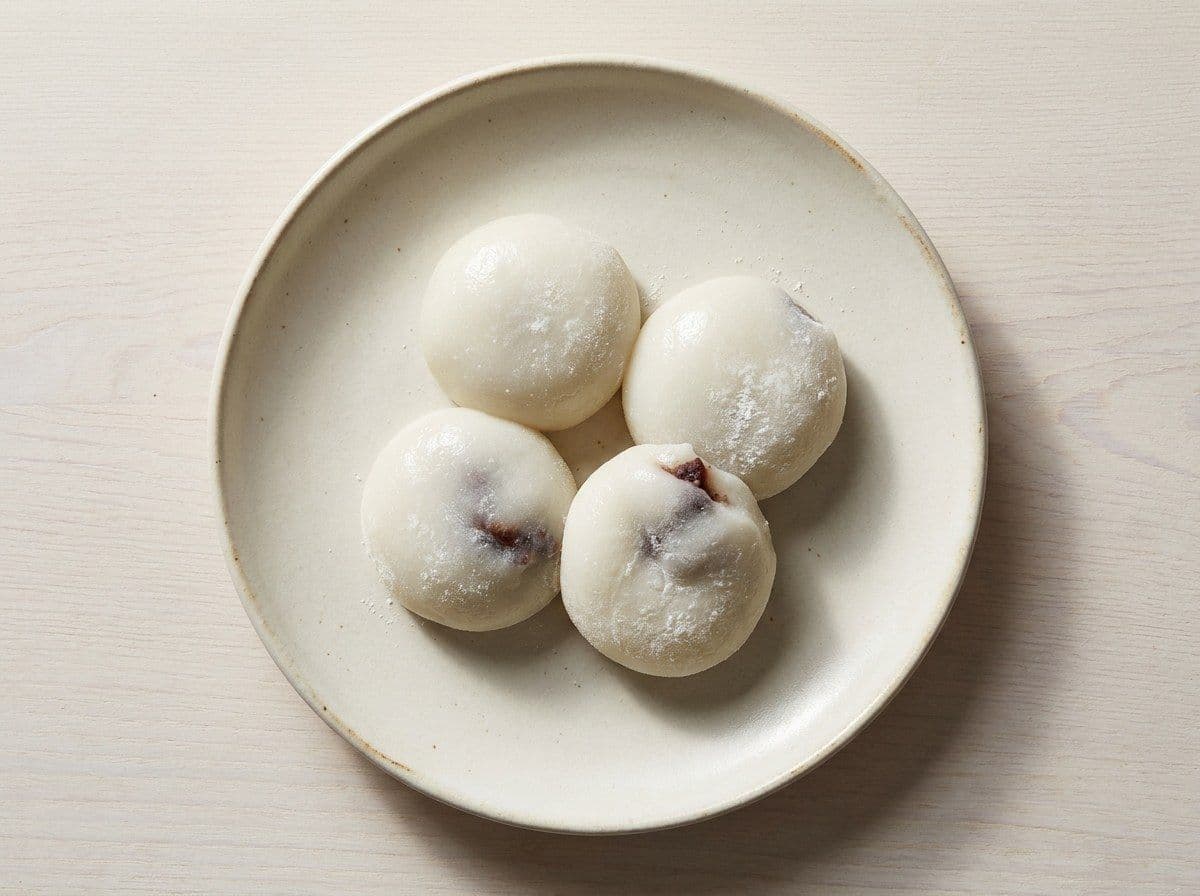
272 kcal a serving, against 351 for the traditional version. That is 79 kcal off, or 23%, with 8.7g of protein. Serves 10. .
What the traditional version is
Traditional mochi is made by soaking short-grain glutinous rice overnight, steaming it, and pounding it with a big mallet until it's a smooth, stretchy mass. It's shaped into small balls or discs, usually with a lump of sweet adzuki bean paste in the centre. There's only a bit of sugar in the filling - the dough itself is all rice.
What changed, and what each change costs
Swap a third of the rice for silken tofu
Silken tofu blends right in with the rice once pounded. It bumps up the protein, lightens the dough and makes the mochi a bit less gluey. Still sticky, just not 'rip out your fillings' sticky.
What it costs you. You lose some of the classic chew. It's softer, almost creamy, and not as elastic. If you're a texture purist, you'll notice it immediately.
Sugar in anko cut by a third
The adzuki filling is mostly sugar and beans. Less sugar means it tastes a little more like beans, a little less like pudding, but you get used to it after the second one.
What it costs you. Some of the fudgy, shiny finish of anko goes missing. The filling's less sticky and not as sweet. If you eat it side by side with the real thing, you'll know which is which (and probably wish you had the original).
Glutinous rice not soaked overnight - use a food processor to 'pound' instead
Proper mochi is a team sport with a wooden mallet. Most British kitchens don't have one lying about, so blitzing cooked rice and tofu in a processor makes it manageable for one person. No risk of chipping the worktop.
What it costs you. You skip the fun (and the drama) of pounding rice by hand. The texture's a bit smoother, but you also avoid clubbing yourself with a mallet.
What goes in it
The ingredients, without the quantities. The weights are what the figures below are computed from, and they are in the book.
- Glutinous rice
- Silken tofu
- Adzuki beans
- Sugar for anko
- Water
How it starts
- Rinse the glutinous rice until the water runs nearly clear.
- Cook the rice: put the rinsed grains and 400g of water in a pan, bring to a simmer, then cover tightly and cook on the lowest heat for 20 minutes.
- Meanwhile, rinse the adzuki beans and simmer in plenty of water until soft (about 45 minutes).
The rest of the method, and every weight, is in Authentic-ish Japanese.
The numbers
| Per serving | Traditional | Lightened |
|---|---|---|
| Calories | 351 | 272 |
| Protein | 9.1g | 8.7g |
| Fat | 0.5g | 0.9g |
| Saturated fat | 0.1g | 0.2g |
| Carbohydrate | 76.7g | 57g |
| Protein per 100 kcal | 2.6g | 3.2g |
Every figure is computed from the recipe's own weighed ingredient list against public food composition databases. The appendix in Authentic-ish Japanese prints the exact database row used for each ingredient, so any number here can be checked. How every number is computed sets out the method.
Allergens. soybeans.
The method is in the book
So, is tofu-mochi any match for the real thing? Not really. If you want that legendary, elastic chew that sticks in your molars and might claim a dental crown, nothing beats pure rice mochi. But the tofu does make it lighter, and kinder on the conscience. The filling's less sweet, which actually lets the adzuki flavour through, so you can at least pretend it's about the beans. Purists will sneer, but you'll save a bit of sugar and give your jaw an easier time.
The quantities and the method for this dish are in Authentic-ish Japanese, along with 48 more. Buy the paperback
More from Authentic-ish Japanese
- Dorayaki, 362 kcal a serving, 20% off
- Matcha Cheesecake, 318 kcal a serving, 41% off
- Anmitsu, 184 kcal a serving, 30% off
- Chicken Katsu, 502 kcal a serving, 41% off
- Tonkatsu, 430 kcal a serving, 51% off
- Ebi Fry, 332 kcal a serving, 27% off
Every Japanese dish and its calories · Every dish in the series