Korean · Authentic-ish Korean
Sundubu Jjigae
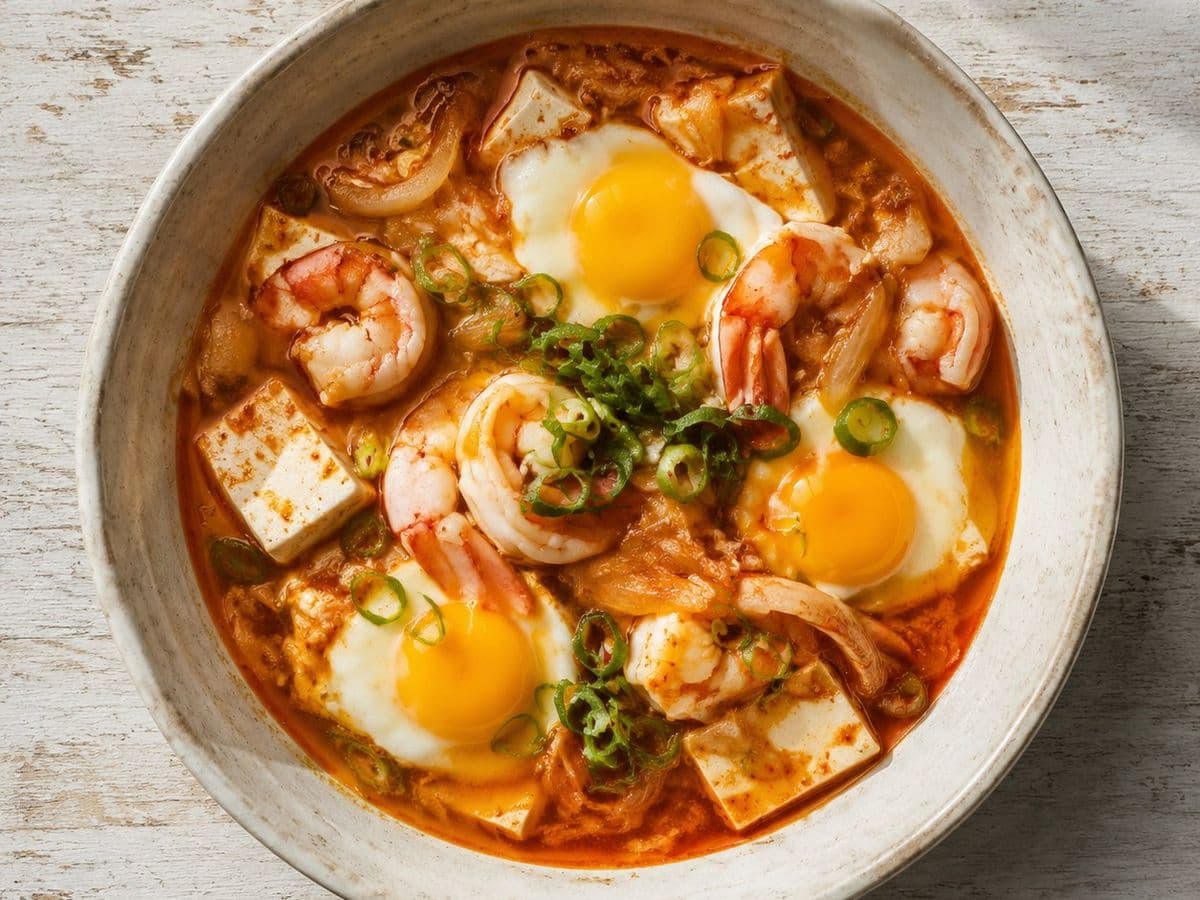
312 kcal a serving, against 444 for the traditional version. That is 132 kcal off, or 30%, with 29.5g of protein. Serves 4. 40 minutes.
What the traditional version is
Sundubu jjigae is made by frying garlic and onion in neutral oil, blooming gochugaru into a hot chilli oil, then simmering it all with anchovy or beef stock, pork belly slices, clams, silken tofu scooped in great clouds, and a last-minute cracked egg. Served bubbling hot with a side of white rice.
What changed, and what each change costs
Chilli oil down from 60g to 10g of oil, up the gochugaru from 20g to 25g
The classic method is to fry a heap of gochugaru in a sea of oil. It makes for a luscious broth and that slap-in-the-face red slick on top. Most of the time, you just don't need that much. I use a stingier hand with the oil and let the gochugaru handle the punch and the colour.
What it costs you. You lose some richness, and your lips won't shine so much at the end. What you get is still properly red, spicy and honest - and your bowl doesn't look like a shallow fryer.
Swap pork belly for extra prawns
Pork belly is traditional and tastes fantastic, but it's mostly fat. Prawns bring all the savoury depth and a chew that stands up to the soft tofu, and pack in much more protein for the same calories.
What it costs you. You miss out on that melting, fatty roundness. The stew leans more seafood than pork house. If you really want the pork, throw in a little for flavour, but this swap is where you save the most.
Clams out, more prawns in
Getting good live clams here is a pain, and the price per protein isn't worth it. More prawns means more of what you came for and less of what you're likely to overcook.
What it costs you. You do lose some of the sea broth's complexity, and that pop when a clam opens in the bowl. No need to fuss about bivalves staying open or shut, though - just prawns, easy as you like.
Stock switches from beef to chicken
Beef stock is richer, but chicken gives a light, clean base that lets the tofu and seafood lead. Plus, a bit less fat.
What it costs you. Lose a bit of backbone and full-on savour. Still, with this much gochugaru, you won't miss beef as much as you think.
What goes in it
The ingredients, without the quantities. The weights are what the figures below are computed from, and they are in the book.
- Silken tofu
- Vegetable oil
- Gochugaru
- Garlic
- Onion
- Raw prawns
- Chicken stock
- Light soy sauce
- Spring onions
- 4 medium eggs
How it starts
- Get everything prepped.
- Heat the oil in a deep frying pan or clay pot over medium heat.
- Add the chicken stock and soy sauce.
The rest of the method, and every weight, is in Authentic-ish Korean.
The numbers
| Per serving | Traditional | Lightened |
|---|---|---|
| Calories | 444 | 312 |
| Protein | 27.1g | 29.5g |
| Fat | 30.6g | 13.5g |
| Saturated fat | 6.4g | 3g |
| Carbohydrate | 15.6g | 18.5g |
| Protein per 100 kcal | 6.1g | 9.5g |
Every figure is computed from the recipe's own weighed ingredient list against public food composition databases. The appendix in Authentic-ish Korean prints the exact database row used for each ingredient, so any number here can be checked. How every number is computed sets out the method.
Allergens. soybeans, crustaceans, eggs, gluten.
The method is in the book
This bowl isn't as silky or decadent as a pork-and-oil original, but it's close enough to scratch the itch when you want something bold and warming on a cold night. I'd take the prawn version for a weekday and save the proper red-oil job for when nothing else will do. Sometimes you want your stew a little cleaner and your lips a bit less glossy. Nobody's judging.
The quantities and the method for this dish are in Authentic-ish Korean, along with 51 more. Buy the paperback
More from Authentic-ish Korean
- Kimchi Jjigae, 409 kcal a serving, 19% off
- Doenjang Jjigae, 185 kcal a serving, 11% off
- Budae Jjigae, 435 kcal a serving, 35% off
- Samgyetang, 343 kcal a serving, 47% off
- Galbitang, 349 kcal a serving, 10% off
- Miyeokguk, 87 kcal a serving, 15% off
Every Korean dish and its calories · Every dish in the series