Spanish · Authentic-ish Spanish
Arroz Negro
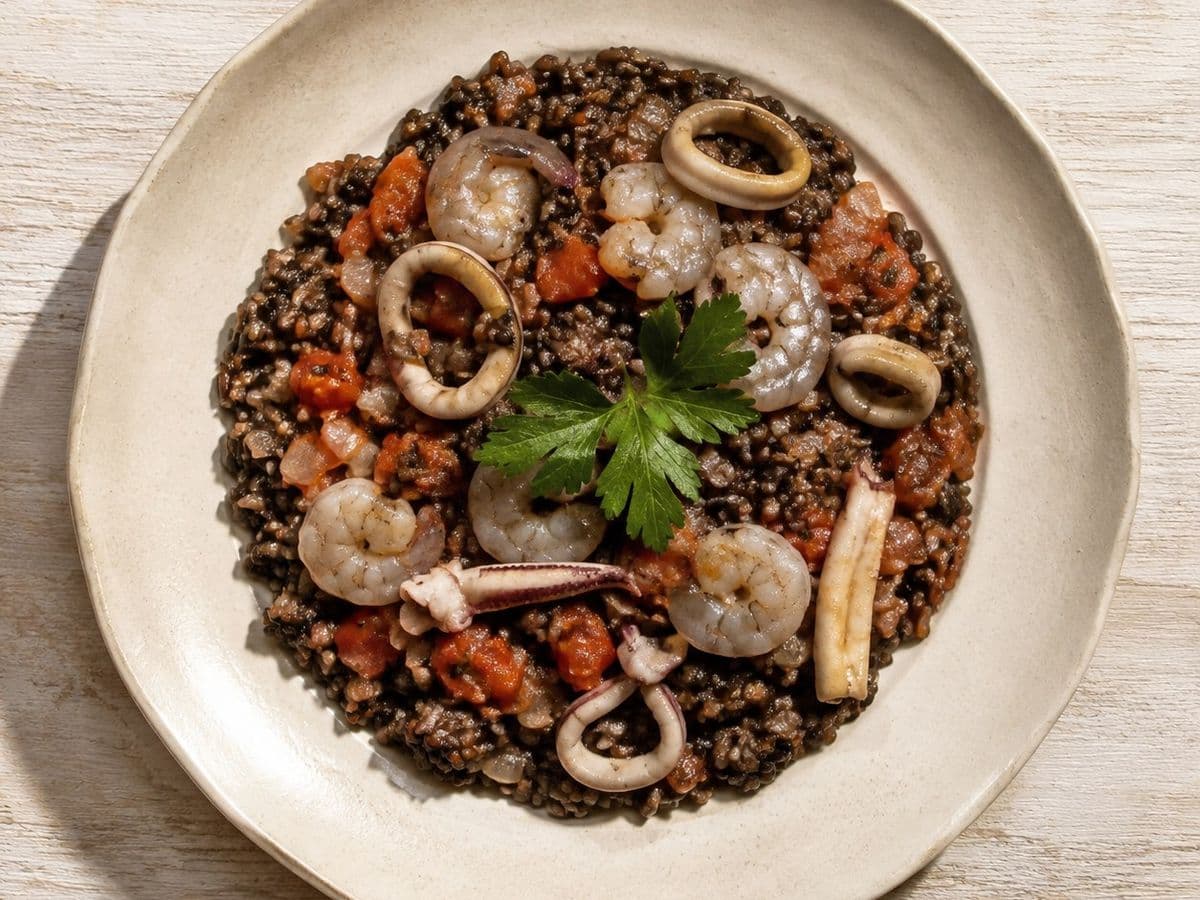
517 kcal a serving, against 624 for the traditional version. That is 107 kcal off, or 17%, with 34g of protein. Serves 4. 60 minutes.
What the traditional version is
Classic arroz negro is a party trick for the eyes. Fry onions and garlic in plenty of olive oil, then add rice to soak it all up. Add diced squid and cook with a splash of white wine, tinned tomatoes, squid ink and a rich fish stock. When it's bubbling and most of the liquid's absorbed, prawns go in for the last five minutes. Finish with a drizzle of more oil or a good blob of alioli if you're behaving yourself. The dish is rich, with a satisfying chew and strong sea flavours.
What changed, and what each change costs
Olive oil from 60g down to 15g
The classic is swimming in oil - it coats every grain and brings out the rice's creamy side. Using less means you lose some gloss and richness. Compensate with a slightly longer cook on the onion and garlic to coax out sweetness, and watch the pan doesn't dry out.
What it costs you. You won't get the same shiny, velvety mouthfeel, but unless you're Spanish and brought up eating it on the beach, you'll hardly notice. The ink and stock do most of the work and distract you from what's missing.
Stock swapped for a much stronger fish and shellfish base
Less oil means the other liquids have to work overtime. Using a punchier stock - cooked down or even a mix of chicken and fish - makes the rice taste bigger and saltier without extra fat.
What it costs you. This is an upgrade, frankly. The extra depth works in your favour. The rice is a bit less slippery but tastes just as gutsy.
Extra squid and prawns added
Protein's a bit light in the original. Dishing up more seafood, especially prawns, bumps up the chew and stops you feeling short-changed. Any excuse to eat more prawns and I'll take it.
What it costs you. You'll end up with more seafood than rice in a spoonful. Some purists may moan that it's over the top, but honestly, who's complaining about too many prawns?
Rice cut slightly (from 320g to 280g)
Dropping some rice lets the seafood shine, and means you don't just have a plate of carbs. You'll still get a proper mound, just not the same wall-to-wall starch.
What it costs you. It's a touch less comforting if you're after pure carb-fuel, but far more interesting. The squid and ink are front and centre, just as they should be.
What goes in it
The ingredients, without the quantities. The weights are what the figures below are computed from, and they are in the book.
- Spanish olive oil
- Onion
- Garlic
- Spanish short-grain rice
- Dry
- Tinned plum tomatoes
- Squid
- Raw prawns
- Fish sauce
- Salt
- Chicken stock
- Squid ink sachets or fresh ink
How it starts
- Heat the olive oil in a big frying pan or wide shallow pot.
- Stir in the rice and cook for 2 minutes, letting it turn a bit translucent.
- Tip in the tomatoes, squid and half the prawns.
The rest of the method, and every weight, is in Authentic-ish Spanish.
The numbers
| Per serving | Traditional | Lightened |
|---|---|---|
| Calories | 624 | 517 |
| Protein | 28.7g | 34g |
| Fat | 19.2g | 8.2g |
| Saturated fat | 3.2g | 1.7g |
| Carbohydrate | 77.9g | 70.3g |
| Protein per 100 kcal | 4.6g | 6.6g |
Every figure is computed from the recipe's own weighed ingredient list against public food composition databases. The appendix in Authentic-ish Spanish prints the exact database row used for each ingredient, so any number here can be checked. How every number is computed sets out the method.
Allergens. crustaceans, fish, molluscs, sulphites.
The method is in the book
If you want the oily gloss of a Valencian seaside restaurant, the original can't be beaten. This version's all about getting the big seafood punch with less oil, and actually more prawns than you'd get at most beach bars. The squid ink makes up for the lost richness, and after a couple of bites you'll stop thinking about what's missing. Not the same, but honestly just as good for a cold British day when you want to pretend you're in Spain.
The quantities and the method for this dish are in Authentic-ish Spanish, along with 57 more. Buy the paperback
More from Authentic-ish Spanish
- Seafood Paella, 564 kcal a serving, 18% off
- Chicken and Rabbit Paella, 609 kcal a serving, 24% off
- Arroz a Banda, 488 kcal a serving, 22% off
- Arroz al Horno, 537 kcal a serving, 22% off
- Arroz Caldoso con Pollo, 619 kcal a serving, 24% off
- Arroz con Costra, 478 kcal a serving, 32% off
Every Spanish dish and its calories · Every dish in the series