Spanish · Authentic-ish Spanish
Arroz al Horno
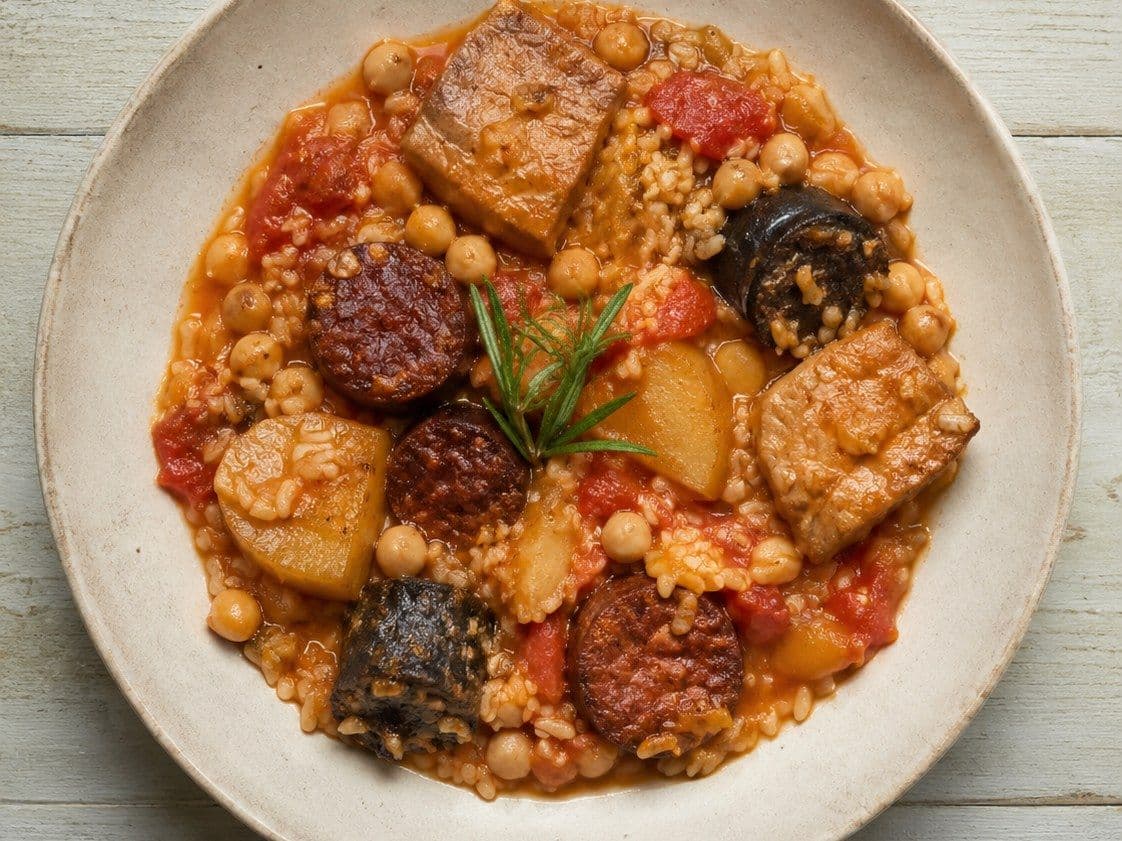
537 kcal a serving, against 685 for the traditional version. That is 148 kcal off, or 22%, with 26.9g of protein. Serves 6. 1 hour 30 minutes.
What the traditional version is
A classic Valencian Sunday lunch: short-grain rice baked in earthenware with pork ribs, morcilla, chorizo and a handful of chickpeas. Slices of potato and tomato crown the top. The rice drinks up stock, fat and spices, coming out rich and sticky, with an amber crust on the edge nobody wants to share. It's as much about the sticky rendered fat as the rice itself.
What changed, and what each change costs
Pork ribs swapped for lean pork loin
Ribs are brilliant for flavour and fat, but they keep the whole dish greased. Pork loin is easier to find, lower in fat, and still keeps things meaty - you just need to watch it like a hawk so it doesn't dry out.
What it costs you. You lose the sticky, lip-coating finish that pork fat gives. Loin will stay tender if you don't overbake, but nobody's going to pretend it's as lush.
Chorizo and morcilla cut right down
Between them, chorizo and morcilla bring lots of fat and a wallop of seasoning. If you halve the amount you still get the punch, but not an oil slick floating over the rice.
What it costs you. Let's not kid ourselves: less sausage means less spiced, smoky oomph, and the rice isn't as bold. If you really love morcilla, use the 100g and just walk an extra mile. Otherwise, a little still flavours the pot.
Olive oil dropped to a splash
Traditional arroz al horno can look like a dare from a cardiologist. Halving the oil and using a non-stick pan for the veg and rice means you'll get flavour without a greasy base.
What it costs you. You lose a little gloss and sticking power. The rice still crisps at the edge if the oven's hot enough, just not as thick a crust.
Extra chickpeas to hold the protein
Dropping half the sausage and fat makes the dish lighter, but at the cost of protein as well as calories. Upping the chickpeas means you'll still get a good mix of protein - plus they love sitting at the bottom of the dish, catching all the leftover spices.
What it costs you. Some purists will say you're making it too much like a bean stew. Honestly, it bulks it out and keeps your plate looking generous without tasting like a diet dinner.
What goes in it
The ingredients, without the quantities. The weights are what the figures below are computed from, and they are in the book.
- Lean pork loin
- Chorizo
- Morcilla
- Tinned chickpeas
- Short-grain Spanish rice
- Ripe tomatoes
- Waxy potatoes
- Garlic
- Paprika
- Chicken stock
- Olive oil
- Salt
- Saffron
How it starts
- Set your oven to 210C.
- Heat the olive oil in a large non-stick frying pan.
- In the same pan, gently fry the chorizo and morcilla until just coloured and some fat has run out.
The rest of the method, and every weight, is in Authentic-ish Spanish.
The numbers
| Per serving | Traditional | Lightened |
|---|---|---|
| Calories | 685 | 537 |
| Protein | 27.6g | 26.9g |
| Fat | 31.9g | 14.2g |
| Saturated fat | 9.4g | 3.6g |
| Carbohydrate | 70g | 74.1g |
| Protein per 100 kcal | 4g | 5g |
Every figure is computed from the recipe's own weighed ingredient list against public food composition databases. The appendix in Authentic-ish Spanish prints the exact database row used for each ingredient, so any number here can be checked. How every number is computed sets out the method.
The method is in the book
This is still proper arroz al horno - just a bit less of the heart-attack-on-a-plate charm. The rice comes out spicy and rich, the chickpeas pick up loads of flavour, and the pork is good so long as you don't nuke it. What you miss is that velvety, sticky mouthfeel from all the pork fat. It isn't going to stick your lips together the way the original does. If you want that, don't swap anything - just invite your cholesterol along for the ride. But for a weekday dinner, this hits the spot without leaving you needing a nap.
The quantities and the method for this dish are in Authentic-ish Spanish, along with 57 more. Buy the paperback
More from Authentic-ish Spanish
- Seafood Paella, 564 kcal a serving, 18% off
- Chicken and Rabbit Paella, 609 kcal a serving, 24% off
- Arroz Negro, 517 kcal a serving, 17% off
- Arroz a Banda, 488 kcal a serving, 22% off
- Arroz Caldoso con Pollo, 619 kcal a serving, 24% off
- Arroz con Costra, 478 kcal a serving, 32% off
Every Spanish dish and its calories · Every dish in the series