Thai · Authentic-ish Thai
Spring Rolls
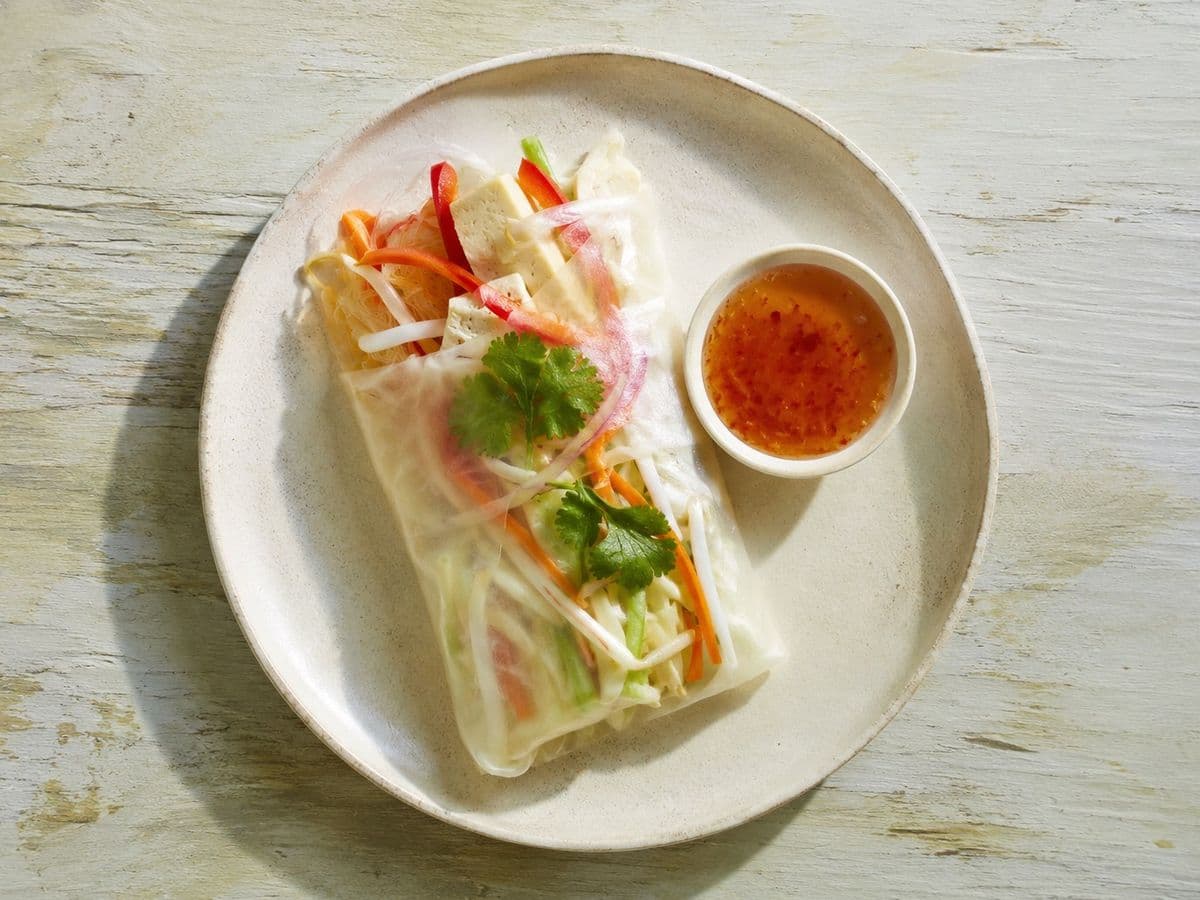
327 kcal a serving, against 439 for the traditional version. That is 112 kcal off, or 26%, with 8.3g of protein. Serves 4. 55 minutes.
What the traditional version is
Glass noodles, shredded vegetables (cabbage, carrot, beansprouts), sometimes some minced pork or prawn, wrapped tightly in spring roll pastry. Rolls are sealed, then deep-fried in hot oil until bubbly and golden. Served hot with dipping sauce. The pastry soaks up oil, going crisp outside and steamy inside.
What changed, and what each change costs
Skip the pork and prawns, double the vegetables, and add a little firm tofu
It's not a meaty roll unless you want it to be. Most Thai street rolls are mostly veg anyway, so no one's going to look at you funny for skipping the pork - unless you're stood next to a butcher.
What it costs you. You miss the odd meaty, savoury bite. But with extra crunch and a little tofu, you keep the protein up and the filling stays satisfying. The tofu is there for the numbers, but sliced fine and fried off, it doesn't shout its presence.
Bake the rolls on a wire rack with a spray of oil instead of deep-frying
Pastry absorbs oil like a sponge in a hot bath. A proper deep-fry gives you bubbles, blisters and that glassy shatter when you bite in. Baking, for all its good points, won't do that - but it does keep things crisp, and you don't need to wring your spring rolls out before eating.
What it costs you. The crust goes crunchy, but you won't get that glass-shard finish. You do, however, avoid your kitchen smelling of fryer for a week - not nothing.
Swap half the glass noodles for beansprouts
Glass noodles give chew, but not much else. Beansprouts bring bite and save a load of empty calories, so you can load up the rolls and not feel like you're only eating transparent pasta.
What it costs you. There's less chew, more crunch. The classic texture takes a little knock, but your filling isn't just a bland tangle of noodle anymore.
Use less oil for the filling and for baking, not frying
You don't need all that oil for the veg if you're not deep-frying. A quick fry in less oil keeps it vivid. The oil spray gives a little shine and helps the pastry cook, but none of it soaks up like in a bath.
What it costs you. You lose some richness. The pastry browns, but there's less blister. On the upside, you aren't left with rolls that leak oil down your wrist.
Add some extra coriander and pepper for punch
Losing the fried edge means the flavours need to try harder. Coriander and pepper step in so your rolls don't taste like wallpaper paste.
What it costs you. More aroma, slight herbal bite, no real loss unless you hate coriander. In that case, leave it out and keep your peace.
What goes in it
The ingredients, without the quantities. The weights are what the figures below are computed from, and they are in the book.
- Glass noodles
- Beansprouts
- Shredded white cabbage
- Grated carrot
- Onion
- Garlic
- Light soy sauce
- Firm tofu
- Red pepper
- Fresh coriander
- Plain flour
- Spring roll pastry
- Vegetable oil
- Salt
How it starts
- Soak the glass noodles in boiling water for 5 minutes, then drain and snip them into short lengths with scissors.
- Heat 10g oil in a frying pan over medium-high.
- Add beansprouts, tofu and soy sauce.
The rest of the method, and every weight, is in Authentic-ish Thai.
The numbers
| Per serving | Traditional | Lightened |
|---|---|---|
| Calories | 439 | 327 |
| Protein | 9.3g | 8.3g |
| Fat | 26.7g | 17.9g |
| Saturated fat | 9.3g | 8g |
| Carbohydrate | 42.1g | 36.3g |
| Protein per 100 kcal | 2.1g | 2.5g |
Every figure is computed from the recipe's own weighed ingredient list against public food composition databases. The appendix in Authentic-ish Thai prints the exact database row used for each ingredient, so any number here can be checked. How every number is computed sets out the method.
Allergens. gluten, soybeans.
The method is in the book
Don't kid yourself - deep-fried is the gold standard. You can't fake those glassy bubbles, but you can get a proper crunch. The filling is lighter, fresher and just as lively, especially with the extras of coriander and red pepper. Tofu does the job for protein, but it isn't converted from pork. The upside: your house doesn't stink and you can eat twice as many. I call that a win, unless you're running a street stall.
The quantities and the method for this dish are in Authentic-ish Thai, along with 48 more. Buy the paperback
More from Authentic-ish Thai
- Tod Mun Pla (Fish Cakes), 218 kcal a serving, 27% off
- Crispy Pork Belly (Moo Krob), 297 kcal a serving, 60% off
- Prawn Toast, 213 kcal a serving, 35% off
- Thai Omelette, 171 kcal a serving, 50% off
- Deep-fried Prawn Cakes, 184 kcal a serving, 60% off
- Thai Fried Chicken, 302 kcal a serving, 59% off