Thai · Authentic-ish Thai
Prawn Toast
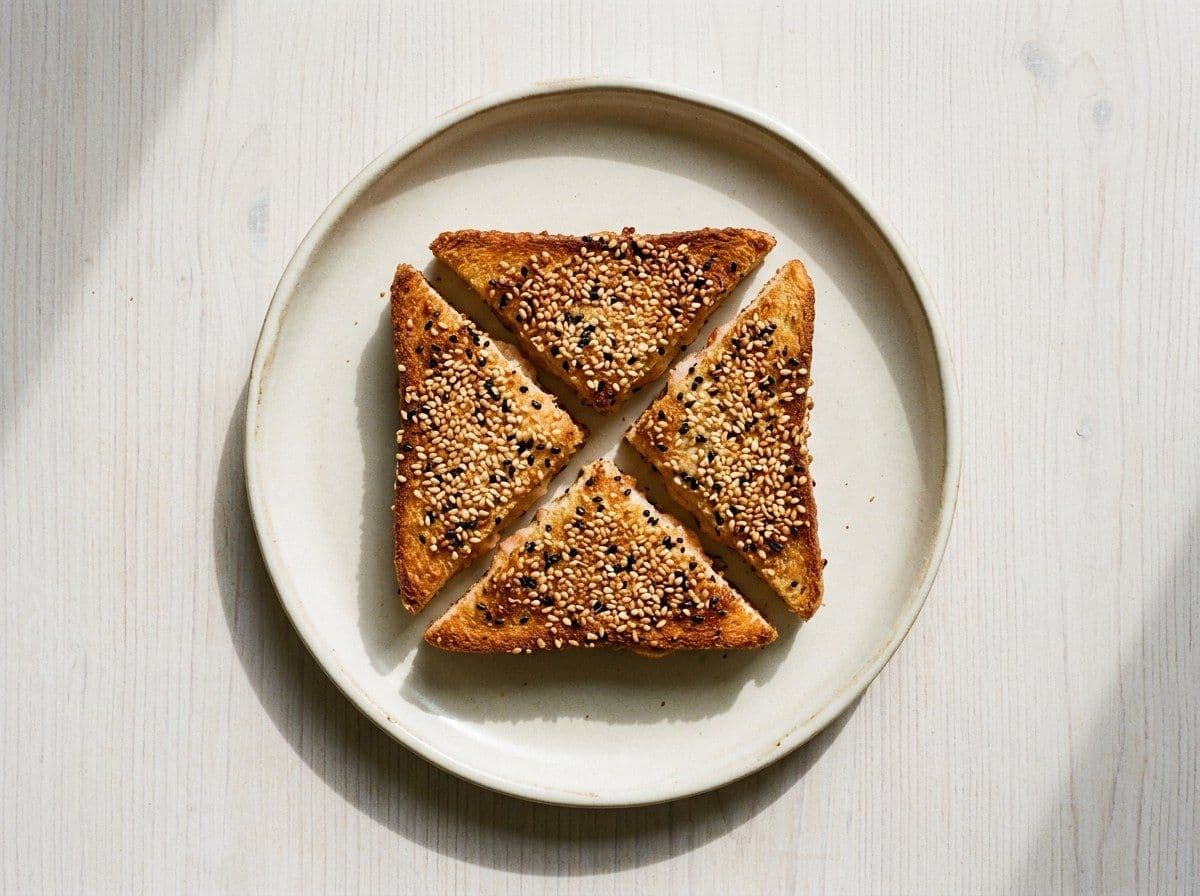
213 kcal a serving, against 328 for the traditional version. That is 115 kcal off, or 35%, with 22g of protein. Serves 4. .
What the traditional version is
Classic prawn toast is made by blitzing raw prawns with a bit of egg, sesame oil, and spring onion, then smearing the paste thickly onto squares of cheap white bread. Sprinkle on a mountain of sesame seeds and fry paste-side down in a couple of centimetres of hot oil until golden brown, then flip to crisp the other side. The bread, frankly, drinks the oil and that's half the point.
What changed, and what each change costs
Bake instead of deep-frying, use a brief spray of oil
Deep-frying is what gives you that impossibly crisp, oil-soaked bread and that's what everyone secretly loves. Baking with a mist of oil gives you browning and a bit of crunch, but it's harder, not airy and shattering. On the other hand, you dodge nearly all the absorbed oil.
What it costs you. It's not the prawn toast of the chip-shop gods. The bread goes borderline rusk-like round the edges and won't soak up sauces. If you want the frying experience, you'll have to dig out the wok.
Swap out half the bread for a thicker topping of prawn and a bit of silken tofu
The bread is just a vehicle for oil and sesame, and it doesn't do a thing for protein. Bumping up prawns and folding in silken tofu gives you more of what you're here for - the prawn and sesame paste. It bulks up the topping and softens the bite, and tofu's so neutral you won't spot it.
What it costs you. The texture is a touch smoother, and the toasts are topping-first now. If you miss spongy white bread, you'll feel short-changed. But for once, you'll be eating these for the prawns, not the bread underneath.
Use toasted sesame oil to finish, not in the paste
Sesame oil poured into the paste just disappears, so brushing it over before baking instead gives you all the flavour right on the surface.
What it costs you. It's more perfumed than toasted, and the sesame edge hits your nose rather than your tongue. That said, you're not pouring good oil straight into the oven to die.
Extra egg white in the topping, hold back the soy
Egg white binds the topping and adds a fraction of protein, while less soy means the prawn flavour shines through. Honestly, the soy in the original is just an accent.
What it costs you. The paste is cleaner and a tiny bit bouncier. If you're in it for salty-savoury umami, you'll notice the difference. If you're here for prawns, not a salt lick, it works.
What goes in it
The ingredients, without the quantities. The weights are what the figures below are computed from, and they are in the book.
- Raw peeled prawns
- Silken tofu
- 2 egg whites
- 2 spring onions
- Light soy sauce
- 1/4 small red pepper
- White bread
- Sesame seeds
- Toasted sesame oil
- Vegetable oil
How it starts
- Heat your oven as high as it'll go - 230C if you can get it, fan on.
- Slice your white bread into triangles or rectangles.
- In a food processor, blitz the prawns, silken tofu, egg whites, spring onion, red pepper, soy sauce and a pinch of salt.
The rest of the method, and every weight, is in Authentic-ish Thai.
The numbers
| Per serving | Traditional | Lightened |
|---|---|---|
| Calories | 328 | 213 |
| Protein | 15.7g | 22g |
| Fat | 19.7g | 8.3g |
| Saturated fat | 2.8g | 1.2g |
| Carbohydrate | 22.3g | 13.3g |
| Protein per 100 kcal | 4.8g | 10.3g |
Every figure is computed from the recipe's own weighed ingredient list against public food composition databases. The appendix in Authentic-ish Thai prints the exact database row used for each ingredient, so any number here can be checked. How every number is computed sets out the method.
Allergens. gluten, crustaceans, eggs, sesame, soybeans.
The method is in the book
The bread takes the hit. If you're the sort who loves fried-out edges and that soft, greasy centre, you'll miss the original. The version here is all about the prawn paste, not the sponge. The protein's up, the oil's down; the result is lighter in every sense. Still, if you squint at it from across the room, it's practically the pub snack you remember.
The quantities and the method for this dish are in Authentic-ish Thai, along with 48 more. Buy the paperback
More from Authentic-ish Thai
- Spring Rolls, 327 kcal a serving, 26% off
- Tod Mun Pla (Fish Cakes), 218 kcal a serving, 27% off
- Crispy Pork Belly (Moo Krob), 297 kcal a serving, 60% off
- Thai Omelette, 171 kcal a serving, 50% off
- Deep-fried Prawn Cakes, 184 kcal a serving, 60% off
- Thai Fried Chicken, 302 kcal a serving, 59% off