Thai · Authentic-ish Thai
Thai Omelette
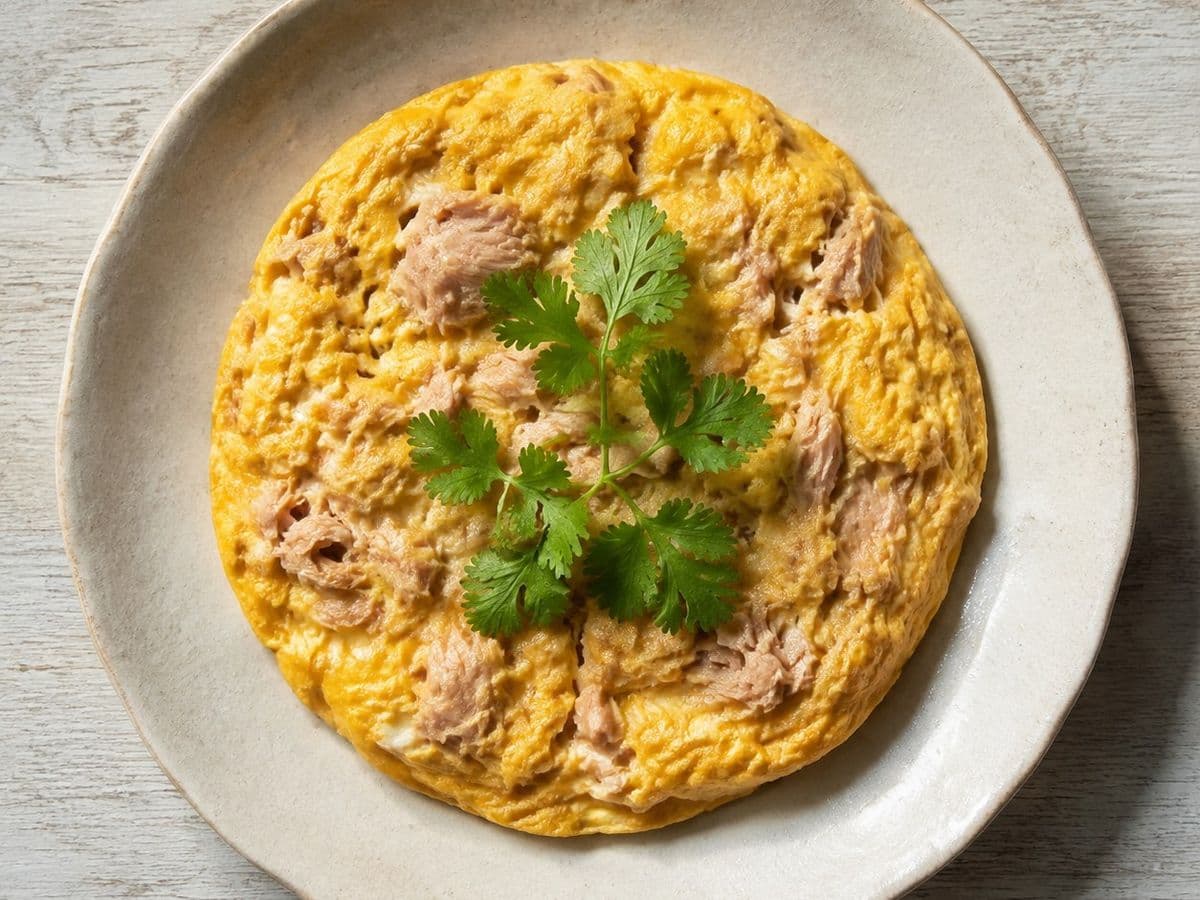
171 kcal a serving, against 345 for the traditional version. That is 174 kcal off, or 50%, with 15.9g of protein. Serves 2. 20 minutes.
What the traditional version is
Medium eggs beaten with fish sauce, a pinch of pepper and sometimes a spoon of rice flour for body. The mixture is poured into a wok of nearly smoking vegetable oil - you want at least 300ml for a small omelette. It puffs up like a startled cat. Serve straight away with rice and a dash of Sriracha.
What changed, and what each change costs
Swap deep-frying for a shallow non-stick frying pan with a fraction of the oil
Let's not pretend. Thai omelette's whole USP is those ragged, crisp edges you get from deep-frying. Using less oil means losing the bubbles - the egg can't puff up and instead sets flat. On the upside, you dodge nearly all the absorbed fat.
What it costs you. The fluff and crunch are missing. What you end up with is basically a firm, flat omelette with just a touch of brown on the edges. The protein's there, but the drama's taken a walk.
Add a little drained tinned tuna for extra protein
If you're going to lose the deep-fried pleasure, you may as well squeeze in something that keeps you full. Tuna bumps up the protein so you won't be peckish by half three. It doesn't get in the way of the taste much if you use the stuff packed in spring water and break it up fine.
What it costs you. You get a slightly fishier note, which in Thailand is normal enough. It is not street food. It is what you knock up at home when you're skint and hungry.
Cut the rice flour - not needed if you're not deep-frying
Rice flour gives extra airy crunch only if the egg's going into wild heat and oil. Lose it and you save a few spare calories. The difference is lost under the tuna, frankly.
What it costs you. The rice flour is the first thing you won't miss unless you're deep-frying. No one will notice it's gone.
Use less oil - 10g versus 54g
With a good non-stick pan you can get away with a slug of oil to stop sticking, instead of pouring in half a bottle. That cuts the absorbed fat to a rounding error.
What it costs you. No visible oil at the bottom of your plate. No crispy fried bits to pick out, either.
What goes in it
The ingredients, without the quantities. The weights are what the figures below are computed from, and they are in the book.
- 2 medium eggs
- Fish sauce
- Black pepper
- Tinned tuna in spring water
- Vegetable oil
How it starts
- Crack your eggs into a bowl and beat them well with the fish sauce and pepper.
- Drain the tuna as dry as you can and break it up with a fork.
- Heat a non-stick frying pan over a medium-high flame.
The rest of the method, and every weight, is in Authentic-ish Thai.
The numbers
| Per serving | Traditional | Lightened |
|---|---|---|
| Calories | 345 | 171 |
| Protein | 8.4g | 15.9g |
| Fat | 32.8g | 11g |
| Saturated fat | 5.4g | 2.6g |
| Carbohydrate | 3.2g | 0.8g |
| Protein per 100 kcal | 2.4g | 9.3g |
Every figure is computed from the recipe's own weighed ingredient list against public food composition databases. The appendix in Authentic-ish Thai prints the exact database row used for each ingredient, so any number here can be checked. How every number is computed sets out the method.
Allergens. fish, eggs.
The method is in the book
There's no getting around it: deep-fried Thai omelette is in a different league. The swap to shallow-frying serves up a serviceable, protein-packed lunch, but the puffs and crunch are missing in action. The added tuna keeps you full, but the drama's gone. Still, it's quick, lean and keeps your shirt clean. If you want the real thing, you'll need to throw oil at the problem and own it.
The quantities and the method for this dish are in Authentic-ish Thai, along with 48 more. Buy the paperback
More from Authentic-ish Thai
- Spring Rolls, 327 kcal a serving, 26% off
- Tod Mun Pla (Fish Cakes), 218 kcal a serving, 27% off
- Crispy Pork Belly (Moo Krob), 297 kcal a serving, 60% off
- Prawn Toast, 213 kcal a serving, 35% off
- Deep-fried Prawn Cakes, 184 kcal a serving, 60% off
- Thai Fried Chicken, 302 kcal a serving, 59% off