British · Authentic-ish British
Fishcakes
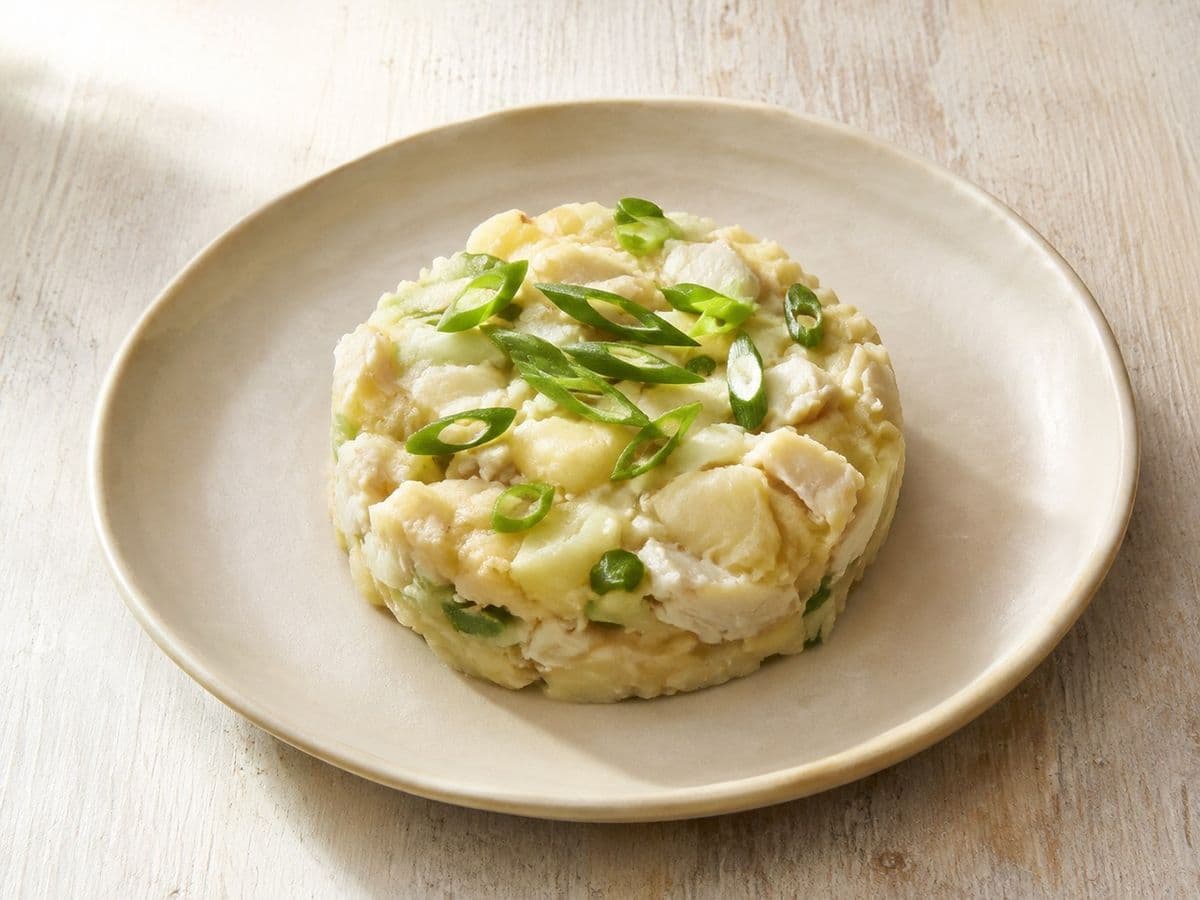
190 kcal a serving, against 403 for the traditional version. That is 213 kcal off, or 53%, with 24.4g of protein. Serves 4. 45 minutes.
What the traditional version is
Proper fishcakes are cold mashed potato and cooked white fish, mashed together with a bit of butter and beaten egg, sometimes thrown together with parsley or spring onion and nothing fancier. Shape into fat little discs, dust with flour, dip in beaten egg, roll in breadcrumbs if you're feeling flush, and shallow-fry in oil until deeply golden on both sides.
What changed, and what each change costs
Shallow-frying in oil to baking on a hot tray with oil spray
Frying gives you that legendary crust, but it also soaks up fat like the potato is auditioning for a chip shop. Baking with a light spray on a preheated tray still gives some browning, and the fishcake holds together once it's cooled a bit, but don't expect the crunch.
What it costs you. The outside is drier and chewy, not crisp. You miss out on the deeply bronzed, oily edges. Anyone telling you they like the baked version better is lying for Instagram likes.
Breadcrumb crust out, just a brushed exterior
Breadcrumbs do make a satisfying shell, but they act like a sponge for oil, too. Skipping them means you can cut a whole layer of fat out without the worry of soggy crumbs gone pale and sad in the oven.
What it costs you. No golden, crumbly coating. Less textural drama when you cut into it. But you won't be picking up bits of crust off the tray, either.
Butter in the mash out, more fish in
Butter brings luxury to the potato, but you can tip the balance towards the fish and make the inside less rich but more satisfying. It's a pleb's move, but upping the fish is good for the numbers and the flavour.
What it costs you. The mash is less lush, slightly firmer, and not as unctuous. You'll notice the extra flakes of cod, though, which is something.
Egg in the mix replaced by a dash of milk for binding
Egg helps stick everything together, but a splash of semi-skimmed milk does nearly as well without the extra protein from the yolk, which is mostly just a bonus here.
What it costs you. You might lose a bit of bounce in the texture, but the cakes hold up. Frankly, the fish does most of the work anyway.
More fresh herbs, less potato
Bulking the cakes with more parsley and spring onion lets you get away with less potato and more fish. It's not the garden on a plate, but you'll notice the difference.
What it costs you. A fresher, greener taste, and just a hint less comfort. If you love the carb-soothing mashed potato, you'll notice it's holding back.
What goes in it
The ingredients, without the quantities. The weights are what the figures below are computed from, and they are in the book.
- Mashed potato
- Cooked cod fillet
- Semi-skimmed milk
- Olive oil
- Chopped fresh parsley
- Sliced spring onions
- Salt
- Black pepper
How it starts
- Boil the peeled potato in salted water until soft, about 15 minutes.
- While the potato cools, poach or steam the cod fillet until just cooked and flaky, about 7-8 minutes depending on thickness.
- In a large bowl, combine the cold mash, flaked cod, chopped parsley, sliced spring onion, milk, salt and pepper.
The rest of the method, and every weight, is in Authentic-ish British.
The numbers
| Per serving | Traditional | Lightened |
|---|---|---|
| Calories | 403 | 190 |
| Protein | 21.8g | 24.4g |
| Fat | 20g | 3.7g |
| Saturated fat | 5.4g | 0.7g |
| Carbohydrate | 33.6g | 14.2g |
| Protein per 100 kcal | 5.4g | 12.8g |
Every figure is computed from the recipe's own weighed ingredient list against public food composition databases. The appendix in Authentic-ish British prints the exact database row used for each ingredient, so any number here can be checked. How every number is computed sets out the method.
Allergens. fish, milk.
The method is in the book
The baked version is a trade: you get fishcakes you can eat midweek without panic, but you pay for it at the crust. The inside is loaded with fish and bright with herbs, but you'll miss the oily, crumbed edges of a classic. This is the second-best way to eat a fishcake. If you do need crunch, you know what to do - heat oil, close your eyes, and accept fate.
The quantities and the method for this dish are in Authentic-ish British, along with 56 more. Buy the paperback
More from Authentic-ish British
- Battered Cod and Chips, 476 kcal a serving, 39% off
- Smoked Haddock Kedgeree, 370 kcal a serving, 34% off
- Fish Pie, 386 kcal a serving, 38% off
- Scampi and Chips, 405 kcal a serving, 49% off
- Deep-fried Whitebait, 332 kcal a serving, 22% off
- Pan-fried Mackerel, 329 kcal a serving, 49% off
Every British dish and its calories · Every dish in the series