German · Authentic-ish German
Kartoffelklosse
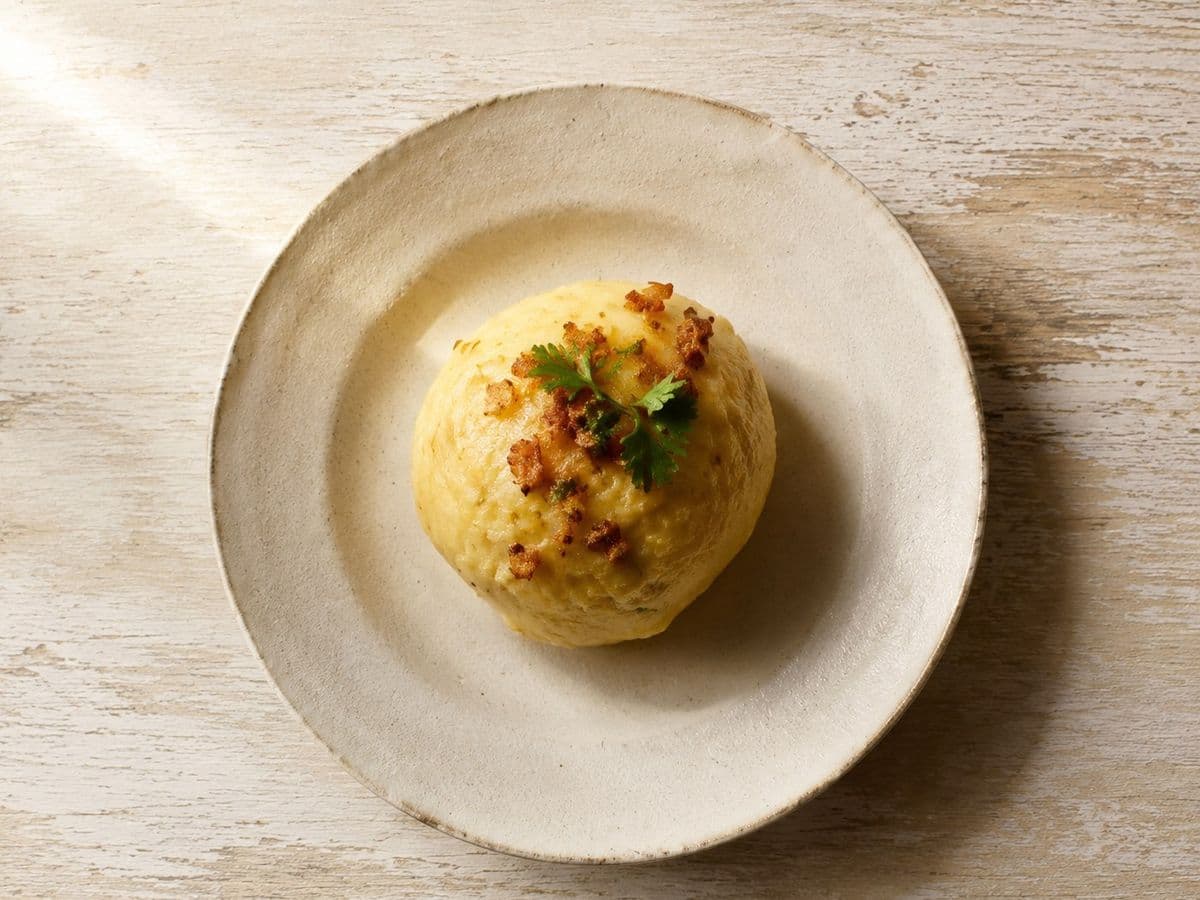
327 kcal a serving, against 381 for the traditional version. That is 54 kcal off, or 14%, with 9.3g of protein. Serves 6. 1 hour 15 minutes.
What the traditional version is
Kloß (or Knödel, if you are from Bavaria) are boiled dumplings made with a mix of raw and cooked potato, bound with egg and a little flour. The classic version aims for a very light, fluffy centre, and is usually finished with a hefty slick of melted butter or a good pork gravy. Germans make a meal of them. Four is the standard portion, though nobody denies seconds.
What changed, and what each change costs
Four dumplings per person down to two
Portion control is the first and most effective move. There's no getting around the fact that potato is there for bulk and pleasure, not to help you hit any nutrition targets. Eating two means you can have your dumpling and eat it, then get on with your day.
What it costs you. You lose the glorious satisfaction of eating until you can't move. A smaller pile of dumplings isn't as satisfying for the soul, if the soul is demanding four of them.
Egg and flour held at normal levels
I did consider bumping up the egg for more protein, or slashing the flour, but you get a weirdly bouncy or sticky thing instead of a dumpling. I'd rather have a half-portion that tastes right than a protein pudding disguised as a potato ball.
What it costs you. No extra protein, but at least you get the proper texture. If you want more protein, serve something meaty or a heap of sauerkraut on the side.
Butter at 75g down to 30g
Melted butter poured over the finished dumplings is a luxury, but it is also a hard hit of fat for not much extra taste. You still need a little for flavour and gloss, but 30g goes further than you think.
What it costs you. Nobody will ever say 'That's too much butter'. You're chasing the memory of richness, not the reality.
What goes in it
The ingredients, without the quantities. The weights are what the figures below are computed from, and they are in the book.
- Potato
- Egg
- Plain flour
- Unsalted butter
- Salt
How it starts
- Peel all the potatoes.
- Take the remaining 600g, grate them raw, and wrap the shreds in a clean tea towel.
- Mix the mashed and grated potato, then add the flour, salt, and the eggs.
The rest of the method, and every weight, is in Authentic-ish German.
The numbers
| Per serving | Traditional | Lightened |
|---|---|---|
| Calories | 381 | 327 |
| Protein | 9.4g | 9.3g |
| Fat | 12.1g | 6g |
| Saturated fat | 6.9g | 3.1g |
| Carbohydrate | 60.2g | 60.2g |
| Protein per 100 kcal | 2.5g | 2.8g |
Every figure is computed from the recipe's own weighed ingredient list against public food composition databases. The appendix in Authentic-ish German prints the exact database row used for each ingredient, so any number here can be checked. How every number is computed sets out the method.
Allergens. eggs, gluten, milk.
The method is in the book
Nobody is moved to poetry by a reduced portion of potatoes, but the dish still delivers what it is meant to. The texture and the flavour are right. All that's missing is the nap you need after eating four of them. If you want to make up for the smaller portion, spoon on some sauerkraut, or just take a walk and be pleased with yourself. It does what it says on the tin. If you want a light, fluffy dumpling that doesn't leave you in a carb coma, this is the honest route.
The quantities and the method for this dish are in Authentic-ish German, along with 54 more. Buy the paperback
More from Authentic-ish German
- Spätzle, 442 kcal a serving, 18% off
- Kasespatzle, 672 kcal a serving, 27% off
- Reibekuchen, 249 kcal a serving, 55% off
- Kartoffelgratin, 315 kcal a serving, 48% off
- Semmelknodel, 265 kcal a serving, -3% off
- Maultaschen, 516 kcal a serving, 24% off
Every German dish and its calories · Every dish in the series