German · Authentic-ish German
Semmelknodel
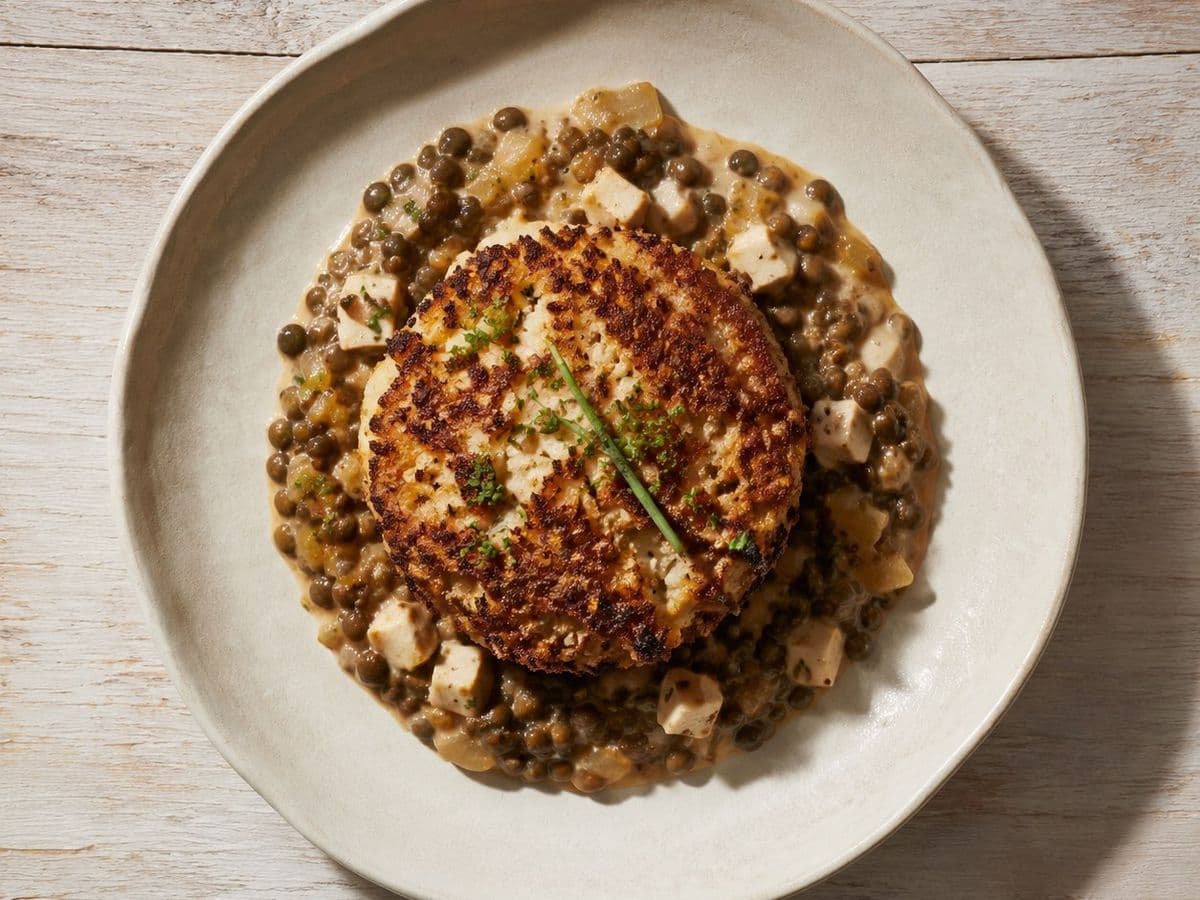
265 kcal a serving, against 257 for the traditional version. That is -8 kcal off, or -3%, with 15.7g of protein. Serves 6. 1 hour.
What the traditional version is
The classic Semmelknodel recipe starts with several white bread rolls, chopped up and soaked in whole milk. Onions are fried in butter till soft, then tossed with the soaked bread along with eggs, parsley, and plenty of salt. You shape big fat balls in your hands (not too tight or they'll turn out like rubber), then poach them gently until they hold together. Usually served under a weight of gravy, with roast meat flying in from every angle. Tradition expects you to eat at least two.
What changed, and what each change costs
300g white bread swapped for 250g rye bread and 100g cooked puy lentils
White bread is the backbone, but it's just air and starch. Rye bread has more protein and fibre, and puy lentils fill in the gaps. The lentils also help the dumplings hold their shape instead of relying on extra egg.
What it costs you. The texture changes. Rye is denser and the crusts turn the dumplings a duller colour. Lentils in a bread dumpling are the other most controversial thing I've ever done - right after putting pineapple on pizza.
300g whole milk down to 200g semi-skimmed milk
Whole milk is pure luxury, but a bread dumpling does not need as much fat as you think. Semi-skimmed soaks the bread just as well. You need a bit less of it, because rye bread doesn't take up as much liquid.
What it costs you. You lose a bit of creaminess, but these are dumplings, not panna cotta. Nobody's writing home about the milk in a Semmelknodel.
40g butter swapped for 10g olive oil
Butter for frying the onions is a getaway vehicle for flavour and fat. I use olive oil because I need one or the other, and I'd rather save my butter for toast.
What it costs you. You will miss the flavour. There's no olive oil in Bavarian mountain huts, and the onions fry up a bit paler. But the dumplings still work.
150g whole egg down to 100g egg and 60g egg white
Whole eggs bind the mix and add structure, but you can cut back on yolks if you add a bit of white. You still get the stickiness without the fat.
What it costs you. The dumplings are a touch less rich, and the yellow is a bit faded. Close your eyes, or serve them under a thick sauce and you'll never notice.
Add 120g firm tofu, crumbled
Here's the trick: tofu hides beautifully in the dough, boosting the protein without turning the thing into a health bar. Crumble it fine, and nobody will know it's in there.
What it costs you. You do slightly notice the texture if you eat one plain. But who eats a bread dumpling without sauce? It isn't cheating, it's dinner.
What goes in it
The ingredients, without the quantities. The weights are what the figures below are computed from, and they are in the book.
- Rye bread
- Puy lentils
- Semi-skimmed milk
- Olive oil
- Whole egg
- Egg white
- Firm tofu
- Onion
- Flat-leaf parsley
- Salt
- Black pepper
How it starts
- First, get the lentils going.
- Cube the rye bread into bite-sized pieces.
- Dice the onion.
The rest of the method, and every weight, is in Authentic-ish German.
The numbers
| Per serving | Traditional | Lightened |
|---|---|---|
| Calories | 257 | 265 |
| Protein | 9.2g | 15.7g |
| Fat | 11.3g | 7.3g |
| Saturated fat | 5.5g | 1.7g |
| Carbohydrate | 29.6g | 35.2g |
| Protein per 100 kcal | 3.6g | 5.9g |
Every figure is computed from the recipe's own weighed ingredient list against public food composition databases. The appendix in Authentic-ish German prints the exact database row used for each ingredient, so any number here can be checked. How every number is computed sets out the method.
Allergens. eggs, gluten, milk, soybeans.
The method is in the book
I won't lie to you - swapping out the bread and butter makes a cultural crime, but the numbers do improve. These actually fill you up and don't leave you regretting your choices by nine o'clock. If anyone asks, yes, they're 'fusion'. If you want a nostalgic Bavarian ball of carbs, stick to the original. If you want dinner that works, try this.
The quantities and the method for this dish are in Authentic-ish German, along with 54 more. Buy the paperback
More from Authentic-ish German
- Kartoffelklosse, 327 kcal a serving, 14% off
- Spätzle, 442 kcal a serving, 18% off
- Kasespatzle, 672 kcal a serving, 27% off
- Reibekuchen, 249 kcal a serving, 55% off
- Kartoffelgratin, 315 kcal a serving, 48% off
- Maultaschen, 516 kcal a serving, 24% off
Every German dish and its calories · Every dish in the series