German · Authentic-ish German
Reibekuchen
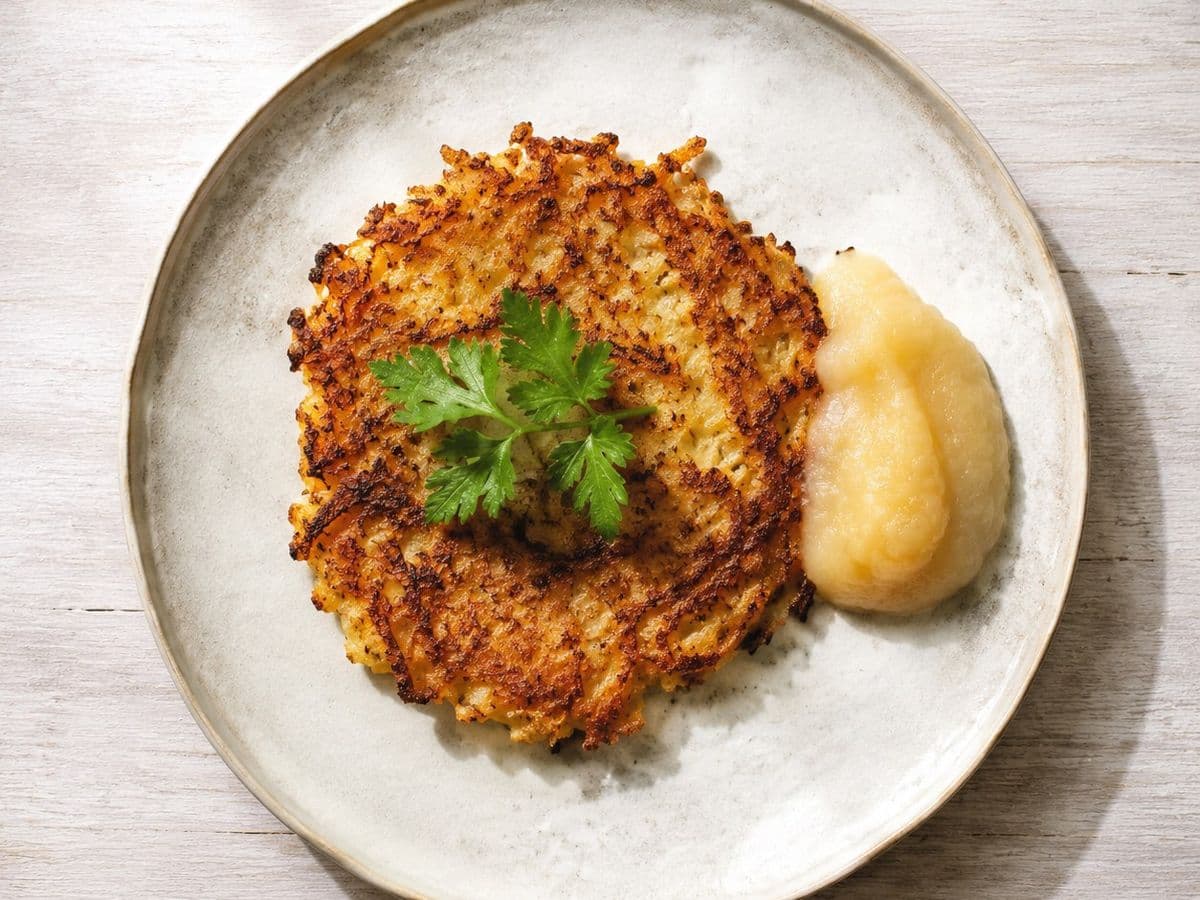
249 kcal a serving, against 548 for the traditional version. That is 299 kcal off, or 55%, with 7.6g of protein. Serves 6. 1 hour.
What the traditional version is
Raw potatoes, grated and squeezed, mixed with onion, egg and a bit of flour, then shallow-fried in a generous layer of vegetable oil until deep golden and crisp-edged. Eaten hot, sometimes with apple sauce or just a sprinkle of salt. Count on a full mug of oil per batch.
What changed, and what each change costs
200g of vegetable oil down to 30g
The oil is what makes the pancakes crisp and rich, but it's also what sends the whole thing off the rails. I swapped frying for baking on a lined tray, brushing just enough oil to keep them from sticking.
What it costs you. You lose the crunch. It goes from deeply crisp to lightly golden, with only a feeble edge crispness if you bake them straight. The inside is still soft, but you won't fool anyone into thinking they're proper fried Reibekuchen. It's less of a treat, but you can eat three without the usual guilt hangover.
60g plain flour down to 40g
You don't really need as much flour if you're not handling the wetness of a deep fry. It just helps everything bind. I cut it down to let more potato shine through.
What it costs you. They're a bit more fragile when handled. They'll hold together if you squeeze the potato mixture as hard as you can, but a heavy hand is the secret. If you skip the squeeze, they'll fall apart.
3 eggs (180g) up to 4 egg whites (132g)
Egg yolk adds richness and some fat, but it's not absolutely crucial for structure. Swapping whole eggs for just whites cuts fat and bumps the protein a bit, though it does take away some of the flavour.
What it costs you. The pancakes are paler, and you lose some of the golden colour and tender richness. It's a fair trade, but don't expect the same depth as the original.
What goes in it
The ingredients, without the quantities. The weights are what the figures below are computed from, and they are in the book.
- Potato
- Onion
- From 4 medium eggs
- Plain flour
- Vegetable oil
- Salt
- Black pepper
How it starts
- Heat the oven to 220C and line two large baking trays with baking paper.
- Peel and coarsely grate the potatoes.
- Grate the onion and add it to the squeezed potato.
The rest of the method, and every weight, is in Authentic-ish German.
The numbers
| Per serving | Traditional | Lightened |
|---|---|---|
| Calories | 548 | 249 |
| Protein | 9.3g | 7.6g |
| Fat | 36.5g | 5.3g |
| Saturated fat | 5.3g | 0.7g |
| Carbohydrate | 46.3g | 43.7g |
| Protein per 100 kcal | 1.7g | 3.1g |
Every figure is computed from the recipe's own weighed ingredient list against public food composition databases. The appendix in Authentic-ish German prints the exact database row used for each ingredient, so any number here can be checked. How every number is computed sets out the method.
Allergens. gluten, eggs.
The method is in the book
Let's not pretend. These aren't the street food icons you get on a cold December day in Cologne, fried until shatteringly crisp. These are a second cousin. But if you accept a softer, lighter pancake, the potato flavour sings and you can eat a plateful without writing off the rest of the week. The effort to squeeze the potatoes is the third most important thing you'll do - skip it and you'll regret it. It's honest, quick, and you won't have to deal with a pan full of burnt oil.
The quantities and the method for this dish are in Authentic-ish German, along with 54 more. Buy the paperback
More from Authentic-ish German
- Kartoffelklosse, 327 kcal a serving, 14% off
- Spätzle, 442 kcal a serving, 18% off
- Kasespatzle, 672 kcal a serving, 27% off
- Kartoffelgratin, 315 kcal a serving, 48% off
- Semmelknodel, 265 kcal a serving, -3% off
- Maultaschen, 516 kcal a serving, 24% off
Every German dish and its calories · Every dish in the series